


























Close
MCE 2026
World Hydrogen & Carbon Americas

Canada Identifies First Four Offshore Wind Energy Areas

Note* - All images used are for editorial and illustrative purposes only and may not originate from the original news provider or associated company.

Subscribe

- Never miss a story with notifications

- Gain full access to our premium content

- Browse free from any location or device.

Media Packs

Expand Your Reach With Our Customized Solutions Empowering Your Campaigns To Maximize Your Reach & Drive Real Results!

– Access the Media Pack Now

– Book a Conference Call

Leave Message for Us to Get Back

Related stories

Transformation of Power Distribution through Advanced Metering Infrastructure

The distribution level of the energy value chain is undergoing a fundamental redesign as utilities replace legacy equipment with intelligent monitoring systems that optimize flow and efficiency.

Strengthening Grid Reliability Through Advanced Metering Infrastructure

Grid stability and uptime are becoming increasingly critical as extreme weather events and fluctuating demand patterns challenge the resilience of traditional power systems.

The Role of Advanced Metering Infrastructure in Driving Smart Grid Growth

Modern energy systems are undergoing a radical transformation as digital communication layers integrate with traditional power hardware to facilitate a more responsive and scalable grid architecture.
- Advertisement -

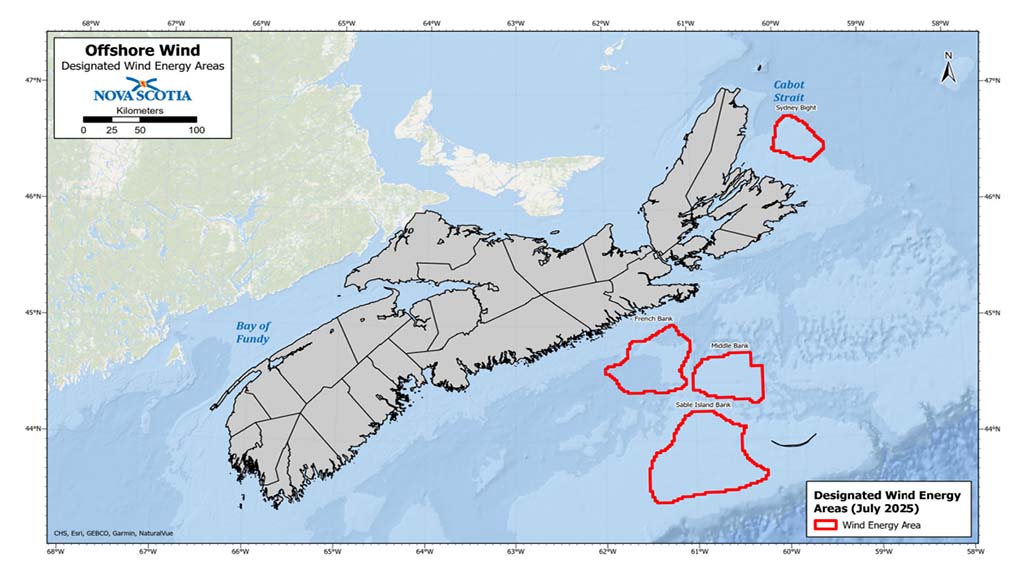
Canada has officially designated its first four offshore wind energy areas along the coast of Nova Scotia, advancing its strategy to license up to 5 GW of capacity by the end of this decade.

The federal and provincial governments selected French Bank, Middle Bank, Sable Island Bank, and Sydney Bight for upcoming offshore wind energy development. This announcement marks a pivotal step in launching a competitive bidding process scheduled for later this year, aligning with broader goals to establish Nova Scotia as a leading clean energy exporter.

Tim Hodgson, Canada’s Natural Resources Minister, stated: “The identification of wind energy areas off the coast of Nova Scotia is a significant step forward towards unlocking our renewable energy potential.”

Nova Scotia Premier Tim Houston added: “With some of the top wind speeds in the world, Nova Scotia has the potential to become a clean energy superpower.”

Trevor Boudreau, Nova Scotia’s Energy Minister, noted that the designation delivers “a clear signal” to investors in industry. “It’s time to go, it’s time to get ready for the first call for bids, and it’s time to invest in Nova Scotia.”

These four sites were selected through a detailed regional assessment, which had initially identified eight locations with strong potential. Following public engagement, the list was refined to five. Of these, four have now been formally designated. Sydney Bight and French Bank were made smaller in response to feedback from stakeholders.

The Canada-Nova Scotia Offshore Energy Regulator is currently preparing its recommendations for the upcoming bid process for offshore wind energy and establishing licensing terms for seabed use. Christine Bonnell-Eisnor, the Regulator’s CEO, remarked that this designation represents “an important step in the offshore wind land tenure process.”

Under the Canada-Nova Scotia Accord Acts, the federal and provincial governments share responsibility for managing offshore areas. As part of this broader effort, the province has now published the final module of its Offshore Wind Roadmap. This latest section outlines consultation protocols and engagement responsibilities for the sector.

Latest stories

Related stories

Transformation of Power Distribution through Advanced Metering Infrastructure

The distribution level of the energy value chain is undergoing a fundamental redesign as utilities replace legacy equipment with intelligent monitoring systems that optimize flow and efficiency.

Strengthening Grid Reliability Through Advanced Metering Infrastructure

Grid stability and uptime are becoming increasingly critical as extreme weather events and fluctuating demand patterns challenge the resilience of traditional power systems.

The Role of Advanced Metering Infrastructure in Driving Smart Grid Growth

Modern energy systems are undergoing a radical transformation as digital communication layers integrate with traditional power hardware to facilitate a more responsive and scalable grid architecture.

Advanced Metering Infrastructure Powering Data Driven Utilities

The transition from analog management to digital intelligence is redefining the utility sector as data becomes the primary driver for operational excellence and strategic decision-making.

Subscribe

- Never miss a story with notifications

- Gain full access to our premium content

- Browse free from any location or device.

Media Packs

Expand Your Reach With Our Customized Solutions Empowering Your Campaigns To Maximize Your Reach & Drive Real Results!

– Access the Media Pack Now

– Book a Conference Call

Leave Message for Us to Get Back

Translate »