















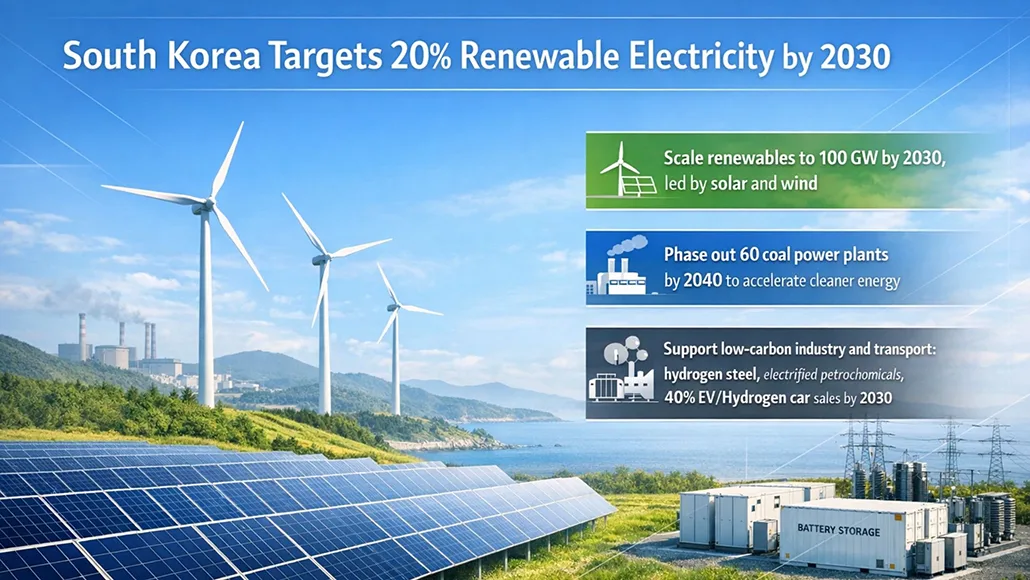

The South Korea government has set a target to generate at least 20 percent of its electricity from renewable sources by 2030, as part of efforts to reduce reliance on energy imports and meet rising demand driven by advanced industries. The plan, presented at a Cabinet meeting, was outlined by the Ministry of Climate, Energy and Environment on Monday.
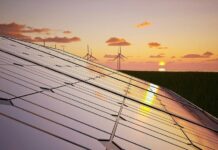
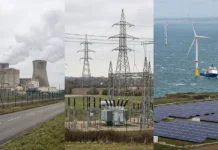
To meet this clean power goal, authorities intend to expand renewable energy capacity to 100 gigawatts by 2030, with a focus on scaling up solar and wind power generation. The South Korea renewable energy target comes against the backdrop of renewable sources accounting for 11.4 percent of total power generation last year, underscoring the scale of expansion required over the next decade.
As part of the broader clean power transition strategy, the government will progressively shut down 60 coal-fired power plants by 2040 while accelerating the deployment of cleaner energy alternatives. Alongside capacity expansion, policy support will be directed toward strengthening green industries, including the development of solar modules, wind turbines, and battery energy storage systems.
The plan also extends to industrial decarbonisation. Authorities will assist key sectors in shifting toward environmentally sustainable operations, including backing the steel industry’s ambition to commercialize hydrogen-based reduction iron-making technology by 2037 and supporting the petrochemical sector’s move to electrify naphtha cracking centers. In parallel, the government aims to ensure that 40 percent of new vehicle sales consist of electric or hydrogen-powered models by 2030. “We will swiftly implement the energy transition plan to make sure that South Korea remains resilient to external shocks, such as the ongoing conflict in the Middle East,” Climate Minister Kim Sung-whan said in a press release. The South Korea renewable energy target reflects a broader push to align energy security with industrial transformation goals.