









Close
MCE 2026
World Hydrogen & Carbon Americas

Statkraft Inaugurates Germany’s Largest Solar Hybrid Plant

Note* - All images used are for editorial and illustrative purposes only and may not originate from the original news provider or associated company.

Subscribe

- Never miss a story with notifications

- Gain full access to our premium content

- Browse free from any location or device.

Media Packs

Expand Your Reach With Our Customized Solutions Empowering Your Campaigns To Maximize Your Reach & Drive Real Results!

– Access the Media Pack Now

– Book a Conference Call

Leave Message for Us to Get Back

Related stories

Hybrid Power Systems Combining Renewables Hydrogen and Dispatchable Generation

In-depth analysis of hybrid power system architecture integrating renewables, hydrogen storage and dispatchable generation to manage intermittency, enhance grid stability and achieve long-term decarbonisation targets.

Carbon Utilisation Pathways Creating New Value for Power Producers

Exploration of how captured carbon emissions are transformed into commercially viable products, from synthetic fuels to industrial feedstocks, improving project economics for power producers through carbon utilisation strategies.

Integrating Renewable Energy into Large-Scale Hydrogen Production

Examination of how solar, wind and hydro resources are integrated into large-scale hydrogen production, with focus on intermittency, optimisation and grid vs off-grid models.
- Advertisement -

Statkraft, Europe’s largest renewable energy producer, has inaugurated Germany’s largest solar battery storage hybrid power plant under the Renewable Energy Sources Act (EEG).

Located in Zerbst, Saxony-Anhalt, the facility represents a major milestone in Statkraft’s role within the country’s clean energy transition. “With the Zerbst solar park, we have implemented a major energy transition project quickly and efficiently. With this success, Statkraft has proven itself to be a reliable partner for energy infrastructure projects and one of the most important companies in the energy transition in Germany,” said Barbara Flesche, Executive Vice President for Europe at Statkraft.

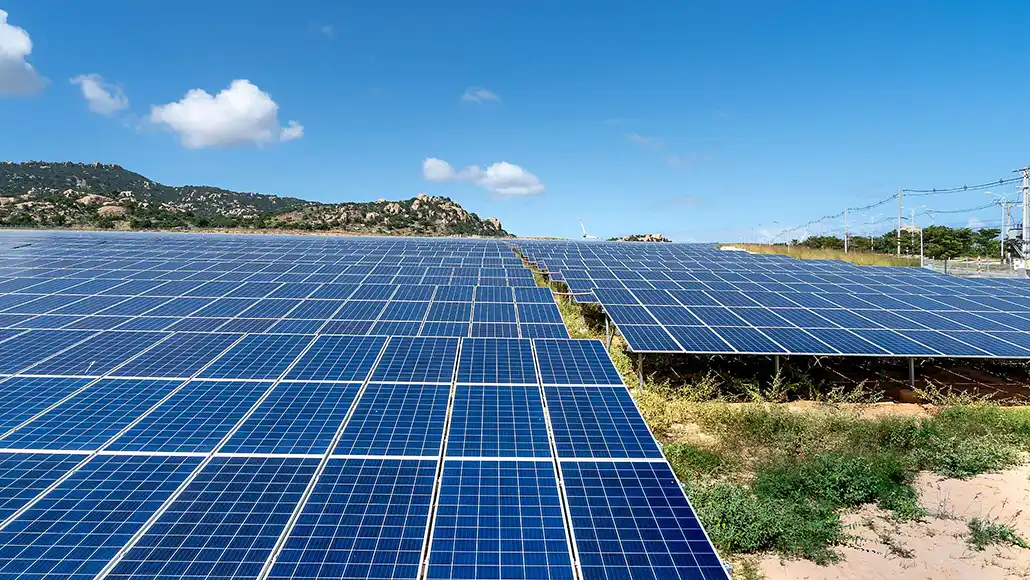
Built on a 41-hectare former gravel pit at a cost of EUR 45 million, the 46.4-megawatt solar farm is capable of producing nearly 50,000 MWh of green electricity annually. That output can supply electricity to about 14,000 households and cut roughly 32,000 tons of CO₂ every year. The project also falls under the EEG innovation tender, which provides a market premium for the solar power it produces.

The site has 88 battery cubes, each holding 16 lithium-ion batteries. Together, they deliver a total capacity of 16 MW or 57 MWh. During daylight hours, the batteries store unused solar power. After sunset, that energy flows back into the grid, improving efficiency and supporting grid stability. The system also helps keep power prices steady. The hybrid plant started feeding electricity into the grid in October 2025, and final connection tests are now nearing completion.

The Zerbst solar hybrid plant project, developed fully in-house, is Statkraft’s first renewable hybrid power plant of its kind in Germany. The company has been steadily expanding its project development business, currently managing a pipeline of wind, solar, and storage projects with a combined potential capacity of 4,000 MW. Construction of the Zerbst solar hybrid plant was completed in just twelve months, exactly on schedule despite common industry delays.

The inauguration ceremony was attended by Saxony-Anhalt’s Minister-President, Dr. Reiner Haseloff, who called the Zerbst project a “lighthouse project that shows how the energy transition in Saxony-Anhalt is succeeding.” He added, “The innovative storage technology makes this hybrid power plant an important building block for grid stability and supplies reliable energy. We need such showcase projects nationwide.”

The city of Zerbst/Anhalt will also see financial benefits from the project, including trade tax revenue and an additional voluntary municipal tax from Statkraft, amounting to around EUR 100,000 that the municipality can use freely.

Latest stories

Related stories

Hybrid Power Systems Combining Renewables Hydrogen and Dispatchable Generation

In-depth analysis of hybrid power system architecture integrating renewables, hydrogen storage and dispatchable generation to manage intermittency, enhance grid stability and achieve long-term decarbonisation targets.

Carbon Utilisation Pathways Creating New Value for Power Producers

Exploration of how captured carbon emissions are transformed into commercially viable products, from synthetic fuels to industrial feedstocks, improving project economics for power producers through carbon utilisation strategies.

Integrating Renewable Energy into Large-Scale Hydrogen Production

Examination of how solar, wind and hydro resources are integrated into large-scale hydrogen production, with focus on intermittency, optimisation and grid vs off-grid models.

Electrolysis Technologies Advancing the Future of Clean Power

Comparative analysis of alkaline, PEM and solid oxide electrolysers, their efficiency, cost trajectories and implications for renewable-driven hydrogen and clean power.

Subscribe

- Never miss a story with notifications

- Gain full access to our premium content

- Browse free from any location or device.

Media Packs

Expand Your Reach With Our Customized Solutions Empowering Your Campaigns To Maximize Your Reach & Drive Real Results!

– Access the Media Pack Now

– Book a Conference Call

Leave Message for Us to Get Back

Translate »