





















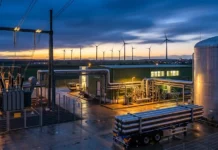
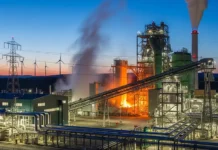



Industrial power operations sit at the heart of modern life. They supply steam and electricity to refineries, chemical complexes, metals processing, cement production, and countless manufacturing facilities that cannot simply pause when the wind drops or when a grid constraint appears. At the same time, these operations are often among the largest stationary sources of CO₂ emissions. For many companies, the uncomfortable reality is that even after aggressive efficiency upgrades and partial electrification, a significant portion of emissions remains tied to combustion and to process chemistry. This is where carbon capture technologies are gaining momentum: they offer a way to reduce emissions while maintaining energy security and production continuity.
The key phrase carbon capture technologies industrial power reflects an increasingly pragmatic mindset. Carbon capture is not framed as a substitute for clean energy, but as an enabling tool for sectors where replacing combustion quickly is not feasible or where process emissions cannot be eliminated by switching fuels. For industrial operators, the question has shifted from “Is CCS real?” to “Which capture pathway fits our plant, and how do we integrate it without destabilising operations?”
Why Industrial Sites Are Different From Power Stations
Carbon capture is often associated with large power plants, but industrial environments introduce additional complexity. Flue gas composition can vary widely, contaminants can be severe, and heat integration opportunities are highly site-specific. Many industrial facilities also operate within tight plot space constraints, making the physical footprint of capture equipment a practical challenge.
Industrial operations also face unique strategic pressures. A power plant may be able to ramp down or change dispatch patterns; a cement kiln or a steam cracker is designed for steady throughput. That means carbon capture technologies must be engineered for high availability and for stable integration with existing control systems.
Core Capture Pathways Used in Industry
There is no single “carbon capture machine.” CCS technology is a family of methods to separate CO₂ from flue gas or process streams, compress it, and transport it to storage or utilisation.
Post-Combustion Capture
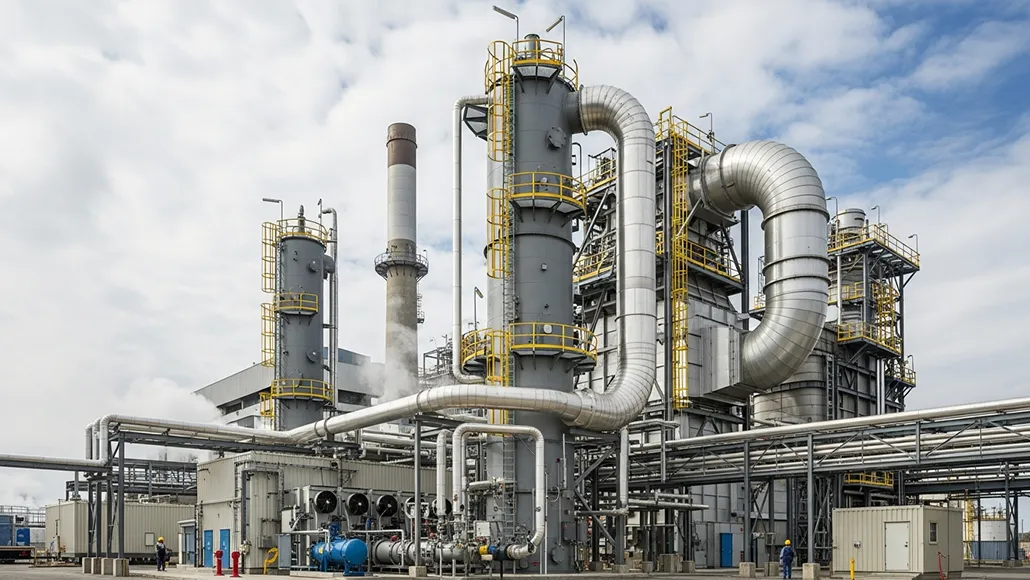
Post-combustion capture removes CO₂ from flue gas after fuel has been burned, typically using chemical solvents. It has the advantage of being retrofittable to many existing plants, which is attractive for industrial power operations with long-lived assets. The trade-off is energy use: solvent regeneration requires significant heat, which can reduce net efficiency unless waste heat or low-grade heat is available.
Newer solvent formulations, improved absorber designs, and better heat integration have reduced this penalty, but it remains a central design consideration. For plants with spare steam capacity or significant waste heat, post-combustion capture can be a natural fit.
Pre-Combustion Capture
Pre-combustion capture is common in gasification or reforming processes, where fuel is converted into a synthesis gas and CO₂ is removed before combustion. This pathway can yield high CO₂ concentrations and can be efficient in certain integrated designs. It is more common in hydrogen production and some chemical processes than in simple boiler retrofits, but it plays an important role in decarbonisation strategies that involve “blue” hydrogen.
Oxy-Fuel Combustion
Oxy-fuel systems burn fuel in oxygen rather than air, producing a flue gas rich in CO₂ and water vapor, which simplifies capture. The challenge is the energy and cost of oxygen production and the need for specialised burners and materials. For certain industrial furnaces and boilers, oxy-fuel can be attractive when integrated with an oxygen supply already present on site.
Capture From Process Streams
Some industrial processes create relatively pure CO₂ streams, such as fermentation, natural gas processing, or ammonia production. Capturing CO₂ here is often cheaper than capturing from dilute flue gas because separation is simpler. These opportunities are important because they can deliver early-scale CCS deployment and help build transport and storage infrastructure that later supports more complex capture projects.
Transport and Storage: The Part That Makes CCS Real
Capturing CO₂ is only the first half of the system. To achieve emissions reduction, the CO₂ must be permanently stored in geological formations or used in a way that prevents it from returning to the atmosphere. Industrial operators therefore increasingly evaluate CCS technology as an end-to-end chain: capture, compression, dehydration, transport, injection, monitoring, and long-term liability management.
Shared CO₂ transport and storage networks can transform economics. When multiple plants connect to a common pipeline and storage site, unit costs fall and projects become less risky. This is why “industrial clusters” are often the focus of CCS development: refineries, power plants, cement and steel sites, and chemical producers can share infrastructure and reduce duplication.
Operational Integration: The Hidden Engineering Work
For industrial power operations, integrating carbon capture technologies is not an add-on; it changes how the plant runs.
Capture systems require steady flue gas flow and composition for optimal performance. They add pressure drops in exhaust paths, which can affect fans and boilers. They consume steam or electricity, altering plant energy balances. They introduce new chemicals and maintenance requirements. And they require control strategies that coordinate the capture plant with the host plant during startups, shutdowns, and upsets.
Successful projects treat the capture unit as part of the plant’s core process rather than as an environmental accessory. That means designing for redundancy where necessary, building operator training programs, and planning maintenance windows that align with production schedules.
Economics and Policy: Making the Numbers Work
Carbon capture has real costs: capital expenditure, energy penalties, solvent makeup, compression power, and transport/storage fees. Whether a project proceeds depends on how these costs compare to the value of emissions reduction.
In many regions, economics are supported by carbon pricing, tax credits, and regulated incentives. Some companies also see strategic value beyond immediate financial returns: meeting customer requirements for low-carbon materials, preserving asset value under future regulation, and securing a license to operate in communities that demand cleaner air.
A realistic financial model also recognises learning curves. Early projects are often more expensive because supply chains are immature and risks are priced conservatively. As more plants deploy CCS technology, standardisation improves and costs can fall, especially for modular capture units and shared infrastructure.
CCUS vs. CCS: Use Cases and Caution
The term CCUS includes utilisation, where captured CO₂ is used to make products such as chemicals, fuels, or building materials. Utilisation can create revenue and encourage capture, but the climate benefit depends on the lifecycle. If CO₂ is converted into a fuel and later burned, it returns to the atmosphere; the benefit then may be limited to displacing fossil carbon in some contexts. Durable utilisation—such as mineralisation in concrete—can provide longer-term storage-like outcomes, but scale and economics vary.
For industrial decarbonisation strategies, it is essential to be clear about the intended outcome. If the goal is deep, verifiable emissions reduction, permanent geological storage or durable mineralisation will generally be more defensible.
How Carbon Capture Interacts with Hydrogen and Electrification
Carbon capture technologies are often discussed alongside hydrogen and electrification because the pathways can complement each other. Capturing CO₂ from reforming processes enables low-carbon hydrogen for industrial users who cannot electrify fully. Electrification can reduce the size of capture systems by lowering fuel combustion. Heat recovery can supply some of the steam needed for solvent regeneration.
This systems perspective matters. A plant that treats CCS as isolated may oversize equipment or miss integration opportunities. A plant that sees CCS as part of a broader energy optimisation plan can reduce costs and improve reliability.
Risks, Governance, and Public Trust
Industrial operators also need to think beyond engineering. CCS projects can face community scrutiny, particularly around CO₂ transport and storage. Transparent monitoring plans, strong safety cases, and credible long-term stewardship are essential.
Internally, governance is equally important. A capture project crosses boundaries between operations, environment, finance, legal, and external affairs. Clear accountability, robust measurement and verification, and conservative risk management build confidence that the emissions reduction is real and that the project will not compromise plant performance.
The Near-Term Role of Carbon Capture in Industry
Deep decarbonisation of industrial power operations will take time. Some facilities will electrify major loads. Some will switch to clean hydrogen or other low-carbon fuels. But many will still face residual emissions for years because of process constraints, infrastructure limitations, and capital cycles.
Carbon capture technologies industrial power therefore fill a crucial gap. They allow essential industries to cut emissions while continuing to supply materials and products society depends on. In the best projects, carbon capture is not presented as an excuse to delay change, but as a bridge that buys time for infrastructure and technology transitions while still delivering measurable emissions reduction today.