













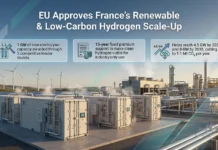

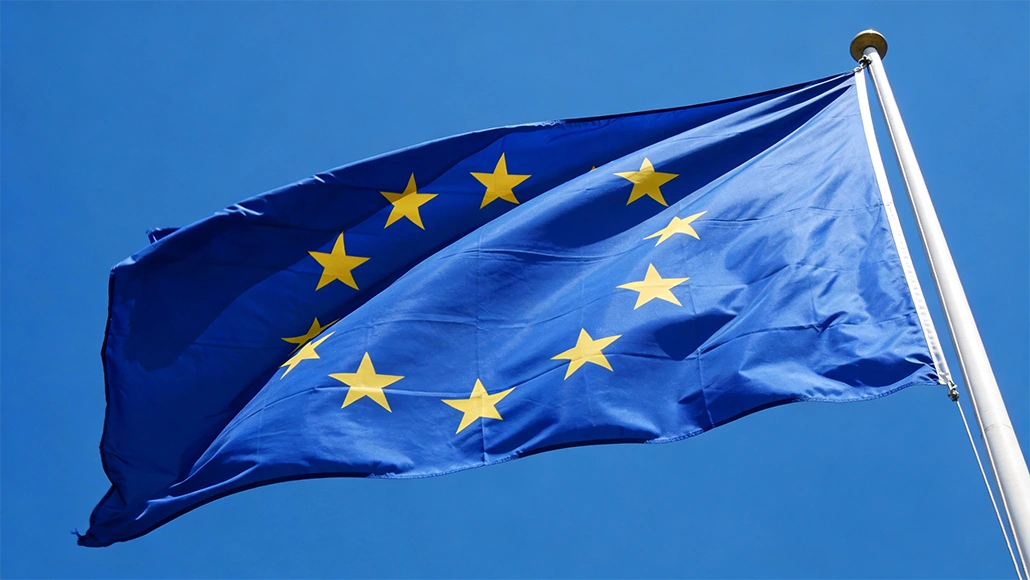

The European Commission has gone ahead and launched its third European Hydrogen Bank auction, having a €1.3 billion or $1.5 billion budget, which is now open to both renewable RFNBO hydrogen as well as non-renewable low-carbon electrolytic hydrogen for the very first time. The inclusion of low-carbon molecules, i.e., the ones attaining a minimum of 70% emissions reductions as against the fossil hydrogen at 28.2 gCO₂eq/MJ, goes on to follow the adoption of the Low-Carbon Fuels Delegated Act in October 2025 and also looks forward to leveling the playing field for regions having limited access to renewables.
Apparently, the auction is split into three segments, which are exclusively RFNBO hydrogen, a combined RFNBO and/or low-carbon category, and lastly a sector-specific tranche when it comes to maritime as well as aviation offtakers. Bids would be in place to compete on a per-kilo fixed premium basis and will be capped at €4/kg or $4.58/kg, with funding awarded for a span of ten years post verified production. Notably, the applications are open until February 19, 2026, with winners anticipated to ink the grant agreements in nine months. The EU has also started a €1 billion – equivalent to $1.17 billion auction so as to decarbonize the industrial process heat and a €2.9 billion, or $3.38 billion, call as per the Net-Zero Technologies window, bringing the overall available under the Innovation Fund to €5.2 billion, or $6.07 billion.
However, Brussels is also taking steps in order to plug the credibility gaps that have plagued the earlier rounds. In the second auction, almost half of the selected winners withdrew, thereby triggering the activation when it comes to reserve projects. This third round puts in place stricter pre-qualification criteria, which includes infrastructure readiness and permitting status as well as stronger financial commitments, opines the Commission. Apparently, developers are also going to remain subject to an 8% completion guarantee if they don’t deliver. Officials hope that these measures, teamed with the eligibility expansion so as to low-carbon electrolytic hydrogen, are going to enhance the project diversity and also decrease the regional concentration that has been witnessed across the prior rounds, where cheap renewables in southern Europe as well as the Nordics went on to dominate the award outcomes.