





























City University of Hong Kong and Southern University of Science and Technology researchers have gone on to develop a new water-based and eco-friendly battery that is based on tofu brine.
The team in its paper confirmed that compared to the present aqueous battery systems, their system gives out exceptional long-term cycling balance along with environmental friendliness within neutral conditions.
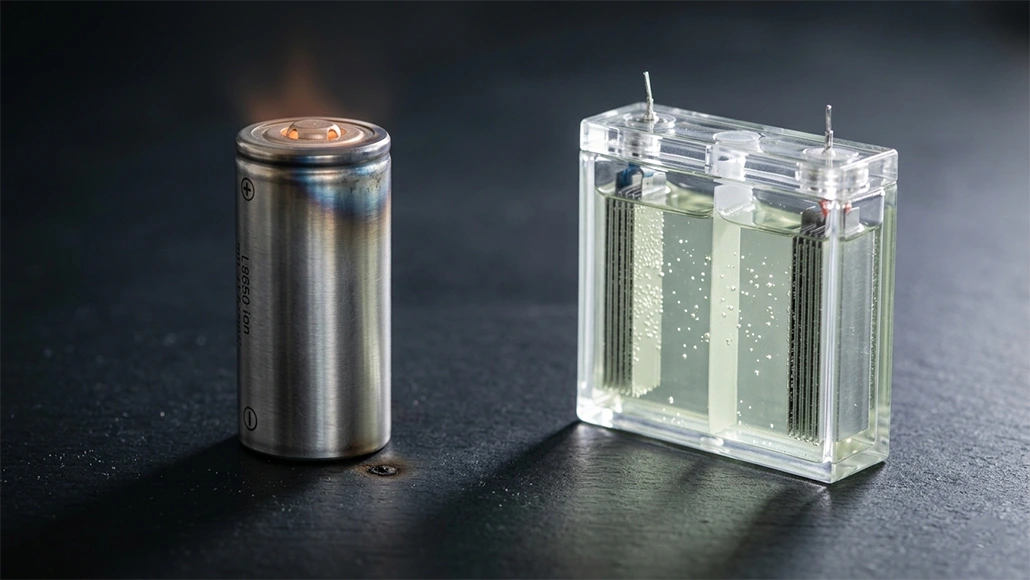
Interestingly, the new battery makes use of what the team terms as organic electrodes having neutral and non-toxic electrolytes. As per the team, the new tofu-brine-based battery has a capacity of 120,000+ charge cycles and is, in a way, saltwater-level safe.
The team further added that this kind of performance does underscore the research potential of this work and also highlights its promise related to practical application.
All this means that it is neither acidic nor flammable, and if scalable, this could as well prove to be revolutionary, specifically when we talk of replacing other battery technology such as lithium-ion.
The tofu-brine battery is indeed a force to reckon with
This would indeed be a big deal, as lithium-ion batteries can be notoriously highly flammable if they are damaged and can even go on to experience thermal runaway. In addition to this, they are also pretty hazardous to the environment, especially in terms of waste handling, and can go on to degrade with time – mostly between 1,000 and 3,000 charge cycles.
While found all across in numerous small electronics, they also happen to be very popular in electric vehicles – EVs. When we talk of EVs in particular, their inherent flammability has gone on to lead to numerous instances of EV fires in recent years, which is not ideal at all.
If we compare, water-based batteries, or the aqueous batteries, are much safer. They are, due to their very nature, non-flammable and also have very few, if at all, toxic materials.
The fact is that such batteries happen to be much easier as well as safer to dispose of and can, in a way, be made using cheaper and also less rare materials. But they have traditionally gone on to struggle with their lasting.
This is due to the fact that the water tends to break down at particular voltages, hence limiting its performance. The new battery, with its punchline of 120K+ cycles, is for sure a massive leap in case of its utility.
Let’s take a reference – batteries in cellphones typically need almost 800 cycles before they begin degrading. EV batteries mostly last anywhere between 1,500 and 3,000 cycles, and when we talk of a good LFP grid battery, it lasts anywhere between 6,000 and 10,000 cycles.
Is scaling it possible?
At more than a hundred thousand cycles, this could as well mean that a single water-based battery could last a minimum of a decade or so. For applications such as grid storage across solar farms as well as wind balancing, this is indeed very valuable.
And the fact is that it is this application that the new battery is most likely aimed at. Although it could, in a theoretical way, get used in things such as phones, these batteries happen to possess much lower energy densities and may not be ideal when we talk of the long run.
It is significant to note that battery breakthroughs such as this look to take place all the time in research, but the fact is that not all make it to the market. What actually matters is if the technology can be scaled or is energy-dense enough so as to be complete, and if it can actually prove cheap in terms of industrial scale.
The point here is that the new battery technology must for sure be able to perform dependably outside the lab conditions. If such issues can very well be addressed, then this new battery could as well go very far. If it can, this tofu-brine battery could as well prove be invaluable when it comes to renewable grid buffering along with rural electrification.
It could also be used as a data center backup battery system, or it may be used in military installations, or also as a backup.