





















The European Commission has given clearance under EU State aid rules to a French initiative designed to scale up the production of renewable and low-carbon hydrogen. The move aligns with the broader objectives set out in the EU Hydrogen Strategy and the Clean Industrial Deal, while also reinforcing the ambitions of the REPowerEU Plan aimed at reducing reliance on Russian fossil fuels and accelerating the energy transition. At its core, the renewable hydrogen scheme is intended to strengthen industrial decarbonisation efforts by enabling new production pathways.
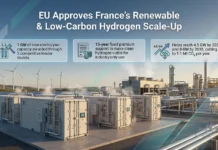
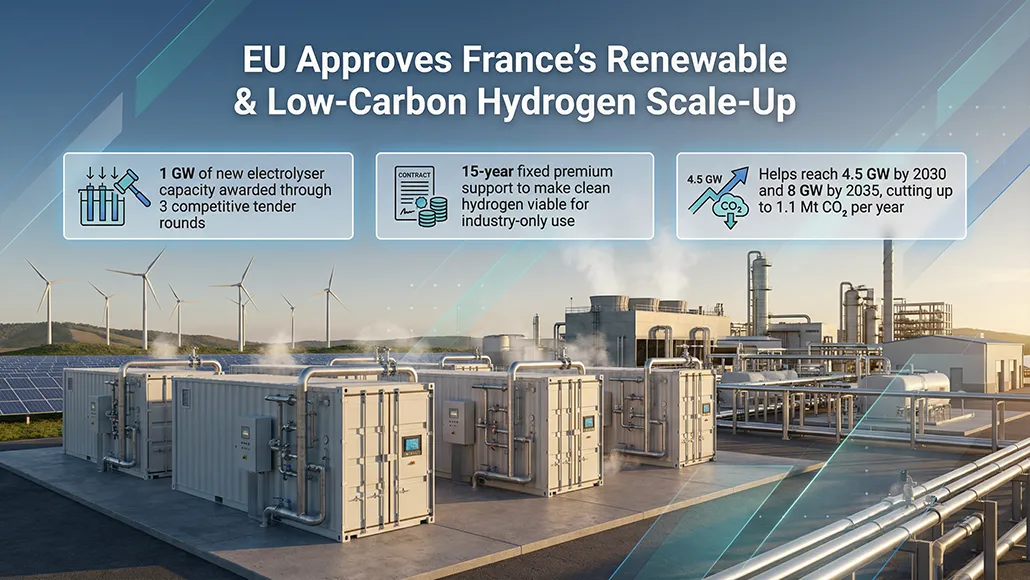
France formally notified the Commission of its plan to roll out support for renewable and low-carbon hydrogen through newly deployed electrolysers. The programme targets a total of 1 GW of hydrogen electrolysis capacity, to be delivered via a competitive bidding mechanism spread across three tender rounds. The initial round alone will cover 200 MW, backed by an estimated €797 million budget. Hydrogen generated under the renewable hydrogen scheme will be directed exclusively toward industrial applications, ensuring it is used in sectors where electrification is not yet a viable alternative.
Support will be delivered in the form of a fixed premium, with contracts extending over a 15-year period. Beneficiaries will be required to demonstrate compliance with EU standards governing renewable fuels of non-biological origin (‘RFNBO’) as well as low-carbon fuels, as defined in the delegated acts covering renewable and low-carbon hydrogen. The financial mechanism is structured to offset the higher electricity costs associated with producing renewable and low-carbon hydrogen compared to conventional fossil-based alternatives.
The scheme is also expected to contribute to France’s longer-term capacity targets, which include reaching 4.5 GW of electrolyser capacity by 2030 and scaling up to 8 GW by 2035. Authorities estimate that the initiative could prevent up to 1,100 kilotons of CO2 emissions annually, supporting national commitments toward EU climate goals.
In its evaluation, the Commission assessed the measure under Article 107(3)(c) of the Treaty on the Functioning of the EU, alongside the 2022 Guidelines on State aid for climate, environmental protection and energy (‘CEEAG’). It concluded that the scheme is both necessary and proportionate in advancing hydrogen production and industrial decarbonisation. The Commission also noted that the aid introduces an incentive effect, given the current cost gap between renewable and fossil hydrogen, and confirmed that safeguards are in place to limit distortions to competition. On balance, the environmental benefits were found to outweigh any potential negative market impacts, leading to formal approval of the scheme.