


















Close
MCE 2026
World Hydrogen & Carbon Americas

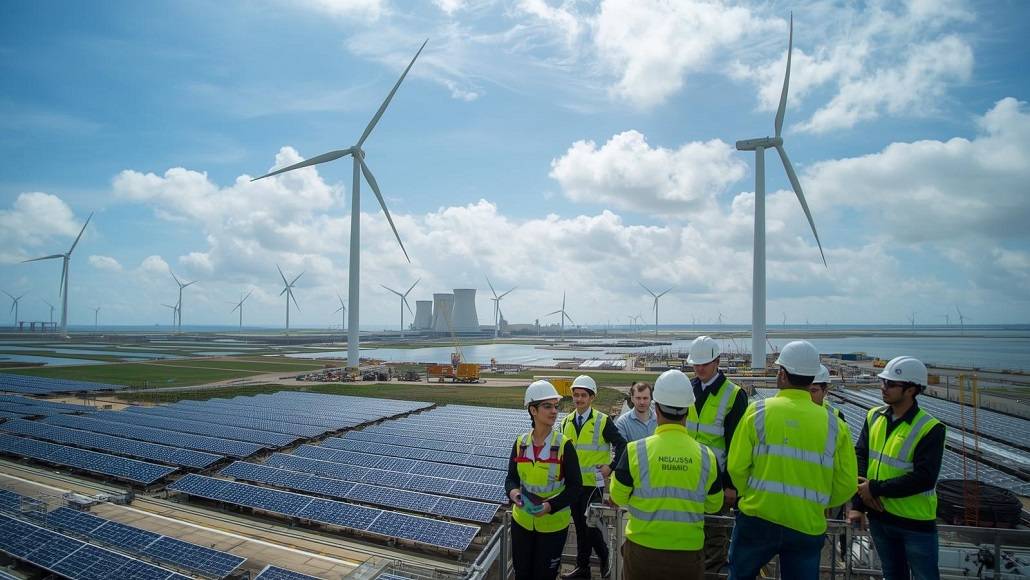
UK to Expand Clean Energy Workforce for Energy Sector Growth

Note* - All images used are for editorial and illustrative purposes only and may not originate from the original news provider or associated company.

Subscribe

- Never miss a story with notifications

- Gain full access to our premium content

- Browse free from any location or device.

Media Packs

Expand Your Reach With Our Customized Solutions Empowering Your Campaigns To Maximize Your Reach & Drive Real Results!

– Access the Media Pack Now

– Book a Conference Call

Leave Message for Us to Get Back

Related stories

Hybrid Power Systems Combining Renewables Hydrogen and Dispatchable Generation

In-depth analysis of hybrid power system architecture integrating renewables, hydrogen storage and dispatchable generation to manage intermittency, enhance grid stability and achieve long-term decarbonisation targets.

Carbon Utilisation Pathways Creating New Value for Power Producers

Exploration of how captured carbon emissions are transformed into commercially viable products, from synthetic fuels to industrial feedstocks, improving project economics for power producers through carbon utilisation strategies.

Integrating Renewable Energy into Large-Scale Hydrogen Production

Examination of how solar, wind and hydro resources are integrated into large-scale hydrogen production, with focus on intermittency, optimisation and grid vs off-grid models.
- Advertisement -

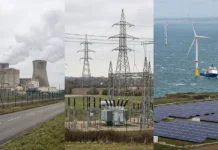
The UK government has unveiled plans to expand its clean energy sector, a move that includes creating 400,000 additional roles by 2030, bringing the total workforce in this field to 860,000. The initiative, announced on 19 October, is part of a wider national plan aimed at building up the UK’s renewable and low-carbon energy infrastructure. Since July 2024, private investment in the sector has already passed £50 billion ($61.04bn), funding projects from coastal areas to industrial centers and key energy corridors.

The plan to expand the clean energy workforce also sets out steps to make sure the workforce has the skills needed for these projects. Five new Technical Excellence Colleges will open, alongside pilot programmes in regions such as Pembrokeshire and Cheshire. A national programme is also in place for reskilling oil and gas workers, backed by £20 million ($24.41mn) in joint UK and Scottish government funding.

While the initiative naturally drives significant employment opportunities, offering salaries above the national average and supporting school leavers, military veterans, and career changers, the government presents these roles primarily as part of scaling the UK’s clean energy capacity.

Several key projects highlight the growth of the sector. The Sizewell C nuclear station will add to the country’s low-carbon power output, while the Acorn and Viking carbon capture and storage facilities boost the nation’s ability to cut emissions. Developments in the North West and Yorkshire will also strengthen the energy supply chain, and initiatives like the “energy skills passport” help people move into high-demand areas such as nuclear and grid infrastructure.

Investment is playing a central role in this clean energy workforce expansion. Iberdrola, through ScottishPower, has raised its UK investment to £24 billion ($29.3bn) between 2024 and 2028. EDF, Centrica, Rolls Royce, and Octopus Energy are pushing forward with projects in nuclear, solar, hydrogen, and wind.

Cross-border interconnectors with Ireland, Germany, and Scotland, including the £4.3 billion ($5.25bn) Eastern Green Link 2, are improving energy connectivity. Offshore wind manufacturing is also on the rise. SeAH Wind is committing £225 million ($274.7mn) in Teesside, backed by UK Export Finance. Altogether, these projects show the UK’s clean energy sector growing, with the planned workforce supporting that expansion.

Latest stories

Related stories

Hybrid Power Systems Combining Renewables Hydrogen and Dispatchable Generation

In-depth analysis of hybrid power system architecture integrating renewables, hydrogen storage and dispatchable generation to manage intermittency, enhance grid stability and achieve long-term decarbonisation targets.

Carbon Utilisation Pathways Creating New Value for Power Producers

Exploration of how captured carbon emissions are transformed into commercially viable products, from synthetic fuels to industrial feedstocks, improving project economics for power producers through carbon utilisation strategies.

Integrating Renewable Energy into Large-Scale Hydrogen Production

Examination of how solar, wind and hydro resources are integrated into large-scale hydrogen production, with focus on intermittency, optimisation and grid vs off-grid models.

Electrolysis Technologies Advancing the Future of Clean Power

Comparative analysis of alkaline, PEM and solid oxide electrolysers, their efficiency, cost trajectories and implications for renewable-driven hydrogen and clean power.

Subscribe

- Never miss a story with notifications

- Gain full access to our premium content

- Browse free from any location or device.

Media Packs

Expand Your Reach With Our Customized Solutions Empowering Your Campaigns To Maximize Your Reach & Drive Real Results!

– Access the Media Pack Now

– Book a Conference Call

Leave Message for Us to Get Back

Translate »