






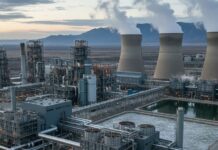













Complex industrial facilities are rarely simple energy consumers. A large plant can look like a small city: multiple substations, kilometres of cabling, steam and compressed air networks, high‑power motors, heat‑intensive unit operations, refrigeration, clean rooms, and critical safety systems that must run under all conditions. In such environments, energy is not only a cost line; it is a production variable that shapes quality, throughput, equipment health, and risk. This is why digital energy management is moving from “nice to have” dashboards into the operational core of modern industry. When done properly, digital energy management enables industrial facilities to monitor consumption with the fidelity of a financial ledger, optimise loads with the discipline of process control, and improve power efficiency through real‑time insights that operators can actually trust.
The key phrase digital energy management industrial facilities captures an important shift in mindset. The objective is not merely to collect data; it is to convert energy data into decisions decisions about how equipment is scheduled, how utilities are balanced, how peaks are avoided, and how maintenance is targeted. In other words, digital energy management is a practical tool for industrial competitiveness.
Why Energy Management Becomes Hard at Industrial Scale
Most facilities already know their monthly electricity bill. Many even know daily consumption. Yet complex sites struggle to answer basic operational questions in real time: Which line is driving the demand spike right now? Why did the power factor shift during a product changeover? How much compressed air is being wasted due to leaks and poor control? Which chiller is cycling inefficiently, and how does that affect production stability?
The difficulty comes from fragmentation. Energy data is distributed across metering systems, SCADA, building management systems, PLCs, historian databases, and vendor‑specific portals. Utilities such as steam, chilled water, and compressed air often have their own measurement gaps. Add production variability, batch scheduling, and aging equipment, and it becomes clear why “energy monitoring” can feel like trying to manage a fleet while only seeing the fuel gauge once a week.
Digital energy management addresses this fragmentation by building a common operational picture: a single version of the truth for industrial facilities power use high resolution, time aligned, and contextualised by production.
From Meters to Meaning: What Digital Energy Management Really Is
Digital energy management is best understood as a layered system.
A Measurement Layer That Is Designed, Not Accidental
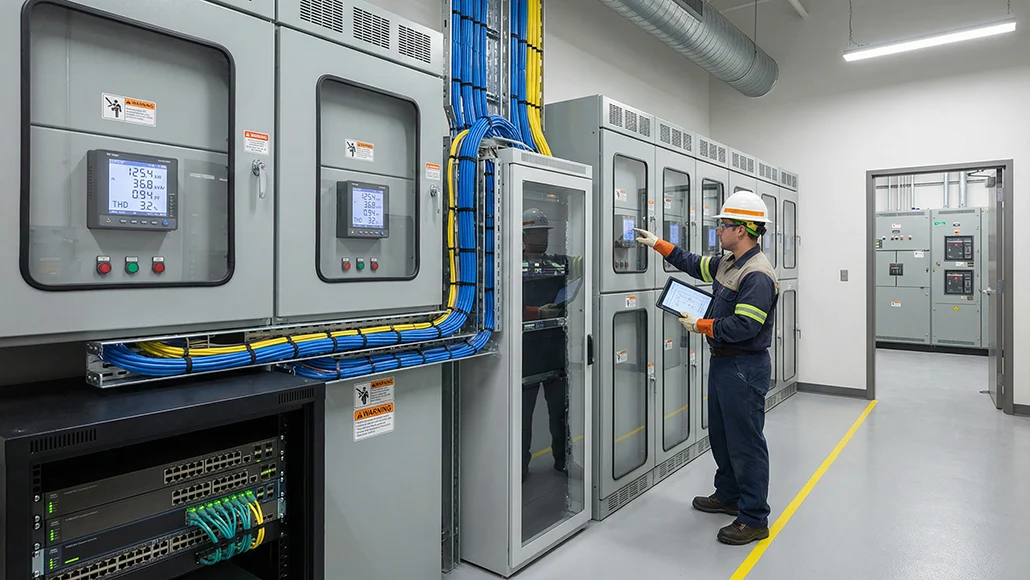
Good energy management begins with metering architecture. This includes revenue meters at incoming feeders, sub‑meters at major process areas, and targeted instrumentation for utilities. In many plants, the cheapest energy saving is better measurement in the right places. Without it, teams debate opinions instead of solving problems.
A Data Layer That Cleans, Aligns, and Contextualises
Industrial data is messy: missing values, time drift, scaling errors, and conflicting tag names are common. Smart energy systems rely on data pipelines that validate, time‑sync, and label data consistently. This is also where energy data is tied to production context batch IDs, product grades, line status, and shift patterns so anomalies can be explained instead of merely observed.
An Analytics Layer That Produces Actions
Analytics is where digital energy management earns its keep. The goal is not to create attractive charts but to generate alerts, recommended setpoint changes, scheduling suggestions, and maintenance triggers. When analytics is designed well, it gives operators a clear “why” alongside the “what,” reducing alert fatigue and building trust.
A Control and Workflow Layer That Makes Change Stick
This layer connects insights to action. It can include automated load shedding, peak shaving strategies, and energy‑aware scheduling. It also includes human workflows: approval steps, operator checklists, and daily energy performance reviews that embed energy discipline into routine operations.
Real-Time Energy Monitoring: The Foundation That Pays Back
Energy monitoring is often dismissed as passive, but in complex industrial facilities it can be transformative. High‑resolution monitoring reveals patterns that monthly bills hide: short peaks that trigger demand charges, weekend baseload that never drops, and frequent cycling that indicates misconfigured controls.
One of the most valuable outcomes is the ability to establish “energy signatures” for key assets and processes. A pump, a compressor, or a packaging line often has a predictable energy profile when healthy. Deviations from that profile can indicate fouling, wear, leaks, or control drift problems that may otherwise surface only after quality issues or failures occur. In this way, digital energy management becomes a form of operational early warning.
Optimising Loads Without Disrupting Production
The phrase “optimise loads” can sound vague until you translate it into everyday plant decisions. A facility might have multiple large motors that can be sequenced to avoid simultaneous starts. It might have redundant compressors where one unit is clearly less efficient at partial load. It may have a set of chillers where one should run as the lead under certain ambient conditions, while another performs better under different conditions.
Digital energy management supports these decisions with real-time guidance. Instead of relying on tribal knowledge, operators can see the efficiency impact of running Asset A versus Asset B, or the cost impact of shifting a noncritical operation by 30 minutes to avoid a peak.
Demand Management and Peak Avoidance
Many industrial electricity tariffs penalise peaks through demand charges. A small number of short peak events can dominate the bill. Digital energy management can forecast demand based on current operating conditions and provide early alerts before the peak happens. That enables gentle interventions sequencing, temporary setpoint shifts, deferrable loads rather than disruptive emergency actions.
Utility Network Optimisation
Compressed air, steam, and chilled water are often treated as fixed utilities, yet their efficiency varies dramatically with control settings and maintenance condition. Smart energy systems can identify leakage patterns in compressed air, steam trap failures in steam networks, or chiller short cycling that increases power draw. Because these utility systems serve many processes, improving them can raise overall power efficiency without touching the production recipe.
Industrial Automation and the Energy-Aware Plant
Industrial automation has long been about safety and consistency. The next evolution is energy awareness: controls that incorporate energy cost and carbon intensity as operating constraints alongside quality and throughput.
For example, a plant with flexible operations might schedule energy‑intensive steps when the grid is cleaner or when on‑site generation is available. A facility might use automated strategies to maintain power factor, reducing penalties and improving transformer utilisation. Advanced control can also coordinate multiple systems HVAC, refrigeration, process heating so they do not fight each other.
Importantly, automation does not replace human judgement; it supports it. Operators remain responsible for safety and production outcomes. Digital energy management succeeds when it augments operator decision‑making with clear, reliable information and reduces the cognitive load of monitoring dozens of variables.
Cybersecurity and Governance: The Price of Connectivity
As energy systems become more connected, cybersecurity becomes inseparable from reliability. Energy monitoring devices, gateways, and cloud platforms introduce new pathways into operational technology networks. Industrial facilities must therefore treat digital energy management as a governed program, not as a software procurement.
Good governance includes segmentation of networks, secure identity and access management, patch management, and clear vendor responsibilities. It also includes data governance: who owns the data, how it is retained, and how quality is maintained over time. Without governance, even strong analytics can erode as tags change, meters drift, or systems are modified during maintenance.
How Digital Energy Management Supports Decarbonisation
Many organisations first adopt digital energy management to cut costs, but the same infrastructure supports decarbonisation. Carbon accounting requires credible energy data. Energy performance improvements reduce total demand, making it easier to electrify or to integrate low‑carbon fuels. Real-time insights can also support reporting requirements and customer audits, particularly for companies selling into supply chains that require emissions transparency.
In practice, decarbonisation depends on a series of operational wins: reducing waste, tightening controls, catching drift, and building confidence that energy improvements are real. Digital energy management provides the measurement and verification backbone that makes those wins repeatable.
Implementation: What Separates Success from Shelf ware
A common failure mode is installing software that looks impressive but is not used after the first month. Avoiding that outcome requires a practical implementation approach.
First, define the decisions the system should support: peak management, compressor optimisation, energy KPIs by line, or verification of a specific savings project. Second, design the metering and data architecture around those decisions. Third, involve operations early so dashboards reflect how the plant runs, not how an external consultant imagines it runs. Finally, build routines: daily or weekly reviews, a clear escalation path for anomalies, and a way to turn insights into maintenance work orders or control changes.
The best programs treat energy like quality measured continuously, reviewed regularly, and improved systematically.
The Competitive Edge of Real-Time Insight
In a volatile energy environment, industrial facilities cannot afford to fly blind. Digital energy management industrial facilities is ultimately about control: control over costs, control over efficiency, control over resilience, and control over emissions. When energy becomes visible at the same resolution as production, plants gain options. They can respond faster, plan better, and run with fewer surprises.
The industrial sites that master digital energy management will not necessarily be the ones with the most sensors or the fanciest analytics. They will be the ones that build trust in the data, connect insights to operational decisions, and turn power efficiency into a daily habit rather than an annual project.