






























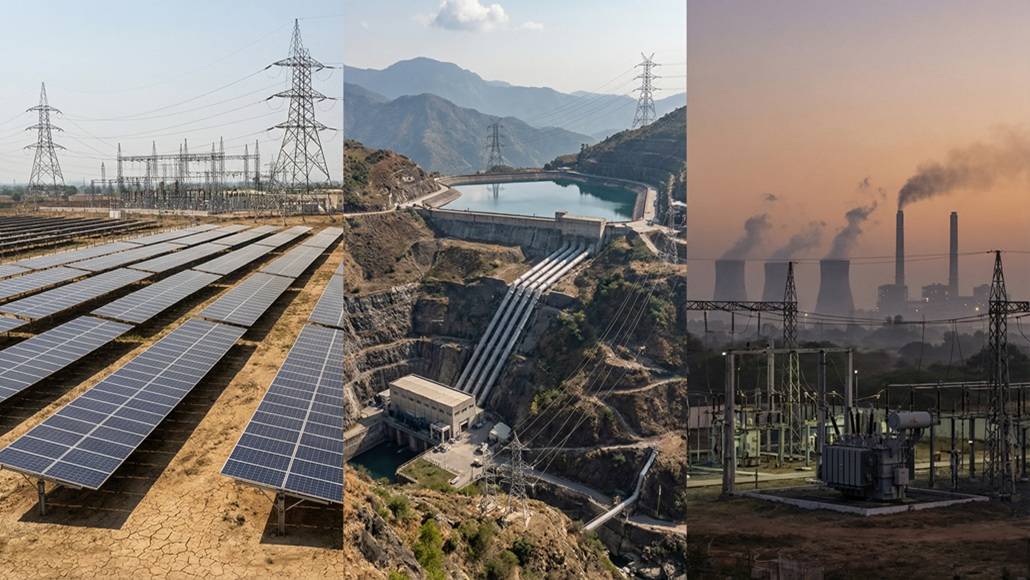
India’s renewable transition is rapidly shifting the economics of its power system. Solar capacity additions are accelerating as the country moves towards 500 GW of non-fossil capacity by 2030, but the next constraint is no longer generation capacity addition — it is time. As solar penetration rises, large volumes of power will be produced during midday while demand peaks after sunset. The infrastructure that can move electricity from one period to another will increasingly determine how the system operates. Pumped hydro storage is emerging as one of the few technologies capable of performing this role at scale.
The implications go beyond grid balancing. As renewable penetration rises, electricity prices will increasingly diverge by time of day. Midday prices will soften due to solar abundance, while evening prices will remain firm due to peak demand. Storage assets capture this spread by absorbing electricity when supply is plentiful and releasing it when demand is highest. In such a system, the economics of renewable power will no longer be
determined solely by the cost of generating electricity but by the cost of storing it. In effect, the marginal cost of storage could increasingly become the price setter for renewable electricity, meaning the long-term economics of solar power may ultimately be shaped as much by storage costs as by the price of solar panels themselves.
This shift also has implications for the role of coal in India’s power mix. Coal based thermal plants historically operated as baseload generators, but the rapid expansion of solar has already begun to erode their daytime utilisation. What keeps coal plants relevant today is their ability to ramp up generation during evening peak demand. If large-scale storage becomes widely available, this balancing role could increasingly shift from thermal
plants to storage infrastructure. In that scenario, decline of coal based thermal capacities in the power mix may be driven less by renewable capacity additions and more by the availability of storage capable of replacing coal’s flexibility function.
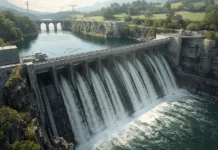
Pumped hydro stands out because of the scale at which it operates. Individual facilities often range between 1–2 GW and can store 8–10 hours of electricity, allowing them to absorb large volumes of surplus renewable power and release it during peak demand. In practice, this means pumped hydro does not operate merely as a project-
level storage asset serving a single generator or distribution utility. Instead, it functions at the level of the grid itself — absorbing surplus electricity from the broader system and releasing it when system-wide demand peaks. In effect, pumped hydro behaves less like a conventional power plant and more like energy infrastructure for the grid itself, effectively functioning as a large-scale energy reservoir — or a “national battery” — embedded within the power system.
India’s current pumped hydro capacity remains modest at around 7 GW, despite an estimated technical potential exceeding 170 GW. Yet the scale of storage required for the next phase of the energy transition is substantial. Projections by the Central Electricity Authority suggest the power system could require over 400 GWh of energy storage by the early 2030s to integrate planned renewable capacity. Much of this requirement will involve long-duration storage — precisely the segment where pumped hydro has structural advantages over most battery technologies. In recent years, several central agencies and state distribution utilities have issued competitive tenders to secure pumped-storage capacity under long-term contracts, reflecting the growing need for grid-scale storage to manage renewable variability and peak demand. Private developers are also pursuing large pumped storage projects as part of integrated renewable-energy portfolios.
Traditionally, pumped storage projects have followed a “storage-as-a-service” model, where utilities supply electricity during non-peak hours and procure it back during peak demand periods, however, going forward, arbitrage-based models may also emerge, whereby developers would integrate renewable generation with storage or procure electricity during lean price period and dispatch at higher prices during peak hours.
At scale, pumped hydro has the potential to alter the architecture of India’s electricity system. Instead of relying on thermal generation to absorb fluctuations in renewable output, the grid could increasingly depend on storage infrastructure that shifts renewable electricity across time. Pumped storage also has the potential to moderate the sharp price spikes that often occur during demand peaks by releasing stored electricity when the system is most constrained, thereby becoming the central balancing mechanism of the power market.
Pumped hydro, with its role in balancing the grid and enabling integration of renewable energy, may therefore emerge as one of the most significant technologies underpinning India’s energy transition.