






Close
MCE 2026
World Hydrogen & Carbon Americas

Germany and Norway commission NordLink power cable

Note* - All images used are for editorial and illustrative purposes only and may not originate from the original news provider or associated company.

Subscribe

- Never miss a story with notifications

- Gain full access to our premium content

- Browse free from any location or device.

Media Packs

Expand Your Reach With Our Customized Solutions Empowering Your Campaigns To Maximize Your Reach & Drive Real Results!

– Access the Media Pack Now

– Book a Conference Call

Leave Message for Us to Get Back

Related stories

Carbon Pricing and Its Long-Term Impact on Power Generation Economics

The implementation of robust carbon pricing mechanisms is fundamentally altering the financial landscape of the energy sector. By internalizing the environmental costs of emissions, these policies are shifting the competitive advantage from fossil fuels to low-carbon alternatives, reshaping investment strategies, and redefining the long-term economic viability of power generation technologies globally.

Repurposing Legacy Power Infrastructure for Low-Carbon Energy Networks

The transition to a sustainable energy future does not require the wholesale destruction of existing systems. By creatively repurposing legacy power infrastructure for low-carbon energy networks, nations can accelerate the deployment of hydrogen and carbon capture technologies while significantly reducing the capital expenditure and environmental impact associated with building entirely new transmission and storage systems.

Balancing Grid Reliability with Deep Power Sector Decarbonisation

Maintaining a constant and reliable flow of electricity while transitioning away from traditional fossil fuels represents one of the greatest engineering feats of the modern era. This analysis explores the strategic deployment of flexible assets and the integration of carbon-neutral firm power to ensure that sustainability goals do not compromise the fundamental stability of the global energy network.
- Advertisement -

Germany and Norway have officially commissioned NordLink, a 623km long high-voltage direct-current (HVDC) transmission system that will provide clean energy to Europe’s largest economy.

Norway’s power production is mostly based on hydropower. Because of the country’s large reservoirs, it can control its renewable energy generation while also helping to offset shortfalls in continuous supply from renewable energy power plants of Germany.

The NordLink cable is also expected to help Norway become a green energy hub.

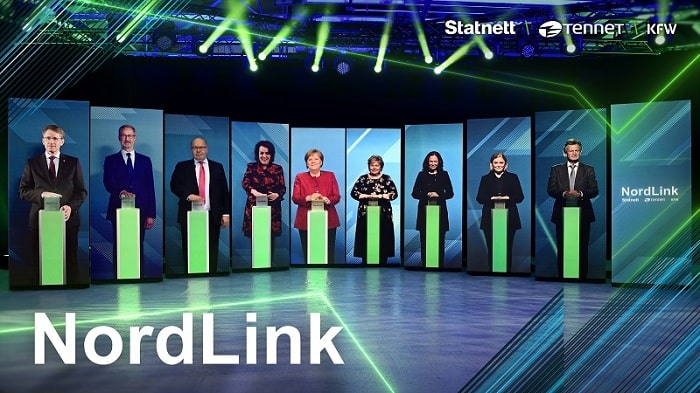
By jointly pressing a ‘digital button’, German Chancellor Angela Merkel and Norwegian Prime Minister Erna Solberg commissioned NordLink on 27 May.

Chancellor Merkel said: “With NordLink, Germany and Norway are moving even closer together.

“The first direct electricity bridge not only helps to stabilise energy prices in both countries, [but] NordLink is a milestone for sustainable energy supply and climate protection in Europe, because the focus is on exchanging renewable energy.”

Prime Minister Solberg said: “NordLink will be of great benefit to both Germany and Norway.

“It will contribute to a more efficient use of power resources and lay the foundations for further investments in renewable production. It will also contribute to our joint efforts in lowering emissions.

As Germany is phasing out coal power, NordLink will ease the transition from fossil to renewable power production. At the same time, it will provide access to energy when Norway needs it.”

The €1.8bn ($2.2bn) NordLink project was completed by a consortium of Norwegian transmission system operator Statnett and DC Nordseekabel. These two entities each hold a 50% stake in the consortium.

Transmission system operator TenneT and KfW each hold a 50% stake in DC Nordseekabel.

At 623km, NordLink is claimed to be the world’s longest subsea electrical interconnector. The system comes with a capacity of 1,400MW, enough to power 3.6 million households in Germany with renewable energy.

NordLink cables are connected to converter stations located at Wilster (Schleswig-Holstein) and Tonstad (southern Norway).

The two stations have been designed to convert the electricity from direct current (DC) to alternating current (AC) or vice versa.

Converted power is fed into the German and Norwegian AC transmission grids, which is later supplied to households and businesses.

Norway is currently connected to the Netherlands through the 700MW NordNed subsea interconnector. The country is connected to Denmark via the Skagerrak connection, which features four cables and a 1,700MW capacity.

Latest stories

Related stories

Carbon Pricing and Its Long-Term Impact on Power Generation Economics

The implementation of robust carbon pricing mechanisms is fundamentally altering the financial landscape of the energy sector. By internalizing the environmental costs of emissions, these policies are shifting the competitive advantage from fossil fuels to low-carbon alternatives, reshaping investment strategies, and redefining the long-term economic viability of power generation technologies globally.

Repurposing Legacy Power Infrastructure for Low-Carbon Energy Networks

The transition to a sustainable energy future does not require the wholesale destruction of existing systems. By creatively repurposing legacy power infrastructure for low-carbon energy networks, nations can accelerate the deployment of hydrogen and carbon capture technologies while significantly reducing the capital expenditure and environmental impact associated with building entirely new transmission and storage systems.

Balancing Grid Reliability with Deep Power Sector Decarbonisation

Maintaining a constant and reliable flow of electricity while transitioning away from traditional fossil fuels represents one of the greatest engineering feats of the modern era. This analysis explores the strategic deployment of flexible assets and the integration of carbon-neutral firm power to ensure that sustainability goals do not compromise the fundamental stability of the global energy network.

Risk Management Strategies in Emerging Low-Carbon Power Investments

Investing in the next generation of energy infrastructure requires a sophisticated understanding of the evolving risks associated with technological novelty and regulatory shifts. This discussion outlines the frameworks necessary to mitigate uncertainty in hydrogen and carbon capture projects, ensuring that capital is deployed effectively to achieve both financial returns and global sustainability targets.

Subscribe

- Never miss a story with notifications

- Gain full access to our premium content

- Browse free from any location or device.

Media Packs

Expand Your Reach With Our Customized Solutions Empowering Your Campaigns To Maximize Your Reach & Drive Real Results!

– Access the Media Pack Now

– Book a Conference Call

Leave Message for Us to Get Back

Translate »