





















Key Takeaways:
- Hybrid power systems combining renewables hydrogen dispatchable generation create integrated architectures where solar and wind provide bulk generation, hydrogen enables long-duration storage and flexibility through electrolysis and reconversion, while dispatchable assets like gas turbines or hydro ensure reliability during extended low-renewable periods, fundamentally transforming grid management from rigid supply-following to dynamic demand response.
- Operational synergies emerge when electrolysers act as flexible demand absorbing renewable curtailment, hydrogen storage provides seasonal balancing and dispatchable generation offers high-ramp capability, with digital optimisation maximising economic value through arbitrage, ancillary services and emissions reduction while minimising system costs compared to siloed renewable-plus-battery approaches.
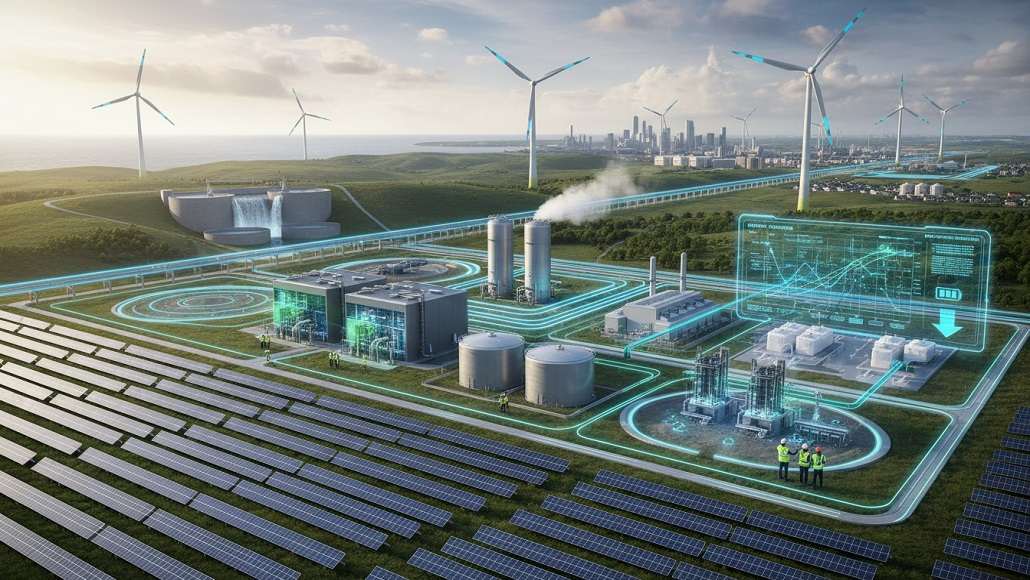
The transition to clean electricity systems dominated by variable renewable energy sources like solar and wind demands more than just installing more panels and turbines. Grid operators face the fundamental challenge of matching highly variable supply with inflexible demand patterns, exacerbated by seasonal fluctuations and extreme weather events. Hybrid power systems combining renewables hydrogen dispatchable generation offer a comprehensive solution, integrating multiple technologies to create resilient, flexible power architectures capable of delivering reliable clean electricity at scale.
These hybrid systems represent a departure from traditional power planning paradigms. Rather than treating renewables, storage and dispatchable generation as separate silos, hybrid approaches optimise their interactions through coordinated control, shared infrastructure and economic dispatch strategies. Electrolyser systems consume surplus renewable generation, hydrogen storage smooths temporal mismatches, and dispatchable assets fill extended gaps, creating a unified system far more capable than the sum of its parts.
Core components of hybrid power system architecture
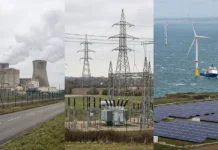
At the heart of hybrid power systems combining renewables hydrogen dispatchable generation lies a carefully balanced portfolio of technologies, each optimised for specific temporal and power scales. Variable renewables primarily solar photovoltaics and onshore/offshore wind provide the bulk of energy input, often at low marginal cost during favourable weather conditions. Their strength lies in capacity factors exceeding 30-50% in good locations, but output varies predictably on diurnal cycles and less predictably on hourly and seasonal scales.
Hydrogen systems bridge medium to long-duration storage gaps. Electrolyser stacks, particularly proton exchange membrane (PEM) technology with rapid response capability, convert excess renewable electricity into hydrogen precisely when curtailment would otherwise occur. Hydrogen storage ranging from above-ground tanks to geological formations decouples production from consumption temporally, enabling weeks or months of storage duration unattainable by batteries. Fuel cells or hydrogen-capable gas turbines then reconvert hydrogen back to electricity during high-demand periods or renewable droughts.
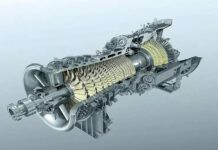
Dispatchable generation provides the final layer of reliability. Enhanced hydropower with pumped storage offers rapid response for daily balancing where geography permits. Hydrogen-ready combined cycle gas turbines provide multi-day flexibility with lower emissions through co-firing or full hydrogen operation. Advanced nuclear or geothermal baseload completes the portfolio in some configurations, ensuring minimum generation during prolonged low-renewable periods.
The genius of hybrid power systems combining renewables hydrogen dispatchable generation lies in their interdependence. Electrolyser flexibility substitutes partially for short-term battery storage by absorbing renewable variability, while hydrogen storage enables strategic operation of dispatchable assets only when truly needed, minimising fuel costs and emissions. Grid coupling amplifies these benefits, allowing hydrogen production to respond to wholesale electricity prices and ancillary service markets.
Operational synergies and flexibility mechanisms
Operational excellence defines successful hybrid power systems combining renewables hydrogen dispatchable generation. Advanced dispatch algorithms coordinate assets in real-time, maximising economic dispatch while maintaining grid stability. PEM electrolysers, with their 10-90% load range and rapid ramping, excel at consuming renewable curtailment during negative pricing hours, converting what would be wasted energy into storable hydrogen. Studies demonstrate this strategy reduces annual operating costs by 1.2-2.6% compared to constant-efficiency models or electrolyser-free scenarios.
Hydrogen storage provides the temporal bridge enabling this flexibility. Compressed gas storage handles daily cycling, liquid hydrogen extends to weekly durations, while salt caverns and depleted gas fields offer seasonal capacity at lowest cost per kWh. When paired with pipeline infrastructure, storage enables regional arbitrageproducing hydrogen cheaply in high-renewable areas for consumption elsewhere. Grid-connected electrolysers further enhance value by participating in frequency regulation and demand response, their flexible load profile substituting partially for dedicated battery capacity.
Dispatchable generation anchors system reliability. Pumped hydro responds in seconds for frequency control, gas turbines ramp in minutes for load following, and hydrogen fuel cells provide clean peaking capability. Critically, hybrid coordination avoids overbuild: hydrogen flexibility reduces required dispatchable capacity by optimising renewable utilisation, while dispatchable assets prevent hydrogen round-trip losses from compromising reliability during multi-day renewable lulls.
Economic analysis reveals profound synergies. Flexible electrolyser dispatch reduces wind curtailment by 20-50% in high-penetration scenarios, while hydrogen storage lowers battery requirements by providing long-duration service. Blue hydrogen productionnatural gas reforming with CCSadds further flexibility when green hydrogen capacity constraints arise, operating at high but constrained load factors (85-90%) to complement variable renewables without excessive electrolyser deployment during peak electricity prices.
Addressing renewable intermittency at multiple timescales
Intermittency challenges span multiple timescales, and hybrid power systems combining renewables hydrogen dispatchable generation address each systematically. Diurnal solar variability finds immediate response through intra-hour electrolyser ramping and short-term battery support. Daily wind fluctuations benefit from overnight hydrogen storage buffering. Seasonal “Dunkelflaute” periodsprolonged low wind and solar across Europedemand geological hydrogen reservoirs paired with dispatchable hydro or gas backup.
Grid coupling amplifies effectiveness. Islanded systems limit electrolyser deployment due to inflexible electricity supply, but grid-connected hybrids exploit wholesale price signals. During negative pricing from renewable oversupply, electrolysers maximise hydrogen production. During scarcity pricing, stored hydrogen reconversion or dispatchable generation activates. This arbitrage captures 10-20% additional value compared to fixed-operation strategies.
Technology flexibility proves decisive. High-flexibility blue hydrogen (10-90% capacity factor) complements green production, reducing electrolyser requirements by 30-60% in storage-constrained scenarios. Conversely, low-flexibility blue hydrogen (85-90% only) necessitates more electrolysers, inadvertently boosting green hydrogen share through economic substitution. Pipeline infrastructure further enhances mixing, enabling optimal regional allocation.
Economic dispatch and system optimisation
Optimisation algorithms underpin hybrid power systems combining renewables hydrogen dispatchable generation. Mixed-integer linear programming models minimise total system cost subject to reliability, emissions and flexibility constraints. Key variables include electrolyser dispatch, hydrogen injection/withdrawal, dispatchable commitment and renewable curtailment. Constraints encompass ramp rates, storage state-of-charge limits, grid transmission and minimum generation requirements.
Real-world deployments validate these models. Flexible PEM electrolyser strategies reduce grid operating costs by precisely matching part-load efficiency curves, accounting for hydrogen/oxygen crossover and auxiliary consumption. Wind curtailment drops significantly as electrolysers absorb surplus generation, while hydrogen output costs decline through optimal timing.
Revenue stacking enhances economics further. Hybrid assets monetise multiple services: energy arbitrage, capacity markets, frequency regulation, renewable integration credits and low-carbon hydrogen sales. Electrolyser demand response participation alone can yield $10-30/MWh additional value. When hydrogen storage enables battery substitution, system-wide costs fall despite higher upfront capital.
Implementation considerations and regional variations
Successful deployment of hybrid power systems combining renewables hydrogen dispatchable generation requires location-specific adaptation. Solar-rich deserts favour daytime electrolyser operation with evening fuel cell peaking. Windy offshore regions benefit from subsea hydrogen storage and platform-based dispatchables. Continental interiors leverage geological caverns for seasonal storage feeding urban demand centres.
Infrastructure sequencing matters. Early phases prioritise short-term storage and flexible electrolysers to maximise renewable utilisation. Mid-term builds geological storage and hydrogen-ready turbines. Long-term develops pipeline networks enabling regional hubs. Policy support accelerates adoption through capacity payments, hydrogen blending mandates and renewable integration incentives.
Challenges persist. Hydrogen round-trip efficiency (30-50%) lags batteries (85-95%), though long-duration capability compensates economically. Capital intensity demands patient capital and revenue certainty. Safety standards for hydrogen infrastructure require regulatory evolution. Yet pilot projects worldwide from Europe’s North Sea hubs to Australia’s solar-hydrogen valleys demonstrate technical feasibility and accelerating cost declines.
Strategic implications for power system evolution
Hybrid power systems combining renewables hydrogen dispatchable generation redefine clean electricity architecture. Rather than renewables plus backup, they create integrated ecosystems where each component amplifies others’ strengths. Intermittency transforms from liability to arbitrage opportunity. Curtailment becomes hydrogen feedstock. Dispatchables evolve from fossil bridge to hydrogen-enabled clean flexibility.
This evolution enables 80-100% renewable penetration with reliability exceeding today’s systems. Cost projections show hybrids competitive with fossil-plus-nuclear baselines by 2030 in favourable regions. Strategic early movers gain infrastructure advantages, skilled workforces and policy influence shaping hydrogen markets.
As climate imperatives intensify, hybrid power systems combining renewables hydrogen dispatchable generation emerge as the proven pathway to reliable clean electricity at scale, balancing technical sophistication with economic pragmatism.