






















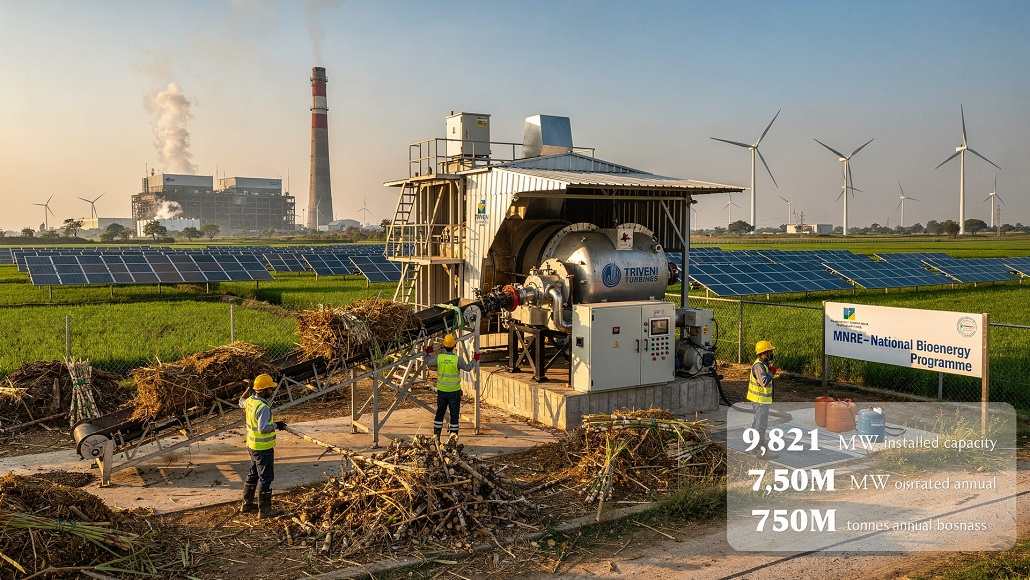

As India accelerates its transition away from fossil fuels, biomass once an underutilized part of the country’s energy mix, is gaining recognition as a scalable and practical solution to clean, decentralized power. Beyond addressing energy needs, biomass supports rural livelihoods, improves waste management and contributes to circular-economy objectives. Unlike other renewables sources such as Solar, Wind and Hydro, modern biomass technologies such as combustion, gasification, pellet-based co-firing and biogas provide firm, dispatchable power while transforming agricultural and forestry residues that would otherwise go to waste.
The Government has strengthened its commitment through initiatives like the National Bioenergy Programme, targeted incentives for briquette and pellet manufacturing and updated guidelines for biomass co-firing in coal plants. These measures reflect a systemic effort to mainstream bioenergy. Co-firing policies enable existing coal infrastructure to gradually decarbonize by blending sustainably produced biomass pellets thus lowering emissions without risking stranded assets. As a result, biomass is increasingly viewed not as a niche solution but is bridging India’s clean-energy transition.
According to the Ministry of New and Renewable Energy (MNRE), India’s cumulative installed capacity for biomass (bagasse) cogeneration stood at 9,821.32 MW as of August 31, 2025. This figure includes biomass power both bagasse cogeneration and non-bagasse cogeneration projects.
With over 25 GW potential, the Indian biomass sector can simultaneously address waste management, rural empowerment, and climate goals.
- Biomass plants contribute to industrial decarbonization while providing decentralized, reliable power in rural areas, aligning with India’s energy access and sustainability goals.
- The country generates approximately 750 million metric tonnes of biomass annually, with nearly 230 million tonnes identified as surplus — a significant feedstock opportunity for bioenergy production.
- Beyond electricity, the future of biomass lies in its integration with advanced technologies like heat pumps, Organic Rankine Cycle (ORC) and supercritical CO₂ turbines, which can enhance efficiency, enable hybrid systems and support industrial decarbonization.
- Policy frameworks such as the National Bioenergy Programme (2021–26) and revised co-firing guidelines are actively driving adoption and investment.
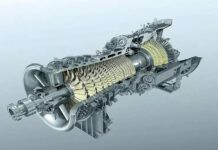
Triveni Turbines is at the forefront of this transformation, supplying efficient steam turbines for biomass plants while investing in next-generation thermal technologies that unlock new value streams.
With fiscal incentives, subsidies and a clear policy push, biomass is poised to play a critical role in India’s clean-energy portfolio. As a complementary solution alongside solar, wind and hydro, it is also a key enabler of the nation’s Net Zero 2070 commitment providing reliable green power while supporting sustainable growth.
Enabling Sustainable Growth Through Biomass Power Solutions:
- Biomass is increasingly used in industries like sugar, paper and food/agro-processing, where cogeneration delivers both electricity and process heat, enhancing energy efficiency and reducing emissions. Innovations such as pelletized biomass for co-firing improve feedstock density, lower transportation costs, and enable integration with larger thermal power plants.
- The utilization of locally available agricultural and forest residues has led to the establishment of Biomass-based Independent Power Plants (IPPs), enabling power generation closer to consumption points.
- Proven technologies such as direct combustion and bagasse-based cogeneration are already well established, particularly in sugar mills. The sugar industry offers a unique opportunity for clean energy integration through bagasse-based power plants. Bagasse, a by-product of sugarcane processing, can be used as a renewable fuel to generate electricity.
Navigating Challenges with In-house Steam Turbine Generators (STGs) – Driving Efficiency and Sustainability in Biomass based Cogeneration
- A leading client in the sugar industry faced the challenge of meeting increased power demands while complying with stringent environmental regulations. Triveni Turbines addressed this by delivering high-efficiency steam turbine solution designed to optimize the performance of their cogeneration plant. The company supplied a state-of-the-art 30 MWe Back-pressure Steam Turbine Generator (STG) with advanced reaction technology. The STG set was custom engineered to handle large volumetric steam flows, ensuring maximum power output, enhanced operational efficiency, and significant energy savings to the customer.
- A client which is one of the largest sugar groups in Central America with six sugar mills and a total milling capacity of 70,000 TCD, awarded Triveni Turbines a major order to install a 25 MWe Extraction Condensing Steam Turbine Generator (STG) for a new cogeneration plant in Nicaragua. Triveni Turbines successfully addressed challenges including high inlet steam parameters (63 bara and 510°C), substantial extraction steam flow and a tight delivery schedule through advanced design technology, ensuring enhanced efficiency, reliable operation across variable sugar season conditions and timely commissioning ahead of the crushing season.
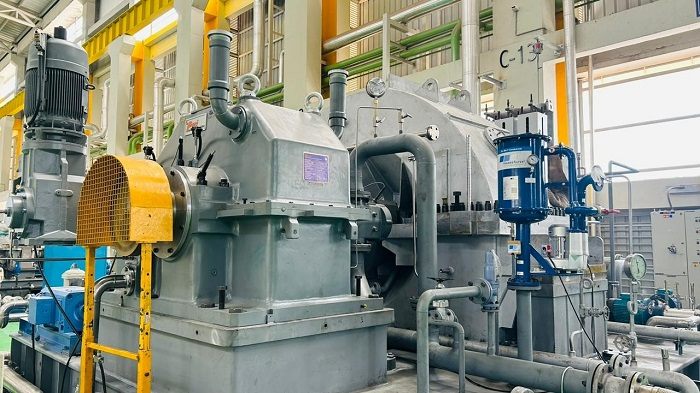
- Amidst stiff competition, Triveni Turbines secured an order for a 16 MWe Condensing Steam Turbine Generator (STG) in Turkey from a customer experiencing operational disruptions due to fluctuating biomass fuel availability including forest residues, paddy residues, canola stalks, sunflower stalks and sweet corn stalks which impacted boiler load and turbine performance. Triveni Turbines’ team of expertise addressed these challenges by engineering the steam turbine rotor, blades and controls for optimal efficiency and reduced maintenance at lower loads, enabling the plant to operate under varied fuel conditions by overloading the STG set where possible. This sets a benchmark, with the unit being delivered in just 7 months and successfully commissioned within 35 days during the pandemic.
Leveraging its state-of-the-art manufacturing facilities and global sourcing network, Triveni Turbines delivered the steam turbine on schedule, setting a new industry benchmark. Apart from manufacturing, the company offers a wide range of aftermarket services to its own turbines as well as for turbines and other rotating equipment such as compressors, rotors, from other makes, supported by its team of highly qualified and experienced service engineers.
Expanding the Horizon: Heat Pumps & Biomass
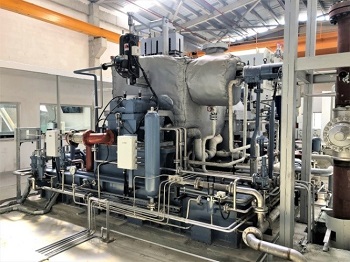
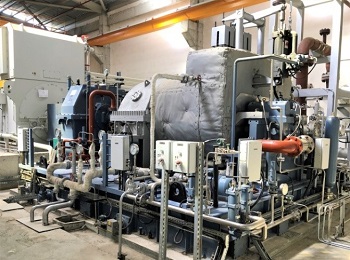
While biomass is burned in a boiler to produce steam and the steam turbines convert steam into electricity, heat pumps can further enhance the efficiency of biomass-based systems by recovering low-grade heat and upgrading it for industrial or district heating applications.
Industrial Decarbonization: Many industries need process heat at 70–200 °C. Biomass boilers + heat pumps can deliver this more efficiently and with lower emissions.
District Heating & Cooling: In colder regions, biomass heat integrated with large-scale heat pumps can provide sustainable heating to communities.
Improved Energy Efficiency: Heat pumps can recover condenser or flue-gas waste heat from biomass plants, reducing overall fuel consumption.
Hybrid Flexibility: Systems can switch between electricity generation and heat supply depending on demand, ensuring better resource utilization.
From biomass to geothermal, Triveni Turbines provides comprehensive power plant solutions with optimized design efficiency. Each steam turbine is custom-engineered to meet the specific customer requirements aligning with plant load, boiler load and future power-to-steam ratios. The Company also delivers complete turnkey solutions for turbo-generator operations, including the supply of steam turbines, steam piping, firefighting systems and electrical cabling.
Next-Generation Innovations
Alongside heat pumps, Triveni Turbines is investing in advanced energy cycles such as:
Organic Rankine Cycle (ORC): Converts low-temperature biomass heat into electricity, ideal for small-scale and decentralized plants.
Supercritical CO₂ Systems: High-efficiency cycles with compact turbines, well-suited for hybrid renewables and future energy storage applications.
Biomass is evolving from a renewable fuel for electricity into a key enabler of integrated clean energy systems
As the world transitions towards cleaner energy sources, Triveni Turbines continues to demonstrate its commitment towards sustainable steam turbine solutions. Through its expertise in heat pumps, ORC and CO₂-based systems, Triveni Turbines is shaping a future where biomass power evolves beyond electricity generation, delivering sustainable heat, improved energy efficiency and enhanced grid flexibility.