





















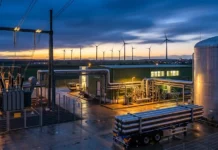








The transformation of urban electricity systems constitutes one of the most consequential infrastructure developments of the 21st century, yet receives remarkably limited attention in public discourse or academic literature. Cities, representing 60-70% of global economic output and 55-60% of global population, are rapidly transitioning to electrified transport, heating, and digital services. This transition, while essential for decarbonization, fundamentally alters electricity demand patterns and total demand magnitude. Urban electricity systems designed to serve 1,000-2,000 peak megawatts per million residents in 2020 must accommodate 1,500-3,000 peak megawatts per million residents by 2045 a 50-100% demand increase concentrated in geographic areas already experiencing land and environmental constraints limiting infrastructure expansion.
The Cumulative Impact of Urban Electrification
Traditional urban electricity demand models projected modest growth based on population expansion and incremental efficiency improvements in existing appliances. A city of 2 million residents in 2020, consuming roughly 4,000-5,000 GWh of electricity annually (equivalent to 500-600 average megawatts of constant load), was expected to grow to 4,200-5,400 GWh by 2045 reflecting perhaps 0.5-1.0% annual demand growth. This projection assumed continued natural gas heating (35-40% of residential energy), oil-based transport (virtually 100% of vehicles), and modest digital infrastructure (5-10% of total electricity).
Contemporary electrification scenarios reveal a fundamentally different future. Electric vehicles, deployed to 70-80% of vehicle fleets within 25 years, add roughly 1.5-2.5 GW of peak demand per 2 million residents (assuming roughly 1.5 million vehicles requiring average 500 W continuous power or 2-3 kW peak simultaneous charging). Heat pumps, installed in 50-70% of buildings requiring space heating, add 1-1.5 GW of peak demand (representing roughly 30-40% of buildings with 10 kW average heat pump capacity). Data centers and digital infrastructure computing, cloud storage, telecommunications add 0.5-1.5 GW peak demand in growing concentrations in major urban centers. Cumulative demand growth reaches 3-5.5 GW peak power, or 15-30% above baseline 2020 levels.
This peak demand increase, occurring during specific hours, drives infrastructure requirements. If peak demand in a city rises from 2,000 MW to 2,500-3,500 MW, utilities must develop generation, transmission, and distribution capacity to reliably serve this new peak. Additionally, the timing of new loads creates operational challenges: electric vehicle charging peaks in early evening when people return home; heat pump heating peaks during winter cold snaps when outdoor temperature plummets; data center operation intensifies during summer months when cooling demands peak. These overlapping demand peaks strain existing infrastructure designed for different temporal patterns and force grid operators to maintain higher spinning reserve (standby generation capacity) and storage resources.
Infrastructure Expansion Requirements and Constraints
Quantifying required infrastructure expansion reveals the magnitude of challenge. A typical 2 million-resident metropolitan area requires roughly 10-15 GW of total generation capacity (allowing for peak demand, transmission losses, and reserves). Adding 3-5 GW to serve electrification means increasing generation capacity 20-35% equivalent to constructing 3-5 large natural gas plants, 2-3 major offshore wind farms, or 40-50 GW of distributed solar. The capital cost of such generation expansion alone reaches $15-30 billion depending on technology mix.
Equally demanding are transmission and distribution infrastructure requirements. Electricity flows from generation sites (often remote from urban demand centers due to renewable resource locations) across transmission networks (high-voltage lines carrying electricity across regions) to distribution networks (lower-voltage systems delivering power to individual customers). Urban electrification intensifies both transmission and distribution stress.
Transmission line expansion is particularly constrained: routing new transmission lines through developed areas requires either acquiring rights-of-way (expensive and politically contentious), utilizing existing corridors (saturated in most urban regions), or deploying underground cables (5-10 times more expensive than overhead lines and technically challenging in congested areas). Permitting and construction timelines for major transmission projects commonly span 10-15 years; projects in environmentally sensitive areas or areas opposing visual impacts face 15-20 year timelines. This extended timeline creates a critical planning challenge: generation and transmission capacity requirements are determined 20-30 years in advance, requiring infrastructure investment decisions based on forecasts of electrification rates, economic growth, and technology adoption that are highly uncertain.
Distribution network reinforcement, particularly in dense urban areas where distribution infrastructure is already constrained, requires coordination with other infrastructure investments. Adding transformer capacity in a dense urban neighborhood often requires street excavation, coordination with water, sewer, telecommunications, and other utilities, and managing traffic during construction. A single distribution transformer upgrade in downtown areas can cost $500,000-2 million and require 6-12 months of coordination. Upgrading distribution networks to support electrification in major cities requires tens of thousands of such interventions, with total cost exceeding $100-200 billion across major metropolitan regions.
Temporal Demand Mismatch and Operational Complexity
Urban electrification creates operational complexity from mismatch between demand timing and available generation. Electric vehicle charging typically occurs in early evening (6-10 PM) as people return home, coinciding with cooling demands in summer or heating demands in winter, creating compound peaks. Data center operations, while more flexible than transport or heating, intensify during daytime business hours when cooling demands peak due to high ambient temperatures. Renewable generation (solar and wind) follows weather patterns solar peaks midday, wind patterns are unpredictable and often increase at night creating potential mismatch with demand peaks.
A hot summer afternoon in a major city might experience: (1) air conditioning demand peaking from industrial/commercial cooling; (2) solar generation declining as afternoon progresses; (3) electric vehicle charging beginning as people return from work; (4) data center cooling demands peaking. Managing such conditions requires either (a) maintaining excess generation capacity, (b) deploying storage resources providing load-shifting capability, or (c) managing demand through dynamic pricing and load control or ideally, all three.
Grid operators increasingly employ dynamic demand response, using price signals and direct control to shift flexible loads. Setting electricity prices $200-300 per megawatt-hour during peak demand hours incentivizes load shifting customers delay vehicle charging by 1-2 hours, adjust thermostat setpoints, or activate demand response mechanisms. Aggregated across a city, this demand shifting of 10-20% can substantially reduce peak demand and relieve grid stress. However, this approach only works if customers have flexibility: vehicles with full battery charge can wait for cheaper off-peak charging; buildings with thermal inertia can briefly reduce heating/cooling; data centers can shift non-time-critical computation. Demand lacking flexibility essential hospitals, emergency services, critical infrastructure must be supplied regardless of grid stress.
Distributed Energy Resource Integration and Urban Grid Modernization
A fundamental shift in urban electricity system architecture is occurring: from centralized generation with unidirectional power flow to distributed generation with bidirectional power flows and sophisticated control systems. Rooftop solar installations in buildings, ranging from small residential (3-10 kW) to large commercial (100+ kW) systems, generate approximately 200-300 average watts per capita in a sunny climate, representing 15-25% of total per-capita electricity consumption. Battery energy storage co-located with solar systems can shift generated electricity from midday excess (when solar output exceeds demand) to evening peaks (when demand exceeds local supply and solar output declines).
Electric vehicles, particularly when equipped with bidirectional charging capability (vehicle-to-grid or V2G), represent distributed storage: a vehicle with 60 kWh battery capacity charged during daytime solar abundance can discharge 20-30 kWh during evening peaks, providing both power supply and frequency stabilization. Aggregated across 1-2 million electric vehicles in a major city, this represents 20-60 GWh of distributed storage comparable to or exceeding centralized battery storage in many regions, yet distributed throughout urban areas where it simultaneously supports individual transportation and grid reliability.
Smart building controls enable demand-side flexibility: learning occupancy patterns, weather forecasts, and electricity prices, building management systems optimize heating/cooling setpoints, equipment operation timing, and charging patterns to minimize costs while maintaining comfort. A large office building can reduce peak demand by 20-30% through such controls equivalent to the output of a large power plant’s worth of equivalent peak capacity in aggregate across thousands of buildings.
The integration challenge lies in controlling this distributed complexity. Traditional utility control systems operated roughly 100-1,000 generating facilities producing predictable power flows. Modern systems operate millions of distributed generation and storage devices with unpredictable output, flexible consumption patterns, and autonomous control logic. Ensuring grid stability requires coordination protocols, communication networks, and control algorithms far more sophisticated than traditional utility systems. Standards-based approaches (OpenADR, IEC 61850 extensions, developing “internet of power” protocols) enable vendor-independent interoperability; blockchain-based energy trading platforms are emerging; machine learning algorithms predict and optimize grid conditions with increasing sophistication.
Planning and Investment Challenges
Utilities face genuine uncertainty in planning urban electrification infrastructure: How rapidly will electric vehicles penetrate? (Forecasts range from 40% to 80% by 2040.) How will heat pump deployment proceed? (Constrained by retrofit costs, existing boiler lifespans, grid capacity availability.) Will distributed generation scale sufficient to reduce central generation needs? (Dependent on rooftop space, building envelope quality, technology costs.) Faced with this uncertainty, utilities must make large capital investments with 20-30 year payback periods and 40-50 year asset lifespans.
Traditional regulatory approaches allowing full cost recovery of infrastructure investments incentivize over-building: a utility facing uncertain growth will rationally build excess capacity, knowing costs will be recovered through customer rates. This approach, rational for individual utilities, creates economically wasteful over-investment in aggregate. Alternatively, utilities facing regulatory uncertainty about cost recovery may under-invest, creating reliability risks and customer dissatisfaction.
Progressive jurisdictions are implementing demand-side management policies incentivizing customer-owned distributed generation and storage rather than relying exclusively on utility infrastructure expansion. Policies paying customers fairly for electricity exported to grid from rooftop solar; reducing interconnection barriers; allowing third parties to aggregate small distributed resources for grid services these policies create markets for demand-side resources, reducing infrastructure expansion requirements.
Case Studies in Urban Electrification
Copenhagen, Denmark, pursuing aggressive electrification and renewable energy integration, illustrates the infrastructure planning challenge. The city targeted 100% district heating from renewable sources by 2035, combined with 80% renewable electricity supply. Achieving this required major investment: expansion of heat pump capacity (converting thermal demand to electricity), large-scale district heating thermal storage (enabling renewable thermal integration), offshore wind generation capacity (providing renewable electricity), and reinforcement of distribution networks. Capital investment exceeded $5-10 billion over 20 years, roughly $2,500-5,000 per resident substantial but justified by renewable energy transition benefits and avoided fossil fuel costs.
Austin, Texas, experiencing rapid population growth (3.5% annual, double the U.S. average), faces electricity demand growth exceeding national trends. Electrification is occurring rapidly: electric vehicles represent 8-10% of new vehicle sales (double the U.S. average); heat pump installations are accelerating in the region. The local utility (Austin Energy) projects electricity demand growth of 2.5-3.5% annually through 2040, higher than historical 1.5-2% growth. Meeting this growth requires generation capacity additions (wind and solar supplemented by some natural gas to ensure reliability), transmission reinforcement (particularly challenging in congested areas), and distribution network modernization. The capital plan exceeds $20 billion over 20 years, or roughly 1.2% of the regional economy annually invested in electricity infrastructure.
Seoul, South Korea, implementing rapid urban heat pump deployment as part of carbon neutrality targets, confronted grid stress when electric heating demands collided with cooling demands during seasonal transitions. Peaks approaching full generation capacity necessitated emergency demand response measures and accelerated storage deployment. Subsequent infrastructure planning incorporated greater distribution system flexibility, demand response capabilities, and distributed generation integration.
The Path Forward: Infrastructure Investment and Grid Modernization
Urban electrification driving 30-50% electricity demand growth is inevitable across developed economies and increasingly in developing economies as living standards improve. Meeting this demand while maintaining reliability and minimizing environmental impact requires coordinated infrastructure investment, demand management, and distributed resource integration at unprecedented scale.
Specific priority areas emerge:
- Accelerating transmission and distribution network modernization, using regulatory mechanisms to ensure adequate investment despite uncertain growth.
- Deploying demand-side management systems enabling demand response, distributed generation integration, and customer flexibility.
- Expanding renewable generation capacity and interconnecting it to urban areas through transmission reinforcement.
- Integrating distributed storage (vehicles, rooftop batteries, thermal storage) as grid resources through updated control protocols and market mechanisms.
- Coordinating urban planning with energy infrastructure planning, ensuring land use decisions (transport corridors, building siting, industrial placement) align with electricity infrastructure requirements.
The magnitude of required investment $500 billion to $1 trillion across major urban economies over 20 years is substantial but comparable to other major infrastructure transitions in human history: electrification in the early 20th century, interstate highway construction in the mid-20th century, and digital telecommunications infrastructure in the late 20th century. Successfully executing this transition requires recognition that electricity infrastructure is not autonomous but embedded in broader urban development patterns, economic systems, and social structures. Infrastructure planning, conducted collaboratively among utilities, city planners, transportation authorities, and communities, creates outcomes vastly superior to isolated utility planning. The cities and regions that advance such coordinated planning will capture the economic and environmental benefits of successful urban electrification; those that delay or fragment planning will face costly retrofit and reliability challenges.