





















The global energy transition is characterized by a fundamental shift in the physical nature of electricity generation. For over a century, the stability of the electrical grid was a byproduct of the massive physical inertia found in the spinning rotors of coal, gas, and nuclear power plants. These synchronous machines naturally resisted changes in frequency, providing a crucial buffer against disturbances. However, as we move toward a grid dominated by inverter-based resources (IBRs) such as solar photovoltaics and wind turbines, this “natural” stability is evaporating. In this new landscape, Grid-Forming Technologies System Stability becomes the primary focus for engineers tasked with maintaining a reliable power supply. Unlike traditional grid-following inverters that require a stable grid signal to operate, grid-forming technologies act as independent stabilizing agents, capable of establishing and maintaining the grid’s voltage and frequency.
The Challenge of Low-Inertia Power Systems
The decline of traditional mechanical inertia has led to the rise of low-inertia power systems. In these systems, a sudden loss of a generator or a large load can cause the grid frequency to drop much faster than in the past. This rapid rate of change of frequency (RoCoF) can trigger cascading failures if not addressed within milliseconds. This is where grid-forming inverters distinguish themselves. While conventional grid-following inverters adjust their output based on the grid’s existing parameters, grid-forming units are designed to behave like a voltage source. They provide an immediate, autonomous response to grid imbalances, effectively mimicking the inertial behavior of a synchronous machine through software and power electronics.
This capability is often referred to as synthetic inertia. By injecting or absorbing power almost instantaneously, these systems provide a critical first line of defense during frequency events. The implementation of Grid-Forming Technologies System Stability strategies allows grid operators to maintain frequency stability even as the proportion of renewable energy approaches 100%. This is not merely an incremental improvement; it is a fundamental redesign of how power system stability is managed at the edge of the network.
Autonomous Voltage Control and Resilient Grid Operation
Beyond frequency, voltage stability is a major concern in modern grids. Traditional systems relied on the strong short-circuit currents of central plants to maintain voltage levels during faults. Inverter-based resources, by their nature, have limited current injection capabilities. To address this, grid-forming technologies incorporate advanced voltage control solutions that allow them to support the local grid voltage during both steady-state and transient conditions. This resilient grid operation is essential for preventing voltage collapses, particularly in remote areas or microgrids where the connection to the main grid is weak or non-existent.
In a grid-forming configuration, the inverter uses internal control loops to set the voltage magnitude and phase angle. This allows the device to respond to local load changes without waiting for a signal from a central controller. This decentralized approach to power system stability is far more robust against communication failures or cyber-attacks, as each grid-forming node possesses the intelligence to maintain its own local stability. As we deploy more of these units, the grid transforms from a centralized, vulnerable system into a mesh of self-sustaining nodes.
The Evolution of Inverter-Based Resources (IBRs)
The transition from grid-following to grid-forming is perhaps the most significant milestone in the history of power electronics. For years, the industry was focused on “fitting in” designing IBRs that could safely disconnect during a fault to protect themselves. Today, the focus is on “staying in” and helping the grid recover. Grid-forming technologies system stability requirements are now being integrated into grid codes worldwide, mandating that new renewable projects provide the services that were once the sole province of fossil fuel plants.
Black-Start Capabilities and Microgrid Independence
One of the most impressive feats of grid-forming technologies is their ability to perform a “black-start.” Traditionally, restarting a grid after a total blackout required a large power plant with an independent starter motor. Grid-forming inverters can achieve this using the stored energy in batteries. By establishing a voltage and frequency reference in a dark grid, they can synchronize other generators and loads, gradually building the network back up. This capability is a game-changer for disaster recovery and resilient grid operation in islanded communities.
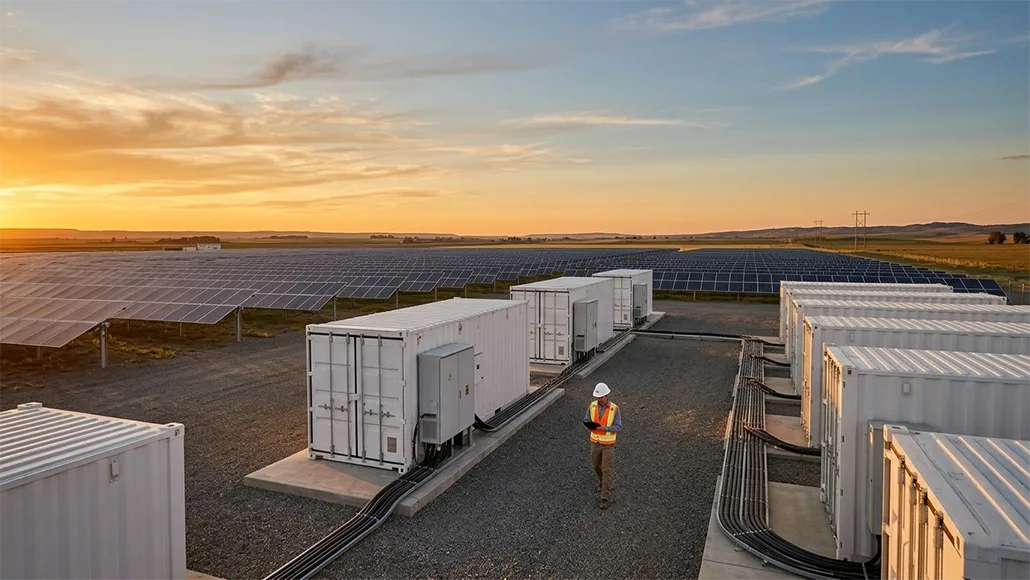
In microgrid applications, grid-forming technologies are already the standard. They allow solar-plus-storage systems to operate indefinitely without a connection to the main utility. During a grid outage, the grid-forming inverter seamlessly transitions to islanded mode, maintaining frequency stability for local residents. This level of autonomy is the ultimate expression of Grid-Forming Technologies System Stability, proving that a renewable-based grid can be just as reliable, if not more so, than a fossil-fuel-based one.
Technical Barriers and Future Scaling
Despite the success in microgrids, scaling grid-forming technologies to the level of the continental power system presents unique challenges. The primary issue is the coordination between thousands of decentralized grid-forming units. If two units respond to a disturbance in conflicting ways, they could theoretically exacerbate the problem rather than solve it. Researchers are currently developing sophisticated “droop control” and “virtual synchronous machine” algorithms to ensure that all grid-forming nodes work in harmony.
Furthermore, the economic framework for these services is still evolving. Grid-forming technologies require oversized inverters and larger energy storage reserves, which increases the initial capital cost. For these technologies to be widely adopted, market mechanisms must be in place to compensate developers for the “inertia” and “system strength” they provide. Recognizing Grid-Forming Technologies System Stability as a valuable market product is a crucial step in the energy transition.
Conclusion: The Future of Power System Stability
We are witnessing the end of the mechanical era of the power grid and the beginning of the digital era. Grid-forming technologies represent the intelligence that will replace the brute force of spinning iron. By providing synthetic inertia, autonomous voltage control, and black-start capabilities, these systems are making a high-renewable future a physical reality. The integration of grid-forming technologies system stability measures is the final piece of the puzzle for a sustainable energy roadmap. As we continue to refine these controls and scale their deployment, we are building a grid that is more flexible, more resilient, and perfectly adapted to the needs of the 21st century.
Key Takeaways
1. Synthetic Inertia and Frequency Control: Grid-forming technologies provide a vital replacement for the physical inertia lost as fossil fuel plants retire. By using high-speed power electronics to inject power in milliseconds, these systems maintain frequency stability in low-inertia power systems, preventing cascading failures and ensuring that the grid can handle high levels of renewable penetration.
2. Autonomous Resilience and Black-Start: One of the most significant benefits of grid-forming inverters is their ability to operate independently of a main grid signal. This enables resilient grid operation during outages, provides autonomous voltage control, and allows for black-start capabilities, where renewable assets can restart the power grid without the need for traditional external power sources.