




















In power intensive industries, energy is rarely “used” once. It is converted, transferred, and far too often discarded. A furnace, kiln, turbine, or reactor might do its primary job well, yet release a steady stream of hot exhaust, warm cooling water, or intermittent flue gas that carries valuable energy out of the process. For decades, many plants accepted these losses as the cost of doing business, especially when fuel was cheap and carbon was not priced. That era is ending. Today, advanced heat recovery systems are becoming one of the most practical ways to deliver immediate improvements in industrial power efficiency while supporting long-term decarbonisation goals.
The key phrase advanced heat recovery systems power industries captures a simple truth: industries with the highest energy intensity also have the largest opportunity to reclaim energy that is currently wasted. The challenge is not identifying waste heat it is engineering a recovery solution that fits the temperature, cleanliness, variability, and integration constraints of the site.
Why Waste Heat is Still Wasted
If waste heat recovery is such a clear opportunity, why is it not universal? The reasons are usually practical rather than ideological. Waste heat can be low temperature, making it hard to use. It can be dirty, corrosive, or particulate-laden, which increases maintenance and fouling risk. It can be intermittent, tied to batch operations or variable production schedules. And, crucially, it can be located far from where useful heat is needed, turning a thermodynamic opportunity into a piping and layout problem.
Advanced heat recovery systems aim to address these realities. They combine better heat exchanger designs, smarter controls, improved materials, and integrated process modelling so recovery is not only technically possible, but operationally reliable.
The First Step: Characterising the Heat Source
Every successful project begins with a clear profile of the waste heat stream. Temperature matters most, but it is not the only variable.
Temperature and Exergy
High-temperature exhaust (for example from glass furnaces, cement kilns, or gas turbines) can often support steam generation or power production. Low-grade heat (from cooling water, compressor aftercoolers, or low-temperature flue gas) is better suited to preheating, hot water networks, or heat pumps. Engineers also consider exergy the “useful” fraction of energy because a 90°C stream cannot do the same work as a 450°C stream even if the total heat content is large.
Cleanliness and Fouling
Flue gas from metallurgical or cement operations may carry dust, alkalis, chlorides, or sulfur compounds. Recovery equipment must handle deposition and corrosion. In many cases, the best solution is not an ultra-efficient heat exchanger that fouls quickly, but a robust design that can be cleaned easily and maintains performance over time.
Variability and Control
A waste heat source may vary with production rate, fuel mix, or ambient conditions. Advanced systems use controls that protect downstream equipment from thermal shock and maintain stable output, whether that output is steam pressure, hot water temperature, or electricity generation.
Core Technologies in Modern Heat Recovery Systems
Heat recovery systems range from straightforward to sophisticated, and the best option depends on what the plant needs.
Waste Heat Boilers and HRSGs
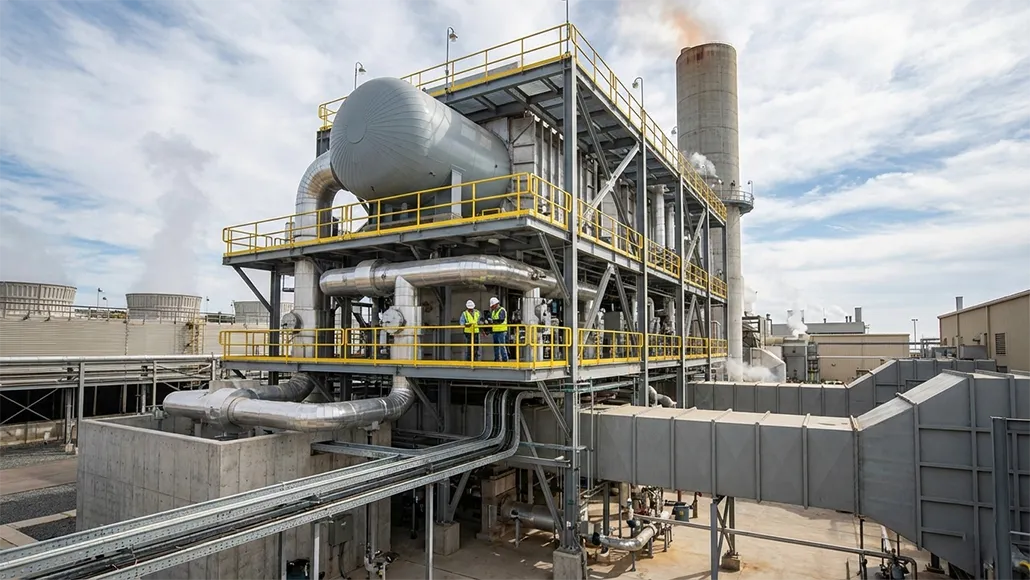
In high-temperature applications, waste heat boilers and heat recovery steam generators (HRSGs) are proven workhorses. They capture energy from hot exhaust to produce steam, which can be used directly in processes or expanded through turbines for power generation. Modern HRSG designs are more compact, better optimised for specific exhaust compositions, and increasingly integrated with advanced monitoring to reduce unplanned downtime.
Economisers, Air Preheaters, and Regenerators
For combustion systems, preheating combustion air or feedwater can deliver meaningful fuel savings with relatively modest capital cost. Regenerative burners and regenerators, common in glass and some steel applications, store heat in a medium and transfer it to incoming air, enabling high efficiency at very high temperatures.
Recuperators and High-Temperature Heat Exchangers
Recuperators transfer heat continuously from exhaust to incoming air or process streams. Advanced materials and designs such as ceramic heat exchangers or corrosion-resistant alloys extend the temperature range and durability. In aggressive environments, careful material selection can determine whether a project delivers value for years or becomes a maintenance headache.
Organic Rankine Cycle (ORC) and Low-Temperature Power Generation
When waste heat is not hot enough for steam power cycles, ORC systems can generate electricity using working fluids with lower boiling points. ORC is particularly relevant for medium-temperature waste heat in industries like cement, chemicals, biomass processing, and some manufacturing sectors. The power output may not be massive, but the value can be strong when electricity is expensive or when the plant wants on-site generation without additional fuel.
Industrial Heat Pumps and Heat Upgrading
Heat pumps are becoming a central part of advanced heat recovery systems because they can “upgrade” low-grade heat to a higher useful temperature. This expands the amount of recoverable energy on a site, particularly in facilities with large cooling loads. Combining heat pumps with waste heat streams often delivers both efficiency gains and improved site thermal balance.
Integration: Where Most Projects Succeed or Fail
Waste heat utilisation is fundamentally an integration problem. Capturing heat is relatively easy; using it in a way that does not disrupt production is harder.
One integration strategy is preheating. Preheating boiler feedwater, process water, combustion air, or raw materials can absorb variable heat without requiring perfectly stable conditions. Another strategy is creating a site-wide thermal network, distributing hot water or steam to multiple users, which increases flexibility and improves the economics by raising utilisation.
In some plants, the most valuable integration is not within one facility but across an industrial cluster. A power plant, refinery, and chemical plant located near each other can sometimes share heat, steam, or utilities. These “industrial symbiosis” projects require coordination and contracts, but they can unlock scale that individual plants cannot achieve alone.
Digital Monitoring and Performance Assurance
One of the more subtle shifts in recent years is the role of digital tools in thermal energy recovery. Operators want performance certainty. Advanced systems increasingly include continuous monitoring of temperatures, pressures, flows, and fouling indicators. With this data, plants can detect degradation early, schedule cleaning efficiently, and verify savings.
Performance assurance matters because waste heat projects can be judged harshly if they underperform. A heat exchanger that loses efficiency due to fouling can silently erode the business case. Instrumentation and analytics turn heat recovery from a “set and forget” asset into a managed system.
Economics: Beyond Fuel Savings
The simplest business case is fuel savings: recover heat, burn less fuel. But modern economics are broader. Heat recovery can reduce peak boiler loads, extending boiler life and reducing maintenance. It can reduce cooling demand and water consumption. It can stabilise process temperatures, improving product quality and yield. And in some markets, it can generate tradable emissions reductions or help meet regulatory requirements.
When calculating value, plants should consider the cost of downtime. A system that slightly reduces theoretical efficiency but has higher reliability may deliver more net benefit. This is why energy optimisation in power intensive industries is as much about operability as it is about thermodynamics.
Common Pitfalls and How to Avoid Them
Many heat recovery projects stumble on predictable issues. Underestimating fouling leads to rapid performance decline. Overestimating utilisation leads to disappointing returns. Ignoring maintenance access turns routine cleaning into a shutdown event. And designing recovery systems without the operations team’s input can create control conflicts that operators understandably resist.
The most robust approach is to treat operators as co-designers. Their experience with process variability and maintenance realities will shape design choices that look conservative on paper but succeed in real life.
The Role of Heat Recovery in Industrial Decarbonisation
Heat recovery does not carry the same visibility as hydrogen projects or large renewable power procurements, yet it often delivers faster emissions reductions per dollar invested. Because it reduces total energy demand, it also makes other decarbonisation measures easier. If a plant cuts its fuel use through thermal energy recovery, it needs less hydrogen, less biomass, or less electrical capacity to reach the same emissions target.
In the long run, deep decarbonisation will require multiple pathways. But advanced heat recovery systems are one of the rare options that are both near-term and foundational. They improve industrial power efficiency today and create a smaller, more manageable energy system for tomorrow.
What “Advanced” Really Means Going Forward
The next generation of heat recovery systems will be defined by flexibility and durability. Plants will demand equipment that can handle variable production rates, changing fuel mixes, and tighter emissions controls. Materials science will matter more, especially as flue gas compositions shift. Integration with electrification through heat pumps and smart thermal networks will become more common. And digital verification will become standard, because boardrooms will expect evidence, not estimates.
For power intensive industries, waste heat is no longer an acceptable loss. Advanced heat recovery systems power industries by turning that loss into a strategic resource: a way to reduce costs, cut emissions, and strengthen competitiveness without waiting for perfect future fuels.