






































In an era where our reliance on electricity is near-absolute, the stability of the power grid is a matter of both economic security and public safety. Grid failures, whether localized or systemic, can lead to significant disruptions, ranging from industrial downtime to the loss of critical services. Addressing these challenges requires more than just reactive repairs; it demands a fundamental shift in how utility providers oversee their vast networks of physical assets. Smart asset management grid strategies are at the forefront of this shift, utilizing data, advanced analytics, and strategic planning to ensure that every component of the electrical infrastructure performs at its peak. By moving from a model of ownership to a model of optimized performance, utilities can significantly reduce the risk of failure and build a more resilient power system.
Smart asset management is essentially the practice of using detailed information about the condition, performance, and risk of assets to make informed decisions about maintenance, repair, and replacement. In the context of the power grid, this involves everything from the massive transformers in substations to the insulators on a distribution pole. By creating a digital representation of these physical assets and feeding it with real-time data, utility managers can gain a level of oversight that was previously impossible. This allow for a more nuanced approach to risk management, where resources are focused on the assets that are most critical to the overall stability of the grid.
The Strategic Importance of Data in Asset Management
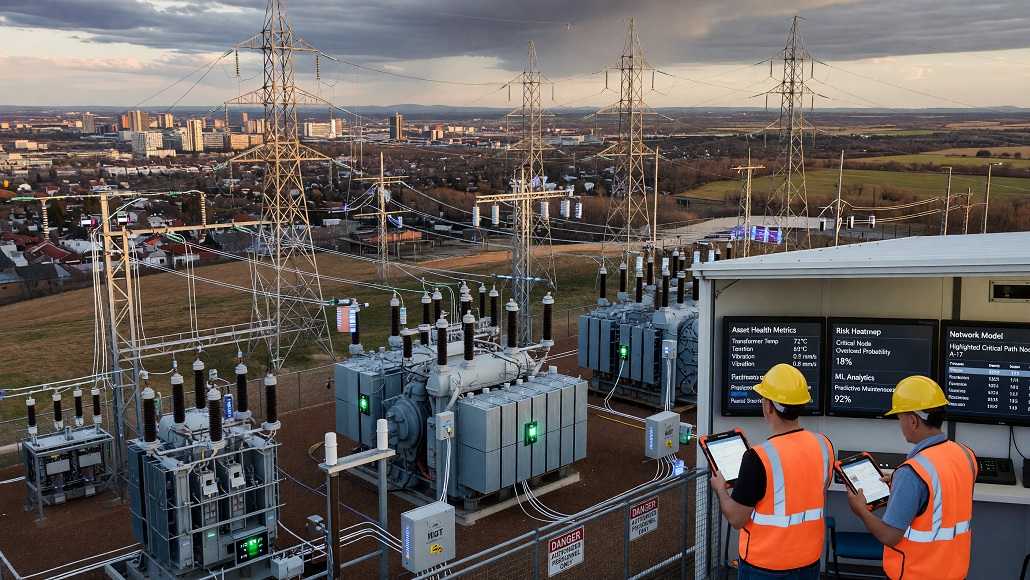
At the core of any smart asset management grid strategy is the collection and analysis of data. In the past, utility companies relied on manual records and periodic inspections to track the health of their equipment. This information was often fragmented, inconsistent, and out of date. Today, the rise of digital utilities has enabled the integration of sensors and communication technologies that provide a constant stream of information. This data includes physical parameters like temperature and vibration, as well as operational data like load profiles and fault histories. When combined, these data points offer a comprehensive view of the “health” of the grid’s assets.
The true value of this data is realized through advanced analytics. Machine learning algorithms can process millions of data points to identify subtle signs of degradation that might be missed by the human eye. For example, a slight change in the harmonics of a transformer’s output could indicate a developing internal fault. By identifying these issues early, maintenance teams can schedule a repair during a planned outage, rather than responding to a sudden failure. This data-driven approach is the foundation of a modern smart asset management grid, turning raw information into actionable intelligence that directly contributes to reducing grid failures.
Enhancing Substation Reliability Through Strategic Oversight
Substations are the most critical nodes in any electrical network, and their failure often has the most widespread impact. Therefore, smart asset management grid strategies place a heavy emphasis on substation reliability. This involves not only monitoring the condition of the assets within the substation but also understanding their role in the wider network. For instance, a failure at a substation that serves a major industrial park has a much higher economic cost than a failure at a rural site serving a few dozen homes. Smart asset management allows utilities to quantify this risk and prioritize their maintenance efforts accordingly.
By integrating condition monitoring with network modeling, utility providers can perform “what-if” scenarios to understand the impact of an asset failure. This information is vital for maintenance planning, as it allows for the identification of the most critical components. If a transformer is identified as being at high risk of failure and its outage would cause significant disruption, the smart asset management system will prioritize its replacement. This strategic oversight ensures that the utility’s budget is being spent where it will have the greatest impact on grid reliability, effectively buying down the risk of major failures.
Risk Mitigation in the Face of Aging Infrastructure
One of the most significant challenges facing utility providers today is the problem of aging infrastructure. Much of the power grid in developed nations was built several decades ago and is now reaching the end of its intended service life. Replacing all of these assets simultaneously is financially impossible. Smart asset management grid strategies provide a solution to this problem by allowing utilities to “sweat” their assets safely. By monitoring the actual condition of an aging transformer, for example, a utility can determine if it can safely continue to operate for another five or ten years, or if its risk of failure has reached an unacceptable level.
This condition-based approach to replacement is far more efficient than simple age-based replacement. It allows for a more gradual and prioritized investment in new infrastructure, reducing the financial burden on the utility and its customers. Furthermore, the data gathered through smart asset management can inform the design of future assets. By understanding exactly how and why their current equipment is failing, engineers can specify more durable and reliable components for the next generation of the grid. In this way, smart asset management grid strategies not only manage the risks of today but also help to build a more robust system for tomorrow.
Integrating IT and OT for Seamless Asset Management
A successful smart asset management grid strategy requires the seamless integration of Information Technology (IT) and Operational Technology (OT). Traditionally, these two areas of a utility’s operations were siloed, with IT managing the business systems and OT managing the physical equipment. However, the rise of the Industrial Internet of Things (IIoT) has blurred these lines. For asset management to be “smart,” the data from the field (OT) must be integrated with the business logic and analytical tools of the enterprise (IT).
This integration allows for a “closed-loop” approach to asset management. When a sensor in the field detects a potential problem, it can automatically trigger a work order in the enterprise resource planning (ERP) system. This ensures that the maintenance team has all the information they need, including the history of the asset and the required parts, before they even arrive at the site. This level of coordination reduces the time it takes to perform repairs and ensures that maintenance is carried out as efficiently as possible. The result is a more responsive and effective organization that is better equipped to handle the complexities of a modern power grid.
The Economic Benefits of a Smart Management Approach
The economic case for adopting smart asset management grid strategies is compelling. While there is a significant initial investment in technology and training, the long-term savings are substantial. The most immediate saving comes from the reduction in unplanned repair costs. Emergency repairs are typically several times more expensive than planned maintenance, as they often involve overtime labor, expedited shipping for parts, and the potential for regulatory fines. By moving toward a more proactive maintenance model, utilities can significantly reduce these “failure-driven” costs.
In addition to direct cost savings, smart asset management also improves the return on investment for capital expenditures. By having a clearer picture of which assets are most likely to fail and what the consequences of those failures would be, utilities can make more informed decisions about where to invest their capital. This ensures that every dollar spent is contributing to the maximum possible improvement in grid reliability. Finally, the improved stability of the power supply has broad economic benefits for the community, reducing the losses associated with power outages and supporting the growth of businesses that rely on a constant supply of energy.
Overcoming Challenges in the Path to Digital Utilities
Despite the clear benefits, the transition to smart asset management grid strategies is not without its hurdles. One of the primary challenges is the need for cultural change within the utility company. Moving from a tradition-bound, reactive culture to a data-driven, proactive one requires significant effort from the leadership and the workforce. Employees must be trained on new tools and processes, and there must be a clear commitment from the top down to value data as a strategic asset.
Data security is another major concern. As the power grid becomes more connected and data-driven, it also becomes more vulnerable to cyberattacks. Protecting the integrity of the data and the security of the communication networks is a critical part of any smart asset management grid strategy. This requires a dedicated focus on cybersecurity, including the use of encryption, multi-factor authentication, and regular security audits. Finally, there is the challenge of data management itself. The sheer volume of data generated by a modern grid can be overwhelming, and utilities must invest in the right software and expertise to ensure that they are getting real value from their data, rather than just drowning in it.
Building a Resilient Power System for the Future
The ultimate goal of smart asset management grid strategies is to build a power system that is not only reliable but also resilient. Resilience is the ability of the system to withstand and recover from extreme events, such as major storms or cyberattacks. By having a deep understanding of the condition and location of every asset in the grid, utility providers can respond more effectively to these events. For instance, after a major storm, the smart asset management system can help to identify which substations are most likely to have been damaged and prioritize the dispatch of repair crews.
As the energy landscape continues to evolve, with the integration of more renewable energy and the rise of electric vehicles, the need for smart asset management will only grow. These new technologies will place different types of stress on the grid, and a data-driven approach will be essential for managing these changes. Ultimately, the transition to a smart asset management grid is not just a technical upgrade; it is a necessary step in the evolution of our power infrastructure. By embracing these technologies and the strategic mindset that accompanies them, we can ensure that our power systems are ready for the challenges of the 21st century.
Conclusion: Securing Grid Performance Through Intelligence
Reducing grid failures through smart asset management is one of the most effective ways for utility providers to improve their service and protect their bottom line. By leveraging the power of data, analytics, and strategic planning, utilities can move away from the inefficiencies of the past and toward a future where power delivery is more stable and resilient than ever before. While the transition requires significant investment and cultural change, the long-term benefits for the utility, its customers, and the wider economy are undeniable.
In the end, smart asset management grid strategies are about more than just keeping the lights on. They are about building a foundation for a smarter, cleaner, and more efficient global energy network. By treating their physical infrastructure as a strategic asset to be optimized, rather than just maintained, utility providers can ensure that they are ready for whatever the future may bring. The journey toward a smarter grid is ongoing, but with the right management strategies in place, we can be confident in the stability and reliability of the power systems that sustain our world.