






















Close
MCE 2026
World Hydrogen & Carbon Americas

ABB technology enables Siam Cement Group to harness the sun’s energy

Note* - All images used are for editorial and illustrative purposes only and may not originate from the original news provider or associated company.

Subscribe

- Never miss a story with notifications

- Gain full access to our premium content

- Browse free from any location or device.

Media Packs

Expand Your Reach With Our Customized Solutions Empowering Your Campaigns To Maximize Your Reach & Drive Real Results!

– Access the Media Pack Now

– Book a Conference Call

Leave Message for Us to Get Back

Related stories

Heat Pumps as Strategic Grid Assets Enabling Renewable Integration and Stability

Modern heat pumps have evolved beyond efficiency technologies to become strategic grid assets capable of providing demand flexibility, load shifting and seasonal balancing. Discover how large-scale heat pump deployment supports renewable integration and grid stability.

Electrification of Heating and Cooling: Reshaping Global Electricity Demand

The rapid electrification of heating and cooling systems is fundamentally transforming electricity demand patterns worldwide. Explore how thermal electrification impacts peak loads, grid infrastructure, and long-term power generation planning in the transition to decarbonized energy systems.

Buildings as Decentralized Energy Systems: Transforming Power Infrastructure

Modern buildings are evolving from passive energy consumers into active energy producers through on-site renewable generation, battery storage and intelligent control systems. Discover how decentralized energy systems are reshaping grid architecture and redefining buildings as critical nodes in the broader power ecosystem.
- Advertisement -

Siam Cement Group operation significantly relies on energy, and it has been a challenge for SCG to manage the energy usage and operate its business while minimizing impact on the environment, particularly climate change.

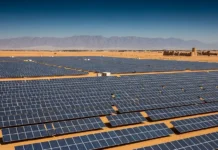
Currently, SCG’s total renewable energy production from all sources is 30 megawatts (MW), which will contribute towards substantial savings in electricity costs. SCG aims to increase solar capacity to 150 MW during 2018 – 2020.

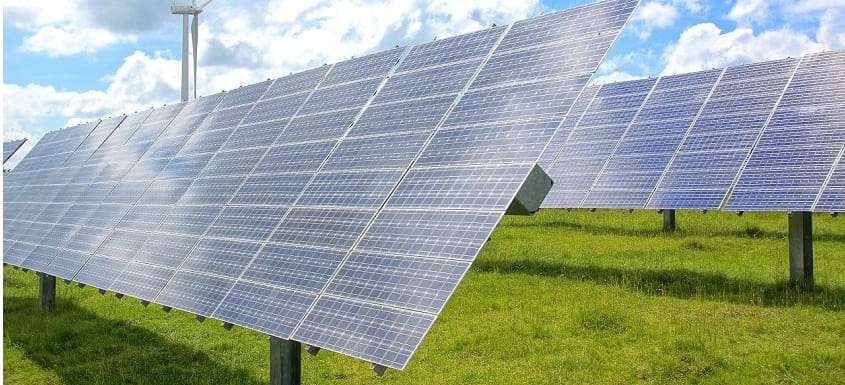
For this project ABB has supplied 19 units of the central inverter type PVS800-57 for ground-mounted solar including installation, supervision, commissioning and training. Those units will be installed at the 3 cement plants; Khao Wong, Kaeng Khoi and Tha Luang in Saraburi province. The total installed capacity of this project is 25 MW, and has been in operational since October 2018.

“Since the end of 2011, ABB central inverters with a capacity of over 300 MW and ABB string inverters with a capacity of 100 MW have been installed in Thailand,” said Mr. Burapa Laohalatanaviboon, Sales Manager of Power & EV Infrastructure. “We are proud to provide SCG with the inverters that are the most efficient and cost-effective way to convert the direct current (DC) generated by solar modules into high-quality and CO2-free alternating current (AC). It will enable SCG to reduce the electricity cost and its carbon footprint that meet its sustainability goals,” continues Mr. Burapa.

The cement industry is important to Thailand’s industrial development, being the main driver of the construction and infrastructure sectors. Siam Cement Group, established in 1913, is now a leading business conglomerate in the ASEAN region with three core businesses namely SCG Cement-Building Materials, SCG Chemicals and SCG Packaging. Over the years, ABB has, in addition, installed DC drives and DC motors in 12 cement plants owned by SCG.

Latest stories

Related stories

Heat Pumps as Strategic Grid Assets Enabling Renewable Integration and Stability

Modern heat pumps have evolved beyond efficiency technologies to become strategic grid assets capable of providing demand flexibility, load shifting and seasonal balancing. Discover how large-scale heat pump deployment supports renewable integration and grid stability.

Electrification of Heating and Cooling: Reshaping Global Electricity Demand

The rapid electrification of heating and cooling systems is fundamentally transforming electricity demand patterns worldwide. Explore how thermal electrification impacts peak loads, grid infrastructure, and long-term power generation planning in the transition to decarbonized energy systems.

Buildings as Decentralized Energy Systems: Transforming Power Infrastructure

Modern buildings are evolving from passive energy consumers into active energy producers through on-site renewable generation, battery storage and intelligent control systems. Discover how decentralized energy systems are reshaping grid architecture and redefining buildings as critical nodes in the broader power ecosystem.

How Renewable Electricity Powers Continuous Thermal Systems

The integration of renewable electricity into thermal energy systems—heating, cooling, and hot water—requires sophisticated technical solutions including thermal storage, hybrid system configurations, and intelligent dispatch algorithms. These innovations enable renewable power to reliably serve round-the-clock thermal demands while maintaining the system reliability that modern buildings and industries require.

Subscribe

- Never miss a story with notifications

- Gain full access to our premium content

- Browse free from any location or device.

Media Packs

Expand Your Reach With Our Customized Solutions Empowering Your Campaigns To Maximize Your Reach & Drive Real Results!

– Access the Media Pack Now

– Book a Conference Call

Leave Message for Us to Get Back

Translate »