
































Key Takeaways:
- Carbon capture technologies for thermal power allow coal and gas plants to continue providing dispatchable electricity while dramatically reducing emissions, using approaches such as post‑combustion capture, pre‑combustion capture and oxy‑fuel combustion, each with specific technical requirements, integration options and cost profiles that shape their deployment potential.
- Retrofitting existing thermal plants with CCS involves substantial engineering work, additional energy use and higher costs, but it can extend asset lifetimes, support grid reliability in systems with high renewables, and redefine the role of fossil generation as a low‑carbon, flexible backup rather than a primary emissions source in the future power mix.
Carbon capture technologies for thermal power are emerging as a pivotal tool in reconciling the continued need for reliable, dispatchable electricity with the imperative to cut greenhouse gas emissions. While renewables expand rapidly, many power systems still depend on coal and gas plants to provide baseload generation, ramping capability and critical grid services. Without some way to address emissions from these units, climate targets would demand their rapid retirement. Carbon capture and storage (CCS) offers an alternative path: maintaining a role for thermal power while significantly reducing its carbon footprint.
Understanding how carbon capture technologies for thermal power are redefining the sector requires examining the main capture methods, the practicalities of retrofitting existing plants, the efficiency and cost implications, and the emerging role of CCS‑equipped plants in a decarbonising grid.
Main carbon capture approaches for thermal power plants
There are three primary families of carbon capture technologies for thermal power: post‑combustion capture, pre‑combustion capture and oxy‑fuel combustion. Each interacts differently with the core processes of coal and gas plants.
Post‑combustion capture is the most widely discussed option for retrofitting existing facilities. It treats the flue gas after combustion, removing CO2 from the mixture of nitrogen, water vapour and combustion products. Typically, chemical solvents such as amines are used to absorb CO2; the solvent is then heated to release a concentrated CO2 stream for compression and transport. Because it can be added downstream of the boiler or gas turbine, post‑combustion capture is technically compatible with many existing plant designs, though detailed integration is complex.
Pre‑combustion capture is more associated with integrated gasification combined cycle (IGCC) plants. In this approach, fuel is first converted into a synthesis gas mainly hydrogen and carbon monoxide. The carbon monoxide is then shifted to CO2 and additional hydrogen, and the CO2 is separated before combustion. The resulting hydrogen‑rich gas is burned in a turbine, producing electricity with much lower direct CO2 emissions. Pre‑combustion capture tends to be easier in terms of separation, as CO2 is present at higher pressure and concentration, but it requires fundamentally different plant designs.
Oxy‑fuel combustion reconfigures the combustion process itself by burning fuel in a mixture of oxygen and recycled flue gas rather than air. This produces a flue gas that is rich in CO2 and water vapour, simplifying CO2 purification. However, oxy‑fuel systems require air separation units to supply oxygen, adding significant capital and energy demands. They are being explored both for new builds and, in some cases, for retrofits where plant layout and economics allow.
Each of these carbon capture technologies for thermal power involves trade-offs between technical complexity, integration requirements and overall performance. Choosing among them depends on plant type, age, fuel, local conditions and policy context.
Retrofitting existing plants: challenges and opportunities
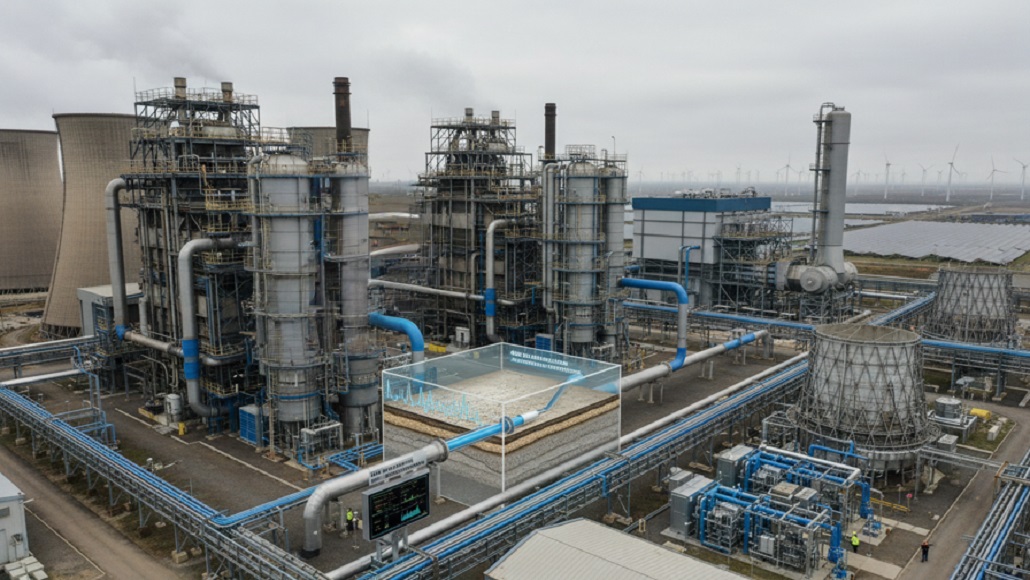
Retrofitting carbon capture technologies for thermal power plants is a major engineering undertaking. Space must be found on or near the site for capture equipment, CO2 compression units and, in some cases, oxygen production. Existing boilers, turbines and auxiliary systems must be assessed for compatibility with new operating conditions, and plant layouts may need to be reconfigured.
For post‑combustion capture, integrating the capture island with the steam cycle is critical. The solvent regeneration process requires low‑pressure steam, which would otherwise be used in the power cycle. Diverting this steam imposes an “energy penalty” that reduces the net efficiency and output of the plant. Cooling systems may need to be upgraded to handle additional loads, and flue‑gas treatment upstream of capture may have to be enhanced to protect solvents from contaminants.
Despite these challenges, retrofits can extend the economic life of young or mid‑life coal and gas units that would otherwise face early closure under strict emissions regimes. For regions heavily invested in thermal infrastructure, carbon capture technologies for thermal power offer a way to avoid stranded assets, retain skilled jobs and maintain grid reliability while aligning with climate objectives.
Retrofitting decisions also intertwine with CO2 transport and storage options. A capture-ready plant without access to a pipeline network or suitable geological storage site has limited practical value. Early CCS projects therefore tend to cluster in regions with favourable geology, existing pipeline corridors or industrial CO2 demand for utilisation.
Efficiency impacts and cost considerations
One of the most significant effects of deploying carbon capture technologies for thermal power is the impact on plant efficiency and operating costs. Capturing, compressing and transporting CO2 consumes energy, reducing the net electric output for a given fuel input. This efficiency penalty typically ranges from several to more than ten percentage points, depending on the technology and plant configuration.
For a coal plant, for example, adding post‑combustion capture might reduce net efficiency from the mid‑thirties to the mid‑twenties in percentage terms if not carefully optimised. Gas plants, which start with higher efficiencies, also experience meaningful drops, particularly in simple‑cycle configurations. Improving capture processes, heat integration and equipment performance can mitigate but not eliminate these losses.
Higher capital and operating costs accompany these efficiency impacts. Capture units, compression trains, air separation systems (for oxy‑fuel), and CO2 pipelines and storage infrastructure all add substantial investment. Operating costs rise due to solvent makeup, additional maintenance, increased auxiliary power use and, in some cases, storage fees or monitoring requirements.
Nevertheless, when evaluated in the context of carbon prices or emissions performance standards, carbon capture technologies for thermal power can be competitive. In systems where unabated emissions face significant penalties, the added cost of CCS may be justified by the ability to continue operating flexible, dispatchable generation. Over time, learning by doing, economies of scale and technology innovation are expected to drive costs down, as has been observed in other clean energy technologies.
Operational flexibility and system integration
Historically, thermal plants with CCS were often envisaged as baseload units running at high load factors to spread capital costs over many operating hours. As power systems evolve toward high shares of renewables, however, the role of thermal plants whether with or without capture is shifting toward more flexible, mid‑merit or peaking operation.
Carbon capture technologies for thermal power must therefore accommodate more variable operating patterns. This raises several technical and economic questions. Capture units designed solely for steady operation may not perform optimally under frequent ramping or low‑load conditions. Solvent systems, heat exchangers and compressors must handle changing flows and temperatures without excessive degradation or efficiency loss.
In response, new operating strategies are being explored. One option is partial capture, where the capture rate varies with plant load or system conditions. Another involves temporarily bypassing capture during peak demand periods to maximise output, then compensating with higher capture rates at other times, provided overall emissions limits are met. Such flexible operation can reduce average capture costs while preserving valuable grid services.
From a system perspective, CCS‑equipped plants can help balance variable renewables by providing fast‑ramping, low‑carbon backup. They can also offer inertia, voltage support and black‑start capabilities that are more difficult to obtain from inverter-based resources. In this way, carbon capture technologies for thermal power contribute not only to emissions reduction but also to maintaining the stability and resilience of the grid.
Redefining the role of fossil-based generation
As climate policies tighten, the long‑term role of unabated fossil generation in power systems will decline. Yet completely eliminating fossil fuels may be technically and economically challenging in some contexts, particularly where alternative low‑carbon flexibility options are limited. Carbon capture technologies for thermal power provide a way for fossil-based plants to evolve from being major sources of emissions to providers of low‑carbon, dispatchable energy.
In such a future, coal plants with CCS may supply a shrinking share of total generation but still be critical at times of low renewable output or during extreme weather events. Gas plants with carbon capture could play a significant role as mid‑merit units, balancing daily and seasonal variations while emitting far less CO2 than conventional plants. Over time, pairing CCS with low‑carbon fuels such as hydrogen or biomass could further reduce lifecycle emissions.
This redefined role also influences investment and policy frameworks. Capacity markets, contracts for difference or long‑term clean‑firm power tenders may be needed to underwrite the higher capital costs and lower utilisation factors of CCS‑equipped plants. Regulators will need to decide how to value attributes such as reliability, flexibility and emissions reduction in remuneration schemes.
Infrastructure, storage and long-term considerations
Deploying carbon capture technologies for thermal power at scale requires more than plant-level engineering. It depends on the development of CO2 transport and storage networks that can handle large volumes safely and reliably over decades. This involves mapping suitable geological formations, such as depleted oil and gas fields or deep saline aquifers, and characterising their capacity, injectivity and integrity.
Pipeline corridors must be planned, permitted and built, potentially serving multiple capture sources across industrial clusters and power plants. Regulatory frameworks must address long‑term liability, monitoring and verification of stored CO2, as well as community engagement and environmental safeguards.
There is also an opportunity to integrate CCS-equipped power plants into broader carbon management strategies, including carbon dioxide removal technologies that combine biomass with CCS or direct air capture. In such scenarios, shared storage infrastructure lowers barriers for multiple low‑ and negative‑emissions technologies, and carbon capture technologies for thermal power become part of a larger ecosystem aimed at net‑zero and net‑negative emissions.
As experience accumulates, best practices for design, operation and regulation will emerge, reducing perceived risks and uncertainty. Early demonstration projects and first‑of‑a‑kind retrofits are thus crucial, not only for proving technical feasibility but also for establishing commercial and institutional models.
In sum, carbon capture technologies for thermal power are poised to reshape the future of fossil-based generation. By enabling coal and gas plants to operate with much lower emissions, CCS can support a smoother, more affordable transition toward deeply decarbonised power systems, preserving reliability and flexibility while aligning with climate goals.