













The management of industrial energy has traditionally been a reactive process, characterized by manual adjustments and retrospective data analysis. However, as energy costs rise and sustainability requirements tighten, this manual approach is no longer sufficient. Today, automation technologies are revolutionizing the way industrial power systems are designed, operated, and optimized. By integrating intelligent control systems with high-resolution sensors and advanced analytics, industrial facilities can now manage their power infrastructure with a level of precision that was previously impossible. This transition toward automated energy management is not just about convenience; it is about achieving a level of operational efficiency that is necessary for survival in a modern, data-driven economy.
The central goal of automation technologies industrial power systems is to create a self-optimizing energy network. This involves the use of smart control systems that can make real-time decisions based on a vast array of inputs, from grid prices and weather forecasts to the current state of production equipment. By automating the balancing of supply and demand within the facility, these systems can significantly reduce waste, lower peak demand, and ensure that every kilowatt-hour is used as effectively as possible.
The Foundation of Industrial Digitalisation
At the heart of any automated power system is the digital layer. Industrial digitalisation has enabled the deployment of thousands of internet-of-things (IoT) sensors across the plant floor, providing a continuous stream of data on energy flows, equipment temperatures, and electrical quality. This data is the lifeblood of power system optimisation. Without a high-fidelity digital representation of the facility’s energy state, automation would be nothing more than a series of simple timers and setpoints.
Modern energy automation technology goes far beyond simple monitoring. It involves the creation of “digital twins” virtual models of the power system that can simulate different operating scenarios. These twins allow engineers to test the impact of a new production schedule or a change in utility rates before implementing it in the real world. This predictive capability ensures that automation strategies are always aligned with the broader goals of the business, whether that is minimizing cost, reducing carbon emissions, or maximizing equipment uptime.
Intelligent Control and Real-Time Monitoring
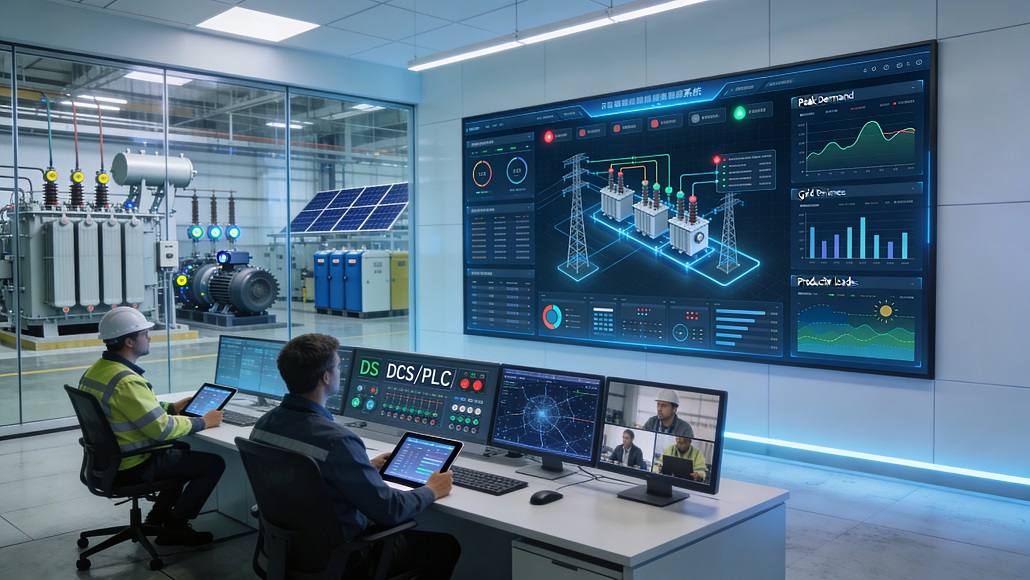
Real-time monitoring is the bedrock upon which intelligent control is built. In an automated system, the “brain” typically a Distributed Control System (DCS) or a Programmable Logic Controller (PLC) specifically tuned for energy is constantly analyzing incoming data to identify opportunities for improvement. If the system detects that a certain motor is running at an inefficient speed, it can automatically adjust the variable frequency drive to bring it back to its optimal point. If it sees that a peak demand event is imminent, it can temporarily throttle non-critical loads to stay below the demand threshold.
This level of intelligent control is particularly valuable for facilities with complex energy profiles. In a refinery or a chemical plant, energy demand is constantly shifting as different processes are ramped up or down. Automation technologies allow for the seamless coordination of these processes, ensuring that the utility systems steam, compressed air, and electricity are always perfectly matched to the needs of production. This reduces the “safety margins” that operators typically maintain, which often result in significant energy waste.
Enhanced Operational Efficiency Through Smart Systems
The impact of automation on operational efficiency is multifaceted. One of the most immediate benefits is the reduction in human error. Managing a large industrial power system is a cognitively demanding task that requires constant attention to detail. By automating routine adjustments and alarm responses, the system frees up human operators to focus on higher-level strategic decisions. Furthermore, automated systems do not suffer from fatigue or distraction, ensuring that optimization strategies are applied consistently 24 hours a day, 365 days a year.
Smart control systems also enable “energy-aware” production scheduling. By integrating the production management system with the energy automation platform, a facility can automatically schedule its most energy-intensive processes during periods when electricity prices are lowest or when on-site renewable generation is highest. This level of synchronization between production and energy is the hallmark of a truly optimized industrial facility. It turns energy from a fixed overhead into a manageable production variable, directly improving the bottom line.
Predictive Maintenance and Asset Health
Automation technologies industrial power systems also play a vital role in maintaining the health and longevity of electrical assets. High-end power quality monitors can detect subtle anomalies in voltage and current that are often the early warning signs of equipment failure. By automating the analysis of these waveforms, the system can alert maintenance teams to a potential problem before it leads to an unplanned outage.
This move from reactive to predictive maintenance is a game-changer for industrial power resilience. It allows for the scheduling of repairs during planned shutdowns, avoiding the high costs associated with emergency fixes and lost production. Moreover, by ensuring that equipment is always running within its design parameters, automation helps to extend the useful life of expensive assets like transformers, switchgear, and large motors. This improved asset management is a key component of the overall business case for energy automation.
Integration with Distributed Energy Resources
As industrial sites add more modular generation and storage, the complexity of managing the power system increases. Automation is the only way to effectively manage a site that has a mix of grid power, solar arrays, gas engines, and battery storage. The automation platform acts as a conductor, orchestrating the various resources to provide the most cost-effective and reliable power mix.
For example, if the grid price spikes, the system can automatically switch the facility to on-site generation or discharge the battery. If the solar output drops due to clouds, it can instantly ramp up the reciprocating engines. This level of millisecond-level coordination is impossible for a human operator to perform manually. Automation technologies make the “industrial microgrid” a practical reality, allowing firms to gain independence from the grid while maintaining the highest standards of reliability.
Cybersecurity in the Automated Power Environment
With the benefits of industrial digitalisation come the risks associated with connectivity. Automated power systems are potential targets for cyberattacks, making security a central part of any automation strategy. A successful automation deployment must include a robust cybersecurity framework that includes network segmentation, encryption, and continuous monitoring for suspicious activity.
Process safety and cybersecurity are becoming increasingly intertwined. If an attacker can gain control of the energy automation system, they could potentially cause physical damage to equipment or create unsafe operating conditions. Therefore, modern smart control systems are designed with “defense-in-depth” principles, ensuring that even if one layer of security is breached, the critical safety functions of the power system remain protected. This commitment to security is essential for maintaining the trust of operators and the safety of the facility.
The Human Element in an Automated World
It is a common misconception that automation replaces the need for human expertise. In reality, it changes the nature of the expert’s role. Instead of making manual adjustments, the energy engineer of the future will be a data scientist and a system architect. They will be responsible for designing the optimization algorithms, interpreting high-level analytics, and ensuring that the automation system is aligned with the changing needs of the business.
Training and workforce development are therefore critical components of a successful automation journey. Operators need to understand how the automated systems work so they can intervene effectively when necessary and provide feedback for continuous improvement. The goal is to create a “human-in-the-loop” system where the speed and precision of automation are balanced by the judgment and experience of seasoned professionals.
Overcoming the Barriers to Adoption
Despite the clear ROI, many industrial firms are slow to adopt full-scale power automation. The primary barriers are often the upfront cost and the perceived risk of disrupting existing processes. However, the move toward modular and cloud-based automation solutions is making these technologies more accessible to a wider range of companies.
A successful approach often starts with a pilot project on a single production line or utility system. By demonstrating the savings and reliability gains in a controlled environment, firms can build the internal consensus needed for a site-wide rollout. Furthermore, many automation providers now offer “as-a-service” models that reduce the initial capital burden, making it easier for firms to start their journey toward power system optimisation.
Conclusion: The Future of Energy Automation
The industrial power system of the future will be autonomous, intelligent, and highly efficient. Automation technologies are the key to unlocking this future, providing the tools needed to manage the complexities of the modern energy landscape. From real-time monitoring and intelligent control to predictive maintenance and renewable integration, the benefits of energy automation are clear.
As these technologies continue to mature and the cost of implementation falls, they will become a standard requirement for any competitive industrial facility. Firms that embrace automation today will be better positioned to handle the challenges of tomorrow, turning energy management from a reactive burden into a strategic advantage. The journey toward an optimized, automated future is not just an engineering goal; it is a fundamental business imperative.