













Industrial energy demands are undergoing a period of unprecedented volatility. Traditional centralized power models, while reliable for the better part of a century, often lack the responsiveness required by modern manufacturing facilities that must balance shifting production schedules with fluctuating energy prices and aggressive decarbonization mandates. In this environment, modular energy systems have emerged as a cornerstone of flexible industrial power strategies. By breaking down large-scale energy infrastructure into standardized, scalable components, facilities can now deploy power assets that grow alongside their operational needs rather than being locked into oversized and rigid legacy systems.
The move toward modular energy systems flexible industrial power is driven by the realization that energy is no longer a fixed utility cost but a dynamic production input. This shift allows for the rapid integration of distributed energy resources, ranging from gas reciprocating engines and fuel cells to battery storage and solar arrays, all housed in modular enclosures that minimize site work and accelerate deployment timelines.
The Engineering Logic Behind Modularity
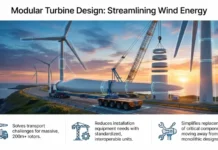
Modular energy systems are built on the principle of “plug-and-play” interoperability. Unlike traditional bespoke power plants that require years of civil engineering and site-specific tailoring, modular units are pre-assembled and tested in controlled factory environments. This manufacturing approach ensures that each module meets stringent quality standards before it even reaches the industrial site. For the plant operator, this reduces the risk of construction delays and performance discrepancies that often plague large-scale infrastructure projects.
The flexibility of these systems is rooted in their containerized nature. Most modular assets are designed to fit within standard shipping container footprints, allowing them to be transported easily via rail, sea, or road. Once on-site, these units are connected to a common busbar or thermal header, creating a cohesive power plant that can be expanded simply by adding more modules. This scalability is a vital component of flexible industrial power, as it allows companies to manage their capital expenditure by investing only in the capacity they need today, with the option to expand as future demand dictates.
Driving Resilience Through Distributed Energy
Resilience is a non-negotiable requirement for industrial operations where even a momentary loss of power can result in millions of dollars in lost production and damaged equipment. Distributed energy models, facilitated by modularity, provide an inherent safety net against grid instability. By generating power closer to the point of use, modular energy systems reduce the vulnerability associated with long-distance transmission lines and centralized failures.
Furthermore, modular systems can operate in “island mode,” a feature that is central to the concept of industrial microgrids. In the event of a grid outage, the modular power plant can disconnect from the utility and continue to supply critical loads using on-site generation and storage. This capability is particularly valuable for facilities located in regions prone to extreme weather or those served by aging grid infrastructure. The ability to maintain autonomous operations ensures that production continuity remains unaffected by external variables, providing a level of reliability that centralized models struggle to match.
Hybrid Power Generation and Technological Integration
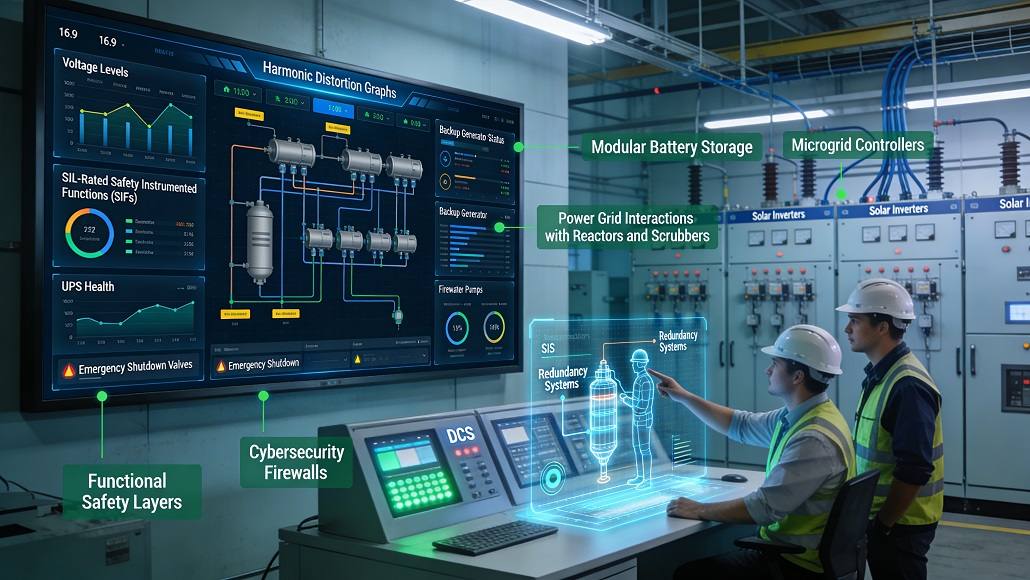
One of the most significant advantages of modularity is its ability to support hybrid power generation. Modern industrial facilities rarely rely on a single energy source. A well-designed system might combine high-efficiency natural gas engines for baseload power with solar PV for cost reduction and battery energy storage for peak shaving. Modular energy systems provide the framework to integrate these diverse technologies into a unified control architecture.
This hybrid approach allows operators to optimize their energy mix based on real-time factors such as time-of-use pricing and renewable availability. For instance, during periods of high solar irradiance, the system can prioritize renewable energy while throttling back modular gas units. Conversely, when the sun sets or cloud cover reduces solar output, the gas modules can rapidly ramp up to maintain a steady power supply. This seamless transition is made possible by sophisticated microgrid controllers that manage the load-sharing between various modular assets, ensuring that the facility always operates at peak efficiency.
Scalable Energy Infrastructure and Future-Proofing
Industrial facilities often undergo expansions or process changes that significantly alter their energy profile. In a traditional setting, such changes might require expensive upgrades to the main electrical substation or the installation of a new boiler. Scalable energy infrastructure mitigates this risk by allowing for incremental capacity additions. If a plant adds a new production line, a new modular power or thermal unit can be installed in a fraction of the time required for traditional construction.
This future-proofing is essential in an era where energy technologies are evolving rapidly. Modularity allows for the “hot-swapping” of older technologies for newer, more efficient ones. As hydrogen-ready engines or advanced fuel cells become more commercially viable, they can be integrated into the existing modular framework without requiring a total system overhaul. This allows industrial firms to stay at the cutting edge of energy technology while protecting their long-term infrastructure investments.
The Role of Industrial Microgrids in Energy Management
Industrial microgrids represent the pinnacle of modular energy management. By combining modular generation, storage, and advanced controls, a microgrid creates a localized energy ecosystem that can interact intelligently with the broader utility grid. This interaction is not just about drawing power; it’s about providing services. Modern modular energy systems can participate in demand response programs, selling excess capacity back to the grid during periods of high demand or providing frequency regulation services to support grid stability.
This transition from passive consumer to active “prosumer” turns the energy center from a cost center into a potential revenue stream. The modular nature of these microgrids makes them highly adaptable to different industrial settings, from remote mining sites that require total energy independence to urban manufacturing centers looking to lower their carbon footprint and energy costs. The common thread is the use of modular energy systems flexible industrial power to create a customized energy solution that meets the specific technical and financial goals of the organization.
Overcoming Implementation Barriers
Despite the clear benefits, the transition to modular systems requires careful planning and a shift in organizational mindset. One of the primary hurdles is the integration with legacy electrical and thermal networks. Industrial facilities often have complex existing layouts that were not designed for distributed generation. Overcoming this requires detailed site audits and the use of flexible interconnection hardware that can bridge the gap between modular units and old switchgear.
Another consideration is the regulatory and permitting environment. While modular units are pre-certified in many cases, the site-specific permits for noise, emissions, and grid interconnection still apply. However, because modular systems are often cleaner and quieter than the large-scale boilers or turbines they replace, the permitting process can sometimes be smoother. Working with experienced partners who understand the nuances of modular energy deployment can significantly reduce the administrative burden and ensure that the project stays on schedule.
Operational Excellence and Remote Monitoring
The decentralized nature of modular power assets would be difficult to manage without the advancements in digital energy management. Modern modular units are equipped with a suite of sensors that provide real-time data on everything from fuel consumption and emissions to component vibration and temperature. this data is typically fed into a cloud-based monitoring platform, allowing for predictive maintenance and remote troubleshooting.
For industrial operators, this means that a team of experts can monitor dozens of modular units across multiple sites from a central location. If an anomaly is detected in one module, the system can automatically shift the load to other modules while alerting a technician. this proactive approach to maintenance reduces the likelihood of unplanned downtime and ensures that the modular energy systems flexible industrial power remain in optimal condition throughout their lifecycle.
Sustainability and the Path to Net Zero
Decarbonization is no longer a choice for the industrial sector; it is a business imperative. Modular energy systems provide a practical pathway to achieving net-zero goals without sacrificing power reliability. By starting with high-efficiency modular natural gas units, facilities can immediately reduce their carbon footprint compared to older coal or oil-fired boilers. As the facility matures, they can integrate more modular renewables and storage, gradually displacing fossil fuels.
The eventual transition to clean hydrogen is also facilitated by modularity. Many modern modular gas engines are designed to run on hydrogen blends, and as green hydrogen becomes more available, these modules can be converted or replaced with dedicated hydrogen fuel cells. This staged approach allows industrial firms to meet their sustainability targets in a way that is financially sustainable and operationally safe.
Economic Considerations and Total Cost of Ownership
When evaluating modular energy systems, it is important to look beyond the initial capital expenditure. The total cost of ownership is often lower than traditional systems when factoring in the reduced site construction costs, faster time to commissioning, and improved operational efficiency. The ability to right-size the system from day one prevents the waste associated with operating large plants at partial load, where efficiency often drops significantly.
Additionally, the modular approach offers better residual value. If an industrial site is decommissioned or relocated, the modular power units can be disconnected, transported, and redeployed at another facility. This portability is a stark contrast to traditional energy infrastructure, which becomes a stranded asset once a site is closed. This flexibility adds a layer of financial security to energy investments that is increasingly valued by CFOs and asset managers.
A New Era for Industrial Energy
The industrial sector is entering a new era defined by decentralization, digitalization, and decarbonization. Modular energy systems are the primary vehicle for this transition, providing the flexible industrial power needed to navigate a complex and changing energy landscape. By embracing modularity, industrial firms can build energy infrastructure that is as resilient as it is efficient, and as scalable as it is sustainable.
Whether it is through the deployment of industrial microgrids or the integration of hybrid power generation, the focus remains on creating a system that serves the needs of production. As technology continues to advance, the capabilities of modular units will only grow, further cementing their role as the foundation of modern industrial power operations. The journey toward more flexible and sustainable energy begins with a move away from the rigid structures of the past and toward a modular future.