























As the global community accelerates its efforts to reach net-zero emissions, it is becoming increasingly clear that electricity alone cannot solve the entire decarbonization puzzle. For heavy industry, shipping, aviation, and long-duration energy storage, a different kind of molecule is required. Hydrogen, specifically “green” hydrogen produced from renewable electricity, is emerging as the essential second pillar of the energy transition. However, moving from a niche industrial gas to a global energy carrier requires a massive and sophisticated expansion of our physical networks. Hydrogen Infrastructure in Future Energy Systems is the key to unlocking this potential. Building a clean hydrogen economy requires a multi-faceted approach to production, transport, and storage that will fundamentally reshape the global energy map over the next three decades.
The Role of Hydrogen as a Versatile Energy Carrier
Hydrogen’s primary value lies in its versatility. It can be used as a fuel for high-temperature industrial processes, as a feedstock for chemicals and fertilizers, as a fuel for heavy transport, and as a medium for seasonal energy storage. This wide range of applications makes it the perfect complement to the electrical grid. When renewable generation exceeds demand, the surplus electricity can be sent to electrolyzers to produce hydrogen. This “Power-to-Gas” pathway allows us to capture renewable energy that would otherwise be wasted and store it in chemical form for weeks or months. This capability is vital for the long-term stability of the energy system, providing a solution for the seasonal imbalances that intermittent solar and wind cannot address alone.
The development of hydrogen energy infrastructure is thus not just about building pipes; it is about creating a flexible bridge between the electricity sector and the “hard-to-abate” sectors of the economy. In a mature clean hydrogen economy, hydrogen will flow seamlessly across international borders, much like natural gas does today. This requires a global hydrogen energy transition that harmonizes technical standards, safety protocols, and market mechanisms. The infrastructure we build today will be the backbone of a global energy system that is both carbon-neutral and highly resilient to the fluctuations of renewable supply.
Hydrogen Fuel Networks and Transport Systems
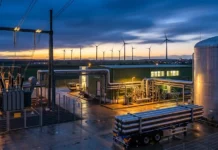
Transporting hydrogen is one of the greatest engineering challenges of the energy transition. Because hydrogen has a very low energy density by volume and can cause “embrittlement” in certain types of steel, traditional natural gas pipelines cannot always be used without modification. The emerging hydrogen transport systems involve a combination of new, dedicated hydrogen pipelines and the retrofitting of existing natural gas infrastructure. In Europe, the “Hydrogen Backbone” initiative is already planning a 53,000 km network of pipelines that will connect production centers in the North Sea and the Mediterranean with industrial hubs across the continent. This infrastructure is essential for lowering the cost of hydrogen by enabling large-scale, efficient distribution.
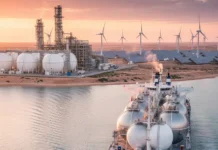
Beyond pipelines, the hydrogen fuel networks will include liquid hydrogen tankers and ammonia carriers for long-distance maritime transport. Converting hydrogen into ammonia or other liquid organic hydrogen carriers (LOHCs) makes it much easier and safer to move across oceans, allowing sun-rich regions like Australia and North Africa to export their renewable energy to energy-hungry regions like Japan and Germany. These global hydrogen transport systems will redefine energy geopolitics, creating a new set of trade relationships based on renewable potential rather than fossil fuel reserves. Hydrogen Infrastructure in Future Energy Systems is thus the physical foundation of a more diverse and equitable global energy market.
Industrial Decarbonization and Hydrogen Clusters
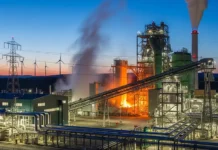
One of the most immediate applications for hydrogen is in the decarbonization of heavy industry. Sectors like steel, cement, and glass manufacturing require high-temperature heat that is difficult and expensive to achieve with electricity alone. By replacing coal or natural gas with hydrogen, these industries can achieve near-zero carbon emissions. To facilitate this, governments and industry leaders are focusing on the creation of “Hydrogen Clusters” or “Hydrogen Valleys” geographic areas where production, transport, and industrial demand are concentrated. By co-locating these elements, we can minimize the initial requirements for hydrogen energy infrastructure and create an integrated ecosystem that can grow over time.
In these clusters, hydrogen fuel networks will serve a variety of users, from steel mills to local bus fleets and heavy-duty trucking centers. This multi-user approach improves the economic viability of the infrastructure and ensures that the benefits of the clean hydrogen economy are distributed across different sectors of the local economy. As these clusters expand and interconnect, they will form the nodes of the national and international hydrogen infrastructure in future energy systems. This gradual, bottom-up approach to building the hydrogen network is the most practical way to manage the massive capital investments required for the hydrogen energy transition.
Challenges in Scaling Hydrogen Infrastructure
Despite the immense promise, scaling hydrogen infrastructure faces significant technical and economic hurdles. The first is the sheer cost of building new pipelines and storage facilities. While retrofitting existing gas lines can save money, it still requires a high level of technical expertise and careful safety assessments. Furthermore, the efficiency of the entire hydrogen chain from electrolysis to compression, transport, and final use is currently much lower than direct electrification. To overcome this, we need continued innovation in materials science and engineering to reduce losses and improve the durability of hydrogen transport systems.
There is also the challenge of the “chicken and egg” problem. Developers are reluctant to build large-scale production facilities without a guaranteed transport network, and utilities are reluctant to build pipelines without a guaranteed supply of hydrogen. Breaking this cycle requires strong government intervention in the form of subsidies, tax credits, and clear regulatory frameworks. Initiatives like the “Hydrogen Bank” in Europe and the “Inflation Reduction Act” in the United States are providing the necessary financial signals to jumpstart the clean hydrogen economy. Without these policy drivers, the hydrogen infrastructure in future energy systems will struggle to reach the scale needed for meaningful industrial decarbonization.
Storage Solutions: Salt Caverns and Depleted Fields
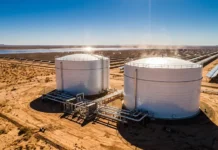
Storing hydrogen at scale is just as important as transporting it. While small-scale storage can be achieved with compressed gas tanks or cryogenic liquid tanks, large-scale, seasonal storage requires geological solutions. Salt caverns, which are already used to store natural gas, are currently the most promising option for hydrogen energy infrastructure. These massive underground chambers are virtually leak-proof and can store hundreds of gigawatt-hours of energy in chemical form. In regions without suitable salt formations, researchers are investigating the use of depleted oil and gas fields or deep saline aquifers for hydrogen storage.
Integrating these geological storage sites into the hydrogen fuel networks is a critical task for grid planners. They must be located near the main transmission corridors and connected to the major industrial demand centers. By providing a reliable buffer against seasonal renewable fluctuations, large-scale storage ensures that the clean hydrogen economy is resilient and stable. This is a vital component of Hydrogen Infrastructure in Future Energy Systems, as it provides the long-duration energy security that the modern world requires. As we develop more of these storage sites, hydrogen will become the “strategic reserve” of the carbon-neutral energy system.
Conclusion: The Molecule that Bridges the Future
The development of hydrogen infrastructure is a multi-decade project that represents one of the most ambitious engineering undertakings in human history. It is the bridge between the electrical grid and the hard-to-abate sectors, between sun-rich deserts and industrial cities, and between today’s fossil fuel economy and tomorrow’s carbon-neutral one. Hydrogen Infrastructure in Future Energy Systems is the key to ensuring that the energy transition is complete, leaving no sector behind.
By investing in hydrogen energy infrastructure today, we are building a more flexible, resilient, and sustainable world. The path forward is challenging, but the rewards are immense a clean hydrogen economy that powers our ships, fuels our industries, and stores the sun’s energy for a rainy day. The journey toward this future is already underway, and the pipes and tanks we build today are the foundation of a truly global energy system that serves both the planet and its people. Through innovation, policy support, and international collaboration, we can ensure that the hydrogen transition is a success, securing our energy future for generations to come.