




















The global energy transition has been characterized by increasing emphasis on electrification replacing fossil fuel combustion with electric motors, heat pumps, and electric resistance heating. This emphasis is justified: electrification, powered by renewable electricity, represents the lowest-cost decarbonization pathway for many applications. However, a growing body of analysis from national laboratories, utilities, and independent researchers reveals that a 100% direct electrification approach encounters technical and economic limitations in specific applications and system contexts. Hydrogen produced by splitting water molecules through electrolysis powered by renewable electricity has emerged as a complementary pathway addressing these limitations. Rather than competing with electrification, hydrogen fulfills distinct functions: providing long-duration energy storage where battery duration is insufficient, enabling international energy trade where transmission infrastructure is impractical, supplying process heat at temperatures exceeding heat pump capabilities, and serving as chemical feedstock for industry.
Why Hydrogen Complements Rather Than Competes With Electrification
Fundamental physics and economics create a division of labor between electrification and hydrogen decarbonization. Electrification excels where electricity can be used directly: electric motors driving vehicles and machinery, heat pumps providing building heating/cooling, electric resistance heating for moderate-temperature process heat. The efficiency of these electrified applications is high electric motors achieve 85-95% efficiency; heat pumps provide 3-5 units of thermal output per unit of electricity input; resistive heating is effectively 100% efficient. Delivered to end-users, electrified services are economically compelling in most developed markets.
Hydrogen addresses applications where direct electrification faces constraints. Long-distance aviation cannot practically be electrified battery weight and recharging requirements make 5,000+ nautical mile missions infeasible with current or near-term battery technology. Hydrogen-based synthetic fuels, created by combining hydrogen with captured carbon dioxide through various synthesis pathways, offer energy density (120-130 megajoules per kilogram) comparable to conventional jet fuel. Steel and cement production at temperatures exceeding 1,200°C require either direct electric heating (requiring specialized furnace redesign) or hydrogen-based reduction processes replacing conventional fossil fuel reduction; many facilities will deploy hydrogen reduction given capital constraints and technical familiarity with hydrogen chemistry.
Crucially, hydrogen addresses a system-level energy storage challenge: renewable electricity intermittency spanning weeks to months. Battery energy storage costs roughly $200-300 per kilowatt-hour of energy capacity; a system storing one week of average grid demand (a typical winter-to-summer energy shortage period) would require trillions of dollars of battery investment. Hydrogen, produced by electricity conversion through electrolysis, stores energy as chemical potential in hydrogen molecules. Repurposing existing salt caverns (geological formations used historically for natural gas storage) for hydrogen storage reduces storage costs to $0-100 per kilowatt-hour of energy capacity, making hydrogen economically viable for long-duration applications while batteries remain economically superior for short-duration (1-6 hour) applications.
Hydrogen Production and Cost Dynamics
Hydrogen exists naturally only in bound chemical forms (water, hydrocarbons, organic compounds). Industrially, hydrogen is produced either through steam methane reforming (heating natural gas with steam in the presence of catalysts) or electrolysis (using electricity to split water into hydrogen and oxygen). Current global hydrogen production, roughly 75 million metric tons annually, derives almost entirely from steam methane reforming; approximately 10 million tons annually is produced through electrolysis. This distribution reflects economic reality: reforming produces hydrogen at $1.20-2.00 per kilogram (depending on natural gas prices); electrolysis currently costs $2.50-5.00 per kilogram depending on electricity costs and equipment efficiency.
Over the past decade, electrolyzer capital costs have declined 40-50%, falling from $800-1,000 per kilowatt of electrolyzer capacity to $400-600 per kilowatt currently, with further declines to $200-300 per kilowatt anticipated by 2030. This cost trajectory, combined with renewable electricity costs falling 80-90% over the same period, creates a convergence: green hydrogen (produced through renewable-powered electrolysis) will achieve cost parity with reforming-based hydrogen by 2025-2030, even in low-cost natural gas regions. In regions with abundant renewable resources and cheap capital (e.g., Chile, Australia, the Gulf Cooperation Council states), green hydrogen production cost is projected to reach $1.00-2.00 per kilogram by 2030-2040, competitive with nearly all industrial hydrogen applications.
This economic transition has triggered a cascade of government support policies. The U.S. Inflation Reduction Act provides $3 per kilogram tax credits for green hydrogen, effectively reducing cost to $1-2 per kilogram in the U.S. European Union regulations mandate hydrogen procurement targets, creating demand certainty for hydrogen producers. Japan’s hydrogen strategy targets 3 million tons of hydrogen availability by 2030 and 20 million tons by 2050. These policies, combined with private investment reaching $10 billion annually in hydrogen projects, establish a market structure supporting rapid cost reduction and technology maturation.
Long-Duration Energy Storage: The Hydrogen Advantage
Energy system modeling for high renewable penetration (80-100% wind/solar) reveals an intriguing storage pattern: battery energy storage economics favor capacities providing 4-8 hours of storage (matching daily renewable variability), but system reliability requires storage duration of 50-200 hours to manage weather pattern persistence. A multi-day high-pressure weather system can suppress both wind and solar output for 2-7 days; reliably operating 100% renewable systems requires storage surviving such events.
Real-world data supports this modeling. Denmark, with wind penetration exceeding 80%, relies on coordinated operation with neighboring countries’ hydroelectric storage and thermal generation to manage multi-day renewable shortfalls. The UK winter 2021-2022 cold snap, with renewable output near zero for 10+ days due to persistent high pressure, would have required either rolling blackouts or alternative supply from nuclear, thermal, or imported electricity. Hydrogen storage provides an alternative: excess renewable electricity during periods of high wind/solar can be converted to hydrogen and stored in salt caverns (abundant in many regions), then converted back to electricity when renewable output is insufficient.
The thermodynamic round-trip efficiency of power-to-gas-to-power systems electrolysis converting electricity to hydrogen (efficiency 70-80%), compression and storage (efficiency > 99%), then hydrogen power generation via fuel cells (efficiency 50-60%) or turbines (efficiency 40-50%) produces overall efficiency of 28-40% for fuel cell conversion or 30-40% for turbine conversion. This efficiency is substantially lower than battery round-trip efficiency (85-95%), but critically, the effective cost per unit of energy stored and retrieved is competitive or superior for storage durations exceeding 50 hours: hydrogen storage capital cost ($0-100 per kWh energy capacity) more than compensates for lower conversion efficiency when amortized across long storage periods.
Hydrogen’s Role in Peak Demand Management
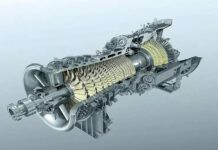
Hydrogen-fired power plants provide a distinct function from battery storage: firm, dispatchable generation during periods of renewable shortage. Unlike batteries discharging stored energy, hydrogen plants produce new electricity from stored hydrogen fuel, scaling generation capacity and energy capacity independently. A 500 MW hydrogen combustion turbine requires 500 MW of hydrogen processing capacity (electrolyzer and hydrogen-from-fossil-fuels conversion) but can operate across a wide range of output levels (50-100% rated capacity) without substantially degrading efficiency.
Texas grid analysis modeling 2050 decarbonization scenario found that 11 GW of hydrogen-fired peaking generation combined with renewable supply reduces peak electricity prices 30-40% compared to all-battery storage approaches, and eliminates the need for overbuilding renewable capacity specifically to fill long-duration shortfall periods. Hydrogen peakers operate at 5-15% capacity factor (producing electricity roughly 43-130 hours annually), far below average operation but providing critical reliability during weather extremes. The $5-8 billion capital cost for Texas hydrogen infrastructure ($3-4 billion for electrolyzer capacity, $1-2 billion for hydrogen turbines, $0.5-1 billion for hydrogen storage cavern development) proves economically justified by avoided $8-12 billion in alternative infrastructure additional battery storage, transmission capacity, or fossil fuel generation.
Japan’s energy modeling, constrained by limited renewable resource and geographic isolation, found hydrogen providing 14% of 2050 electricity generation compared to 3% in Texas (which has abundant wind/solar) and 1% in Central-West Europe (which has significant hydroelectric and pumped storage capability). Hydrogen’s dominant role in Japan reflects its unique challenge: limited renewable potential (roughly 500 TWh technically feasible wind/solar capacity vs. 1,200+ TWh demand growth by 2050) necessitates greater reliance on imported low-carbon energy and long-duration storage. Hydrogen and ammonia (a hydrogen compound enabling more efficient shipping than pure hydrogen) are imported as liquefied fuels, providing 20-30% of 2050 electricity generation in Japanese models.
International Trade and Energy Security
Hydrogen’s potential to serve as an internationally tradable energy vector parallels conventional energy trade (coal, oil, natural gas) but addresses contemporary concerns about renewable resource distribution. Renewable electricity resources are geographically concentrated: the highest-quality wind resources are in northern latitudes and coastal regions; the highest-quality solar resources are in equatorial and subtropical regions. Producing hydrogen from renewable electricity in resource-rich regions (Patagonia in Chile, Australian outback, Arabian Peninsula) and transporting it internationally to demand centers offers a pathway for energy-import-dependent nations to decarbonize without building massive renewable infrastructure at potentially inferior resource sites.
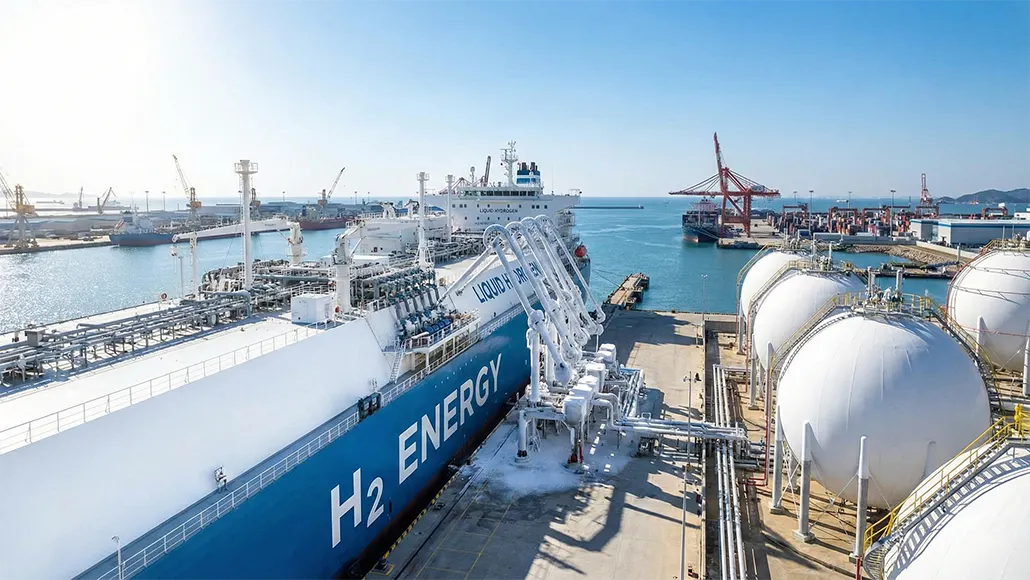
Liquefied hydrogen transport cooling hydrogen to -253°C and transporting in cryogenic tanks aboard specialized ships enables intercontinental hydrogen trade. Transport cost analysis suggests hydrogen production in high-quality renewable regions at $1-2 per kilogram, plus $0.30-0.60 per kilogram intercontinental transport, yields delivered hydrogen cost of $1.30-2.60 per kilogram. This is competitive with hydrogen production in resource-poor regions using lower-quality renewable resources or generating hydrogen through alternative methods (e.g., natural gas reforming with carbon capture).
Plans are advancing for hydrogen production hubs in renewable-rich regions and import terminals in demand centers. Australia has announced 25 GW of electrolyzer capacity targeting hydrogen export to Japan and South Korea. Chile is developing hydrogen export capacity utilizing Atacama Desert solar resource. Gulf Cooperation Council nations plan hydrogen production utilizing both renewable solar and natural gas with carbon capture and storage (CCS). Conversely, import terminals are being developed in Japan (planning 100+ million tons annual liquefied hydrogen/ammonia import capacity by 2050), Germany (North Sea hydrogen imports via subsea pipelines), and South Korea. This international hydrogen trade infrastructure represents a multi-hundred billion dollar investment but provides geopolitical and economic advantages compared to fossil fuel import dependence.
Electrolyzer Flexibility and Grid Stabilization
Emerging economic analysis reveals electrolyzers serve not just as hydrogen producers but as grid flexibility resources flexible electricity consumers that can adjust load dynamically in response to electricity prices and grid conditions. An electrolyzer operating in price-responsive mode turns on when wholesale electricity prices drop below a defined threshold (reflecting abundant renewable supply) and turns off when prices spike above the threshold (reflecting scarcity). This dynamic load shifting absorbs renewable variability without the capital cost of battery storage.
Modeling of Texas grid decarbonization found that 57 GW of electrolyzers (roughly equivalent to 9 million metric tons of hydrogen annually) providing flexible demand reduces wholesale electricity price spikes from $245 per MWh to $160 per MWh during constrained periods. This $85 per MWh price reduction over 50-100 high-price hours annually yields $2-4 billion in cumulative system value. Similar benefits are quantified in European Union modeling where price-responsive electrolyzers reduce system costs $2.1 billion annually compared to scenarios with restricted electrolyzer flexibility.
Regulatory frameworks in emerging hydrogen markets, particularly the EU, have imposed temporal correlation and additionality rules requiring electrolyzers to contract directly with renewable generators and operate only when those generators produce electricity. These rules, introduced to ensure hydrogen production accompanies renewable capacity expansion, have the unintended consequence of preventing electrolyzers from providing grid flexibility removing value that makes hydrogen cost-effective. Recent policy reforms permit greater flexibility in these requirements, recognizing that allowing electrolyzers to optimize across the broader electricity system reduces overall costs and accelerates hydrogen deployment. This policy evolution reflects recognition that hydrogen’s primary value proposition in energy systems is system flexibility and long-duration storage, not merely decarbonized fuel production.
Industrial Application Beyond Power Generation
Hydrogen’s applications extend far beyond power generation. Steel production using hydrogen reduction (replacing the fossil fuel-based blast furnace reduction process) has achieved pilot demonstration, with commercial deployment expected by 2025-2030. Hydrogen direct reduction produces molten iron chemically equivalent to blast furnace output, compatible with existing electric arc furnace steelmaking, but eliminating the 1.5-2 tons of CO₂ emissions per ton of steel produced through traditional reduction.
Ammonia synthesis, producing nitrogen fertilizers through the Haber-Bosch process (combining hydrogen and nitrogen), currently generates 1.5-2% of global emissions through fossil fuel hydrogen feedstock. Green hydrogen-based ammonia production, demonstrated at pilot scale, produces fertilizer without fossil fuels, critical for decarbonizing agriculture responsible for 10-15% of global emissions.
Chemical production, refining, and other hydrogen-intensive industries using 75 million metric tons of hydrogen annually can transition to green hydrogen as costs achieve parity with fossil fuel hydrogen. This industrial hydrogen transition alone avoids 700-900 million metric tons of CO₂ emissions annually, representing roughly 2-3% of global emissions.
The Hydrogen Transition Timeline
Evidence from cost declines, policy support, and project development suggests hydrogen deployment will accelerate substantially over the next decade. By 2030, green hydrogen production is projected to reach 3-5 million metric tons annually globally (up from current 1 million metric tons), representing 10-15% of total hydrogen production. By 2040-2050, green hydrogen could comprise 80-100% of global hydrogen supply, with production capacity aligned to demands from power systems, industrial process heat, chemicals, and potentially heavy transport.
The specific hydrogen role in each regional energy system will vary. Texas emphasizes domestic renewable hydrogen production for export and grid flexibility. Japan emphasizes imported hydrogen for direct power generation. Europe balances domestic renewable hydrogen production with imported hydrogen, leveraging both abundant wind (particularly offshore) and renewable-rich trading partners.
This differentiation reflects economic logic: producing hydrogen where renewable resources are cheapest, whether domestically or through international trade, minimizes overall system cost and accelerates global decarbonization. Hydrogen, rather than competing with electrification, completes the decarbonization toolkit providing long-duration storage, firm power generation, industrial process heat, and international energy trade pathways that pure electrification cannot achieve within reasonable cost and technical constraints.