
















Over the past few years, the concept of powering a whole house with solar energy has ceased to be a fantasy of the future because it has become feasible. The world has seen home owners employ solar power systems due to the development of solar technology, declining prices of panels and the increasing awareness of the environment; the use of the power systems offers a clean, reliable and not very expensive alternative to the conventional electricity.
Still, how are you going to solar-power your whole house? What is the equipment you require, how much will it cost and what are the important steps to take to make sure you have a successful set up? This guide simplifies all that you need to know.
The Solar Energy and its working.
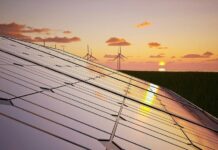
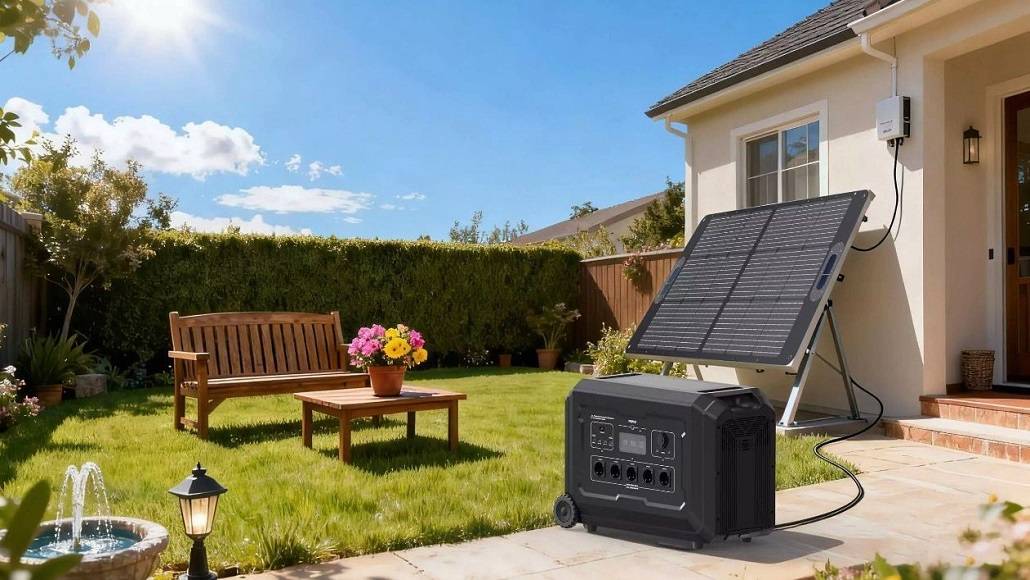
It is significant to know the working mechanism of whole house solar generator systems before getting deep into the process. The essence of solar energy systems is to transform sunlight into usable electricity with the help of photovoltaic (PV) panels. These panels produce direct current (DC) power which is later transformed into the alternating current (AC) type of electricity used by the appliances in your home using an inverter.
You can use any surplus energy (produced) to store this in batteries or feed some of it back into the grid known as net metering, depending on your arrangement and local energy policies.
Briefly, a solar-powered house will only have four primary systems:
- Solar Panel- This absorbs sunlight and converts it into electricity.
- Inverter – DC to AC power converter.
- Battery Storage (Optional) – It retains excess energy which can be used later.
- Net Meter (optional)- Measures energy that exchanges with utility grid.
Step 1: Assess the Energy requirements of your Home.
To achieve full-scale powering of your entire home with solar, the first thing you need to do is to identify the quantity of electricity consumed. This data is available on your monthly utility bills where it is normally indicated in kilowatt-hours (kWh).
For example:
- A medium-size apartment can use approximately 300-600 kWh/month.
- A medium sized family house can consume 800-1200 kWh per month.
- A big house that has heavy use of appliances would require 2,000+ kWh per month.
Knowing how much power you use, you can then guess the number of solar panels and the size system you will require to cover that power usage.
Step 2: Determine the Solar System Size that you require.
In order to calculate the correct size of your solar energy system, you should take into account the number of sunlight hours in your area.
As an example, in the case of 1,000 kWh/month of power consumption in your home and 5 hours of sunshine light on your area a day, then you would require approximately 6.5 kW solar system.
Here’s a simple formula:
10/x = System Size (kW) = monthlies = x /y = = Sun Hours per Day x 30 x 0.75 System Size (kW) = = Monthly Energy Use (kWh)/x/y =
(The 0.75 represents losses in efficiency as a result of heating, shading, and inverter operation)
This estimate can be refined to match the conditions of your home by online calculators and professional solar installers.
Step 3: Select the appropriate Solar Panels.
There are not just solar panels. The productivity, durability, and look of the product may differ considerably in line with brand and technology.
Types of Solar Panels
Monocrystalline Panels:
- Highest efficiency (18-22%)
- Sleek black look
- Good fit in homes that have small roofs.
Polycrystalline Panels:
- Moderate efficiency (15-17%)
- Lower cost
- Blue, speckled appearance
Thin-Film Panels:
- Lightweight and flexible
- Lower efficiency
- Excellent when it comes to special or mobile-use.
In the majority of residential systems, monocrystalline panels are more preferable because they are better performing and have a high lifespan (25+ years).
Step 4: Choose to go with Grid-Tied, Off-Grid or Hybrid systems.
Your solar system can be configured in three broad ways basing on your energy objectives:
Grid-Tied Systems
These are the least and most affordable arrangements. This system goes directly to the utility grid, which enables you to pull power during low production times of the sun and sell any extra energy at a credit.
Pros:
- Lower initial cost
- Does not need huge battery storage.
- Eligible for net metering
Cons:
Based on the grid supply (no power during outages)
Off-Grid Systems
They are entirely off the grid and they use battery storage as a source of electricity through the day and night.
Pros:
- Full energy independence
- Ideal for remote areas
Cons:
- Expensive initial cost because of batteries.
- Demands accurate regulation of energy.
Hybrid Systems
A hybrid system is the one that includes both grid and battery storage. It has the advantage of having backup power in the event of an outage and still having the grid as a failover mechanism.
Pros:
- Most flexible option
- Storage and stability of the grid.
- Smart energy optimization
Cons:
A little costlier than grid-tied systems.
Step 5: Decide How to store your battery
Although you can operate a home on the solar-powered mode and do not need batteries, energy storage has important benefits. You can save the surplus of solar energy in the daytime which can be used at night or when there is a power cut.
The battery types to be utilized in a Solar System include:
- Lithium-Ion (LiFePO4): Long life, high efficiency, and low maintenance.
- Lead-Acid: Less expensive and heavier, but has a shorter life.
An average battery system capacity is 5 to 15 kwh based on the amount of backup you desire. Lithium batteries are the most preferred long-term investment with most households.
Step 6: Test Suitability and Positioning of Roof.
The roof is very important in defining your system efficiency.
Consider the following:
- Direction: Orientation South-facing roofs (in the Northern Hemisphere) take the most sunshine.
- Tilt Angle: Angle of optimum is equal to your geographic latitude.
- Shading: Do not shade close trees, chimneys or high buildings which shade the sun.
- Condition: When installed, you must have a healthy roof.
In case your roof is not a good one, you can place ground-mounted panels where they would be well exposed.
Step 7: Installation and Professional Evaluation.
When you have picked out your parts, now it is time to install. The reasons why it is essential to hire a certified solar installer is the achievement of high safety levels, efficiency, and warranty.
An installer will:
- Test property and complete system design.
- Obtain necessary permits
- Mount panels are fixed on and make electrical components.
- Install inverters, batteries and monitoring devices.
- Test and activate the system
It can be installed in 2-5 days depending on the size and complexity of the system.
Step 8: Monitor, Maintain and Optimize.
Once installed, maintenance and access to the system is done regularly to keep your system running at optimum performance.
Maintenance tasks include:
- Cleaning of the panels after every couple of months to dispose of dust and garbage.
- Shading changes detection.
- The inverters and the wiring must be okay.
The solar systems are maintenance free though they require the services of professional check up occasionally to ascertain that efficiency is maintained and lifespan is prolonged.
The Environmental and the Payoff Financial.
The transition to solar power has a dual benefit: economic and environmental:
Financial Benefits
- Reduced power bills: The utility bills can be saved to 70-100 percent.
- Government incentives: Numerous areas are providing credits in the form of tax or rebates.
- Return on investment: The majority of the systems recover their costs in 5-8 years.
Environmental Impact
- Zero carbon emission: Solar power does not generate any greenhouse emission.
- Less reliance on fossil fuels: Foster cleaner energy production.
- Sustainable future: Every solar powered home will contribute to a reduction in pollution throughout the globe.
Final Thoughts
The ability to energize your house using solar power is no longer a green proposal, it is feasible and a fulfilling reality. The correct system design, smart energy management and a credible installation will help to experience the outcome of real energy autonomy and save money and save the planet.
With the constant advancement in technology and the reduction in costs, before long solar power will be the standard power source in homes, with houses everywhere turning into self power stations, and able to sustain themselves.