




























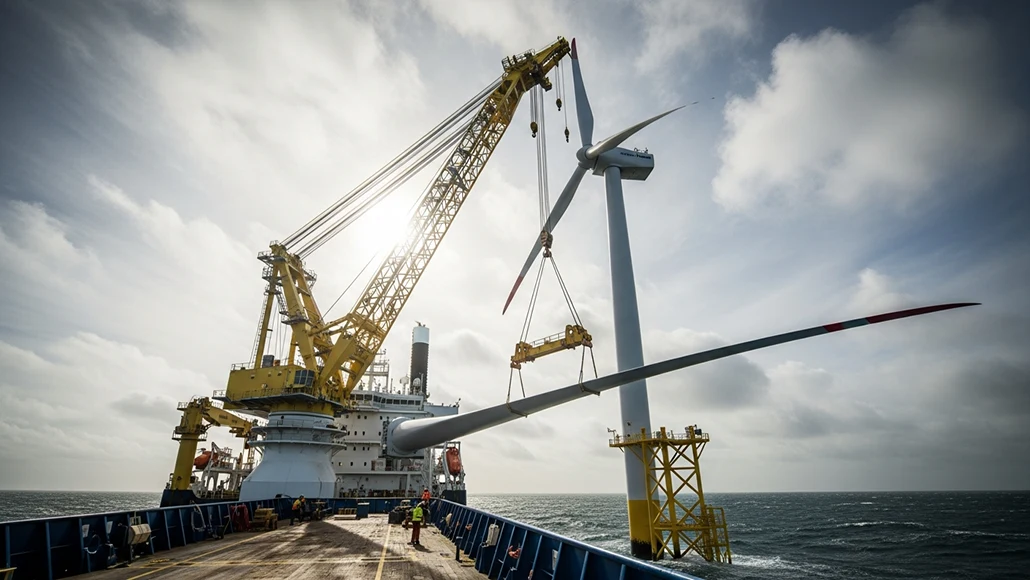

The latest UK offshore wind auction secured 8.2 gigawatts of new capacity, exceeding market expectations and strengthening the government’s chances of meeting its target to largely exit fossil fuels from power generation by 2030.
The result means the UK now needs roughly 7 gigawatts of additional capacity in the next auction, widely seen as the final realistic opportunity to have projects operational before the 2030 deadline. Developers were awarded contracts at higher subsidy levels than last year, a cost that will ultimately be borne by consumers, creating a challenge for Prime Minister Keir Starmer as he has pledged to reduce household energy bills during the current parliament.
“With these results, Britain is taking back control of our energy sovereignty,” said Energy Secretary Ed Miliband in a statement. He added that the outcome represents the largest single procurement of offshore wind capacity in British and European history.
Projects in the UK offshore wind auction were awarded at a strike price of £65.45 per megawatt-hour, above last year’s level but still expected to deliver a net benefit to consumer bills over the next decade, according to analysis from Aurora Energy Research.
RWE AG emerged as the dominant participant, involved in all but one of the winning projects. Separately, the company said it had reached an agreement with KKR & Co to jointly develop, build and operate the Norfolk Vanguard East and West projects, both of which secured contracts in the auction. One project, Dogger Bank South, has yet to receive planning approval, raising questions over whether it can be completed in time for the 2030 target. RWE shares rose as much as 3.5%, reaching their highest level in nearly 15 years.
The government said increased investment in renewables will help reduce electricity costs over time by cutting reliance on gas, even though the upfront cost of building wind farms is passed on to consumers in the short term. Total spending exceeded the original £900 million budget for fixed-bottom offshore wind and was expanded to nearly £1.8 billion under rules allowing additional projects to be selected if they offered value for consumers.
While offshore wind costs have fallen significantly since the early 2000s, recent supply-chain disruption, higher raw material prices and increased financing costs have pushed prices higher. These pressures have made developers more cautious and have limited bidding activity in several European markets over the past year.
Including floating offshore wind projects, total capacity awarded reached 8.4 gigawatts.
“The results of the government’s offshore and floating offshore wind auction represent a significant step forward in delivering the UK’s evolution to clean energy,” said James Alexander, chief executive officer of the UK Sustainable Investment and Finance Association.