
















Close
MCE 2026
World Hydrogen & Carbon Americas

Google DeepMind and CFS Partners on Fusion Energy Research

Note* - All images used are for editorial and illustrative purposes only and may not originate from the original news provider or associated company.

Subscribe

- Never miss a story with notifications

- Gain full access to our premium content

- Browse free from any location or device.

Media Packs

Expand Your Reach With Our Customized Solutions Empowering Your Campaigns To Maximize Your Reach & Drive Real Results!

– Access the Media Pack Now

– Book a Conference Call

Leave Message for Us to Get Back

Related stories

Hybrid Power Systems Combining Renewables Hydrogen and Dispatchable Generation

In-depth analysis of hybrid power system architecture integrating renewables, hydrogen storage and dispatchable generation to manage intermittency, enhance grid stability and achieve long-term decarbonisation targets.

Carbon Utilisation Pathways Creating New Value for Power Producers

Exploration of how captured carbon emissions are transformed into commercially viable products, from synthetic fuels to industrial feedstocks, improving project economics for power producers through carbon utilisation strategies.

Integrating Renewable Energy into Large-Scale Hydrogen Production

Examination of how solar, wind and hydro resources are integrated into large-scale hydrogen production, with focus on intermittency, optimisation and grid vs off-grid models.
- Advertisement -

Google DeepMind has joined forces with Commonwealth Fusion Systems (CFS) in a research partnership aimed at moving fusion energy forward. Fusion, the process that powers the sun, holds the potential for clean, abundant energy without the long-lived radioactive waste. It requires keeping an ionized gas, or plasma, stable at temperatures above 100 million degrees Celsius inside the confines of a fusion device. DeepMind is tackling this challenge with artificial intelligence, working to control one of the hardest physics problems in energy research.

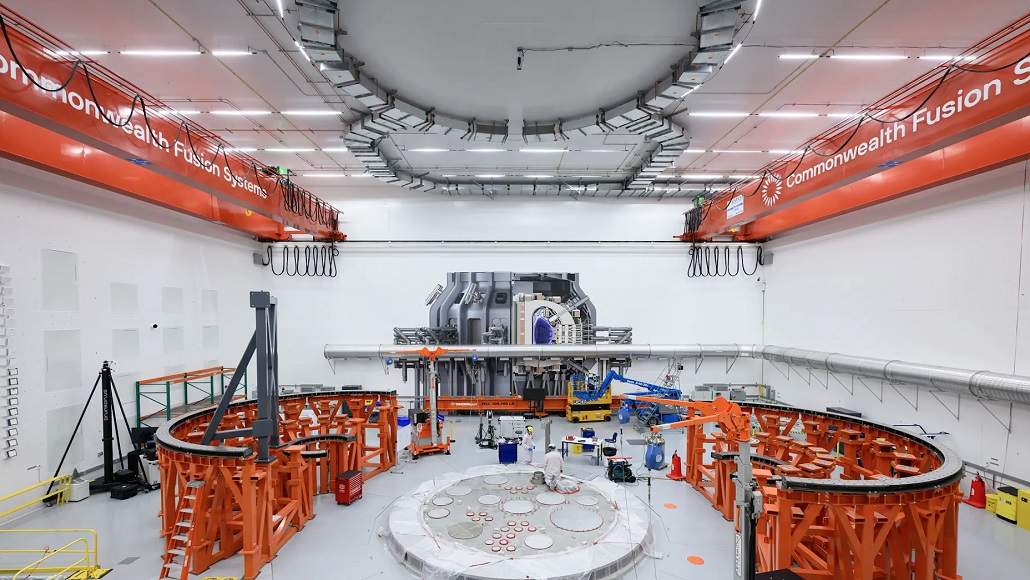
CFS, a well-known leader in fusion energy, is taking an ambitious approach with its compact tokamak, SPARC. The device uses high-temperature superconducting magnets and is built to produce more energy from fusion than it takes to sustain the reaction, a milestone called “breakeven.” Reaching this point is an important step toward making fusion a practical energy source for the world.

The collaboration builds on DeepMind’s earlier breakthroughs in AI-guided plasma control. Working with the Swiss Plasma Center at EPFL (École Polytechnique Fédérale de Lausanne), DeepMind demonstrated that deep reinforcement learning could control tokamak magnets to stabilize complex plasma shapes. To expand this work, the team also created TORAX, a fast, differentiable plasma simulator written in JAX. TORAX allows researchers to explore a wider range of plasma behaviors more efficiently, testing strategies that were previously too complex or time-consuming.

The partnership’s work centers on three main objectives:

  • Creating a fast and accurate differentiable simulation of fusion plasma.
  • Finding the most efficient and reliable ways to get the most out of fusion energy.
  • Exploring new real-time control methods using reinforcement learning.

Bringing together DeepMind’s AI skills and CFS’s advanced hardware gives the partnership a real chance to speed up fusion research. And beyond its scientific impact, the effort seeks to make fusion-generated electricity a reality on the grid, bringing clean, safe power to communities everywhere.

Latest stories

Related stories

Hybrid Power Systems Combining Renewables Hydrogen and Dispatchable Generation

In-depth analysis of hybrid power system architecture integrating renewables, hydrogen storage and dispatchable generation to manage intermittency, enhance grid stability and achieve long-term decarbonisation targets.

Carbon Utilisation Pathways Creating New Value for Power Producers

Exploration of how captured carbon emissions are transformed into commercially viable products, from synthetic fuels to industrial feedstocks, improving project economics for power producers through carbon utilisation strategies.

Integrating Renewable Energy into Large-Scale Hydrogen Production

Examination of how solar, wind and hydro resources are integrated into large-scale hydrogen production, with focus on intermittency, optimisation and grid vs off-grid models.

Electrolysis Technologies Advancing the Future of Clean Power

Comparative analysis of alkaline, PEM and solid oxide electrolysers, their efficiency, cost trajectories and implications for renewable-driven hydrogen and clean power.

Subscribe

- Never miss a story with notifications

- Gain full access to our premium content

- Browse free from any location or device.

Media Packs

Expand Your Reach With Our Customized Solutions Empowering Your Campaigns To Maximize Your Reach & Drive Real Results!

– Access the Media Pack Now

– Book a Conference Call

Leave Message for Us to Get Back

Translate »