





























Events Date: 9

US DOE Unveils New Fusion Science and Technology Roadmap

Note* - All images used are for editorial and illustrative purposes only and may not originate from the original news provider or associated company.

Subscribe

- Never miss a story with notifications

- Gain full access to our premium content

- Browse free from any location or device.

Media Packs

Expand Your Reach With Our Customized Solutions Empowering Your Campaigns To Maximize Your Reach & Drive Real Results!

– Access the Media Pack Now

– Book a Conference Call

Leave Message for Us to Get Back

Related stories

Ergonomics Improving Efficiency in Transmission Worksites

Optimizing the physical interaction between utility professionals and their environment, ergonomics transmission worksites initiatives are proving that worker comfort is a primary engine of operational speed. By refining tool design and harness mechanics, the power sector is reducing physical strain and fatigue, allowing crews to maintain peak performance throughout the demanding lifecycle of infrastructure projects.

Data Driven Insights Transforming Safety in Power Grids

Revolutionizing the management of risk in the energy sector, data driven safety power grids initiatives are turning vast streams of information into actionable protection strategies. By analyzing patterns of maintenance, environmental conditions, and worker behavior, utility providers are now able to predict hazards before they manifest, creating a more transparent and responsive safety environment for the modern electrical infrastructure.

Building Safety Culture Across Power Transmission Teams

Strengthening the human foundation of our energy networks, safety culture power transmission teams initiatives are moving beyond compliance to a deep-seated commitment to mutual protection. By fostering open communication, leadership accountability, and peer-to-peer engagement, utility organizations are creating an environment where every individual feels empowered to prioritize safety as a core personal and professional value.
- Advertisement -

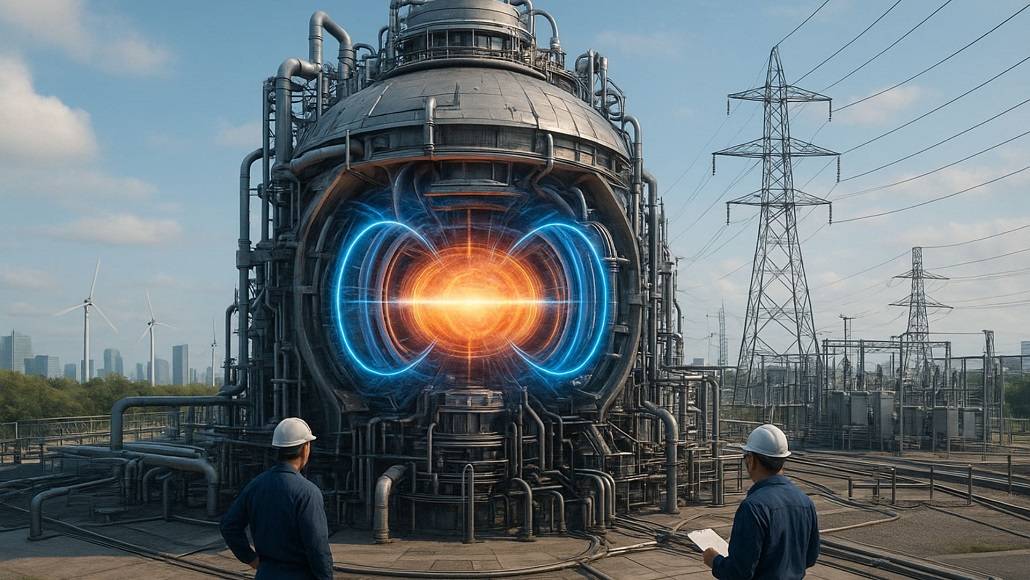
The U.S. Department of Energy (DOE) has unveiled its Fusion Science and Technology (FS&T) Roadmap, a national strategy aimed at accelerating deployment of fusion energy to full-scale commercialisation. The FS&T plan lays out DOE’s Build–Innovate–Grow approach, which brings together federal support and private-sector innovation to put fusion power on the grid by the mid-2030s.

The initiative aligns with President Trump’s Executive Order “Unleashing American Energy” and reflects the administration’s goal of boosting domestic energy production while reasserting U.S. leadership in the global energy space. By speeding up efforts toward fusion power deployment, the DOE aims to strengthen the nation’s electrical grid, rebuild key supply chains, and secure a future defined by dependable, American-made energy.

“The Fusion Science and Technology Roadmap brings unprecedented coordination across America’s fusion enterprise,” said Dr. Darío Gil, Under Secretary for Science at the Energy Department. “For the first time, DOE, industry, and our National Labs will be aligned with a shared purpose—to accelerate the path to commercial fusion power and strengthen America’s leadership in energy innovation. Thanks to President Trump’s leadership, the Department is streamlining the full strength of the U.S. scientific and industrial base to deliver fusion energy faster than ever before.”

Unveiled during a series of U.S. Fusion Energy Enterprise Events in Washington, D.C., the roadmap highlights collaboration among government, academia, and industry leaders to discuss the next phase of fusion development. Over 600 scientists, engineers, and industry experts took part in shaping the roadmap, identifying the main technical challenges and research gaps that must be overcome to develop a Fusion Pilot Plant (FPP) and keep the U.S. at the forefront of the global fusion industry.

At the center of the Fusion Science and Technology roadmap are three strategic pillars:

  • Build essential infrastructure to close materials and technology gaps;
  • Innovate using advanced research, high-performance computing, and artificial intelligence;
  • Grow the U.S. fusion ecosystem through partnerships, regional manufacturing hubs, and workforce expansion.

“Fusion is real, near, and ready for coordinated action,” said Jean Paul Allain, Associate Director of DOE’s Office of Fusion Energy Sciences. “This roadmap provides the strategic foundation for building the scientific, technical, and industrial base needed to ensure American leadership in commercial fusion on an ambitious timeline.”

With over $9 billion in private investment already advancing prototype reactor designs and burning-plasma projects, the DOE is leading a national effort to bridge remaining technical gaps in materials, plasma systems, fuel cycles, and plant engineering. The Build–Innovate–Grow approach aims to enhance supply chains, advance fusion research, and strengthen America’s competitive edge in delivering commercial fusion power.

While the Fusion Science and Technology roadmap outlines six key areas, structural materials, plasma-facing components, confinement systems, fuel cycles, blankets, and plant engineering integration, it does not commit DOE to specific funding levels. The DOE’s next steps will hinge on strong public-private partnerships and future Congressional funding as it pushes to grow the nation’s fusion sector through the 2030s.

Latest stories

Related stories

Ergonomics Improving Efficiency in Transmission Worksites

Optimizing the physical interaction between utility professionals and their environment, ergonomics transmission worksites initiatives are proving that worker comfort is a primary engine of operational speed. By refining tool design and harness mechanics, the power sector is reducing physical strain and fatigue, allowing crews to maintain peak performance throughout the demanding lifecycle of infrastructure projects.

Data Driven Insights Transforming Safety in Power Grids

Revolutionizing the management of risk in the energy sector, data driven safety power grids initiatives are turning vast streams of information into actionable protection strategies. By analyzing patterns of maintenance, environmental conditions, and worker behavior, utility providers are now able to predict hazards before they manifest, creating a more transparent and responsive safety environment for the modern electrical infrastructure.

Building Safety Culture Across Power Transmission Teams

Strengthening the human foundation of our energy networks, safety culture power transmission teams initiatives are moving beyond compliance to a deep-seated commitment to mutual protection. By fostering open communication, leadership accountability, and peer-to-peer engagement, utility organizations are creating an environment where every individual feels empowered to prioritize safety as a core personal and professional value.

Human Factors Shaping Safety in Power Transmission Work

Understanding the cognitive and psychological drivers of performance, human factors power transmission safety initiatives are refining the interface between the worker and the high-voltage environment. By addressing issues like cognitive load, decision-making biases, and fatigue, the energy sector is moving beyond physical protection to a sophisticated model of error prevention that acknowledges the inherent limitations and strengths of the human mind.

Subscribe

- Never miss a story with notifications

- Gain full access to our premium content

- Browse free from any location or device.

Media Packs

Expand Your Reach With Our Customized Solutions Empowering Your Campaigns To Maximize Your Reach & Drive Real Results!

– Access the Media Pack Now

– Book a Conference Call

Leave Message for Us to Get Back

Translate »