

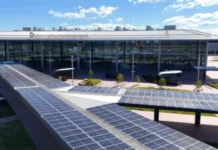
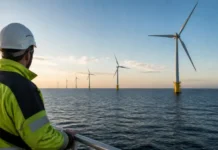
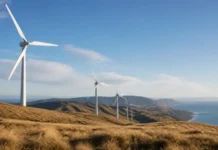

















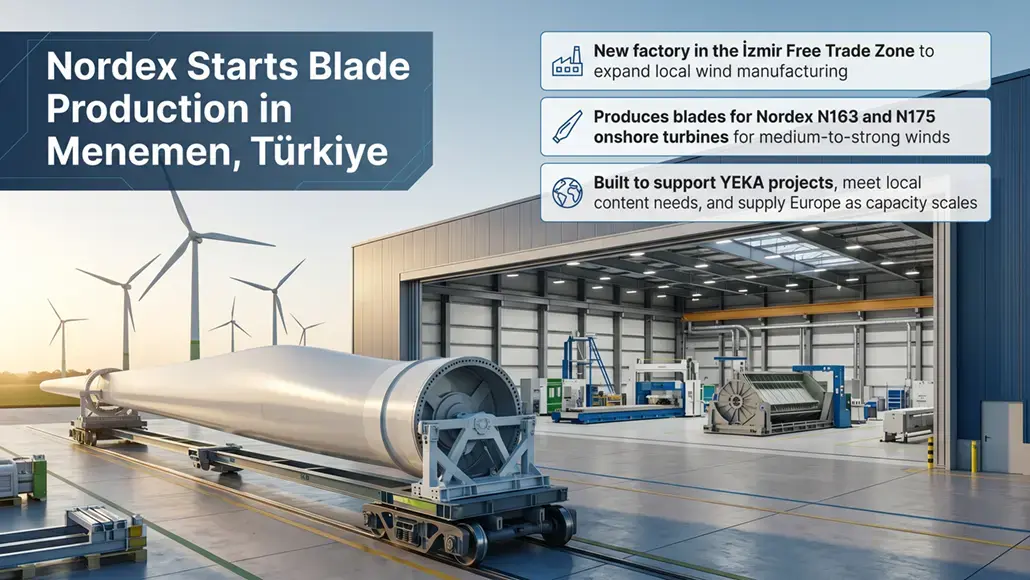

Nordex Group has started operations at its new blade manufacturing facility in Menemen, İzmir, Türkiye, marking a major expansion of the company’s local wind energy manufacturing footprint. The site, located within the İzmir Free Trade Zone, covers nearly 130,000m², including around 90,000m² allocated for production activities. The facility has been established to support rising regional demand for advanced onshore wind turbines and will focus on producing blades for the company’s latest N163 and N175 turbine platforms designed for medium-to-strong wind conditions. Rotor Blade Production at the site will initially support projects awarded under Türkiye’s YEKA-4 and YEKA-5 programmes, while also positioning the company to supply European wind energy markets.
Once the plant reaches full operational capacity, Nordex expects the site to manufacture as many as 1,200 rotor blades annually through four-shift operations. The facility is also expected to employ approximately 1,200 people across manufacturing and administration. The company stated that the new plant strengthens its ability to comply with local content requirements linked to Türkiye’s YEKA specifications while supporting the broader domestic wind industry supply chain. Türkiye has remained an important market for Nordex Group since 2009, with the company maintaining roughly 34% market share since 2017.
Nordex Group CEO José Luis Blanco said: “The start of production at our new blade factory in Menemen marks an important milestone in strengthening Nordex’s manufacturing footprint in Türkiye and supporting our long-term growth strategy in the country.
“By investing in local production capacity, we are not only contributing to the development of the wind industry in Türkiye but also enhancing our ability to fulfill further all local content requirements in accordance with the YEKA-specifications.”
Since 1985, the company has commissioned more than 64GW of wind power capacity across more than 40 global markets. Rotor Blade Production at the Menemen facility is expected to play a key role in supporting both domestic renewable energy projects and export demand from Europe.