




























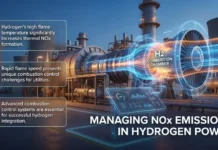



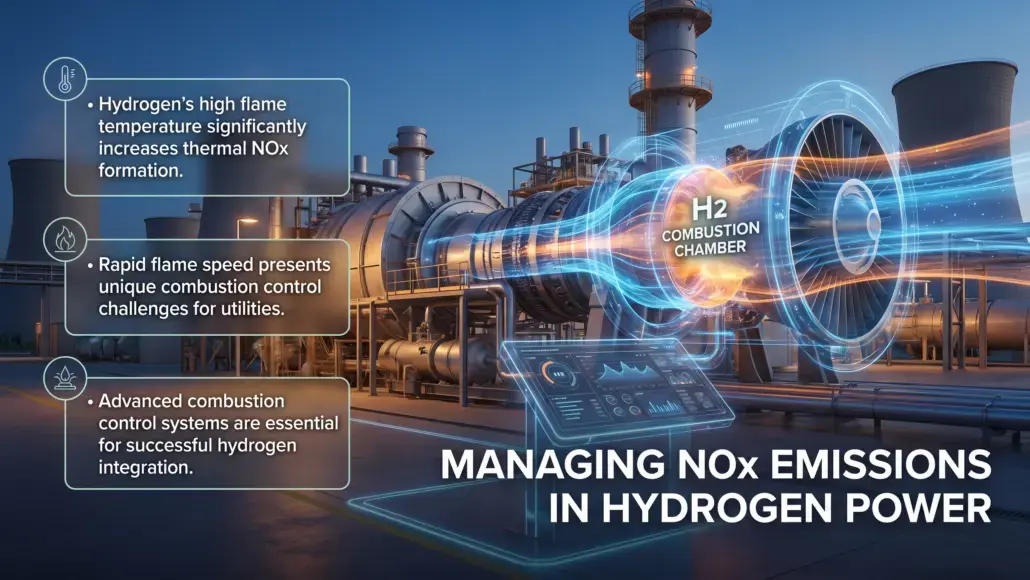

The transition to hydrogen-fueled power generation presents significant technical hurdles, particularly regarding the control of nitrogen oxides (NOx) emissions. Hydrogen’s unique combustion properties, such as its high adiabatic flame temperature and rapid flame speed, facilitate the formation of thermal NOx at rates significantly higher than those seen with natural gas. As utilities look to integrate hydrogen into their fuel portfolios, the deployment of hydrogen combustion control systems managing nox in power generation becomes essential. These systems are designed to regulate the combustion environment precisely, ensuring that the environmental benefits of using a carbon-free fuel are not offset by an increase in air pollutants that contribute to smog and respiratory issues.
Achieving low NOx levels while burning hydrogen requires a multi-faceted approach that combines advanced burner hardware with sophisticated control algorithms. The challenge lies in maintaining flame stability and efficiency while simultaneously keeping the flame temperature below the threshold where nitrogen and oxygen in the air begin to react. This balance is particularly difficult to achieve across the full operating range of a power turbine, from startup to peak load. By utilizing real-time data from high-fidelity sensors, modern control systems can adjust fuel and air flow in milliseconds to prevent the formation of hotspots and ensure uniform combustion.
Chemical Kinetics and Thermal Mechanism of NOx Formation in Hydrogen Flames
The formation of NOx during combustion is primarily driven by the Zeldovich mechanism, which is highly dependent on temperature. In hydrogen flames, the peak temperatures can exceed those of natural gas by several hundred degrees Celsius. This temperature increase accelerates the rate-limiting step of the Zeldovich mechanism, leading to an exponential increase in NOx production. Therefore, hydrogen combustion control systems managing nox in power generation must focus on temperature suppression as a primary strategy. Understanding the detailed chemical kinetics of hydrogen-air reactions is critical for designing the next generation of low-emission burners.
Unlike hydrocarbon fuels, hydrogen combustion does not produce prompt NOx, which is formed through reactions with hydrocarbon radicals. This means that nearly all the NOx produced in a hydrogen turbine is thermal NOx. This simplification of the chemistry allows for more targeted control strategies but places an even greater emphasis on managing the spatial and temporal distribution of heat within the combustion chamber. Any localized area of high temperature, even if transient, can lead to a significant spike in total NOx emissions. The design of the combustion liner and the fuel injection patterns must be optimized to promote rapid mixing and eliminate these temperature peaks.
The pressure at which combustion occurs also plays a role in NOx formation. In high-pressure gas turbines, the reactions proceed more quickly, further increasing the challenge of emissions control. Modern control systems must account for the effects of pressure and humidity on the combustion process, adjusting the operational parameters to maintain the desired emission profile. The integration of chemical kinetic models into the control software allows for more accurate predictions of NOx formation under varying load conditions, enabling the system to take proactive measures to mitigate emissions.
Diluent Injection Strategies for Flame Temperature Regulation
One of the most established methods for controlling NOx in hydrogen turbines is the injection of diluents such as steam, water, or nitrogen. These substances act as thermal sinks, absorbing a portion of the heat released during combustion and lowering the overall flame temperature. Hydrogen combustion control systems managing nox in power generation are responsible for precisely metering the amount of diluent injected, balancing the need for emissions reduction with the potential impact on turbine efficiency and maintenance. Excessive diluent injection can lead to flame instability or increased wear on the hot section components due to the high moisture content of the exhaust.
Nitrogen injection is particularly common in integrated gasification combined cycle (IGCC) plants, where nitrogen is available as a byproduct of the air separation unit. When hydrogen is produced via electrolysis, the availability of nitrogen may be limited, making steam or water injection more attractive. Each diluent has a different heat capacity and effect on the combustion chemistry, which must be factored into the control logic. The use of steam injection can also provide a small boost to power output, although this is often offset by the energy required to produce the steam.
The timing and location of diluent injection are critical for its effectiveness. Injecting the diluent directly into the fuel stream or the primary combustion zone provides the most immediate temperature reduction but can also interfere with flame stability. Advanced injection systems use multi-point delivery to ensure that the diluent is evenly distributed throughout the flame. The control system must continuously monitor the dynamic pressure in the combustion chamber to detect any signs of combustion instability that might be caused by the diluent injection, adjusting the flow rates accordingly to ensure safe and reliable operation.
Advanced Sensor Integration for Real-Time Combustion Monitoring
Precise control of hydrogen combustion is impossible without high-speed, accurate sensing of the combustion environment. Modern hydrogen combustion control systems managing nox in power generation rely on a suite of advanced sensors, including dynamic pressure transducers, flame scanners, and tunable diode laser absorption spectroscopy (TDLAS) systems. These sensors provide real-time information on the flame position, temperature, and chemical composition, allowing the control system to make instantaneous adjustments to the fuel and air valves. The ability to detect the onset of combustion instability before it reaches a critical level is a key safety feature of these systems.
Optical sensors are particularly valuable in hydrogen applications because the hydrogen flame is nearly invisible to the naked eye and emits light in different wavelengths than hydrocarbon flames. Specialized flame scanners that are sensitive to ultraviolet and infrared emissions are used to verify the presence of the flame and to monitor its characteristics. TDLAS systems can provide a cross-sectional measurement of gas temperature and moisture content in the exhaust, offering a more comprehensive view of the combustion process than point-source thermocouples. The integration of this high-fidelity data into the turbine’s control architecture allows for a more aggressive optimization of the emission profile.
Machine learning algorithms are increasingly being used to process the vast amounts of data generated by these sensors. By training on historical data, these algorithms can identify subtle patterns that indicate an impending shift in emissions performance or combustion stability. This predictive capability allows the control system to adjust the operational parameters before a limit is exceeded, reducing the frequency of trips and enhancing the overall reliability of the power plant. The combination of advanced hardware and intelligent software represents the state of the art in hydrogen combustion management.
Lean-Premixed Combustion and Micro-Mix Technology Developments
To avoid the inefficiencies and complexities of diluent injection, the industry is moving toward dry low NOx (DLN) technologies specifically designed for hydrogen. The most promising of these is lean-premixed combustion, where the fuel and air are thoroughly mixed before entering the combustion zone. By ensuring that there are no fuel-rich pockets, the peak flame temperature can be kept low, significantly reducing NOx formation. However, the high flame speed of hydrogen makes lean-premixed combustion prone to flashback. Advanced control systems must therefore include features to prevent and detect flashback events.
Micro-mix technology represents a significant evolution of the lean-premixed concept. Instead of a few large burners, a micro-mix system uses hundreds of tiny fuel injectors to create a multitude of very small flames. These small flames have a very low residence time in the high-temperature zone, which inherently limits the formation of NOx. The rapid mixing achieved by the micro-scale injectors also provides a high degree of resistance to flashback. The control system for a micro-mix burner must manage a complex network of fuel manifolds and valves, ensuring that the fuel distribution remains uniform across all the injectors.
The transition from conventional DLN to hydrogen-capable designs often involves a complete redesign of the burner hardware. Advanced manufacturing techniques, such as 3D printing, are being used to create the complex internal geometries required for optimal mixing and cooling. The control logic for these new burners is developed using computational fluid dynamics (CFD) simulations, which provide a detailed understanding of the interactions between the fuel, air, and flame. These technological advancements are paving the way for one hundred percent hydrogen combustion with NOx levels that meet the most stringent international standards.
Integration of Control Logic with Post-Combustion Emission Reduction Systems
While primary combustion control is the first line of defense against NOx, most modern power plants also utilize post-combustion systems like Selective Catalytic Reduction (SCR) to achieve ultra-low emission levels. The effectiveness of the SCR depends on the precise injection of ammonia or urea into the exhaust gas, which reacts with the NOx over a catalyst to form nitrogen and water. The hydrogen combustion control systems managing nox in power generation must be tightly integrated with the SCR control logic to ensure that the ammonia injection rate matches the fluctuating NOx concentration in the exhaust.
When a turbine is operating on hydrogen, the raw NOx levels entering the SCR may be different from those seen with natural gas, requiring a recalibration of the ammonia injection system. The control system must also account for the effects of the increased moisture content in the hydrogen exhaust on the catalyst’s activity and lifespan. Advanced feedback loops that utilize NOx sensors both upstream and downstream of the SCR allow for a more precise and responsive control of the emission reduction process. This integrated approach ensures that the total emissions from the power plant remain well below the regulatory limits.
The coordination between the combustion control and the SCR also plays a role in optimizing the overall efficiency of the plant. By reducing the amount of raw NOx produced in the turbine, the demand for ammonia in the SCR is lowered, reducing the operating costs and the potential for ammonia slip (the release of unreacted ammonia into the atmosphere). This holistic view of the emission control process is essential for the sustainable operation of hydrogen-fired assets. As the power generation sector continues to evolve, the sophistication and reliability of advanced control architectures will be a critical factor in the successful adoption of hydrogen as a mainstream fuel.