

















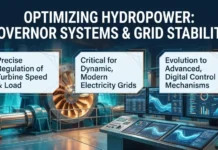




















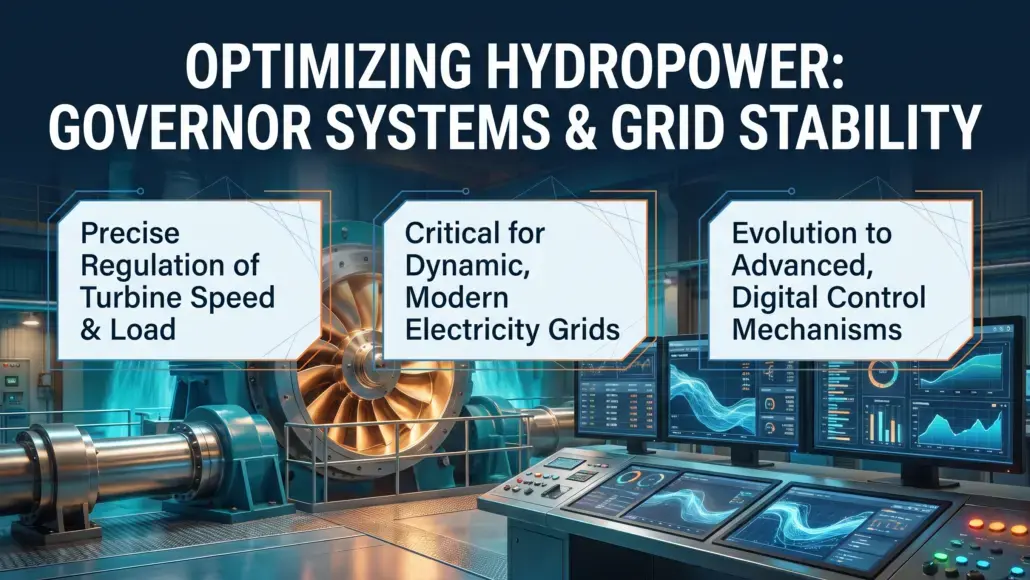

The precise regulation of turbine speed and load is fundamental to the operation of any hydropower facility, especially within the context of a modern, dynamic electricity grid. As the primary control mechanism, the governor system is responsible for managing the flow of water to the turbine runner, thereby controlling the power output and maintaining the synchronous speed of the generator. The evolution of hydropower governor systems from traditional mechanical hydraulic designs to advanced digital platforms has significantly improved the agility and accuracy of load regulation. These modern systems allow for more sophisticated control strategies, enabling hydropower plants to provide essential grid services such as primary frequency response and secondary load following. By integrating high speed data processing and precision hydraulic actuators, utilities can ensure that their assets respond rapidly to grid disturbances while maintaining the mechanical stability of the turbine generator set.
A governor system operates by comparing the actual speed or power output of the unit against a setpoint and adjusting the wicket gates or blades to correct any deviation. In older mechanical systems, this was achieved through a series of flyweights, dashpots, and hydraulic amplifiers, which, while reliable, were limited in their response speed and adjustability. The transition to digital governors has replaced these mechanical components with electronic controllers and high resolution sensors. This digital core allows for the implementation of complex control algorithms, such as proportional-integral-derivative (PID) logic, which can be fine tuned to match the specific hydraulic characteristics of the plant. The result is a more stable and responsive control system that can handle the rapid load changes required by modern power markets. This modernization process also facilitates the integration of the plant into broader regional grid management schemes, where automated coordination between different assets is essential for maintaining overall system balance. By utilizing standardized communication protocols, these digital governors can participate in wide area monitoring and control systems, providing an additional layer of stability for the transmission network. The use of high resolution sensors also provides a more detailed record of plant performance, allowing for a more nuanced understanding of how different operating regimes impact the long term health of the machine. This wealth of data is a vital resource for asset management, providing the evidence needed for investment decisions and regulatory reporting. The continuous evolution of these control platforms ensures that hydropower remains at the leading edge of technical innovation in the energy sector.
Digital Control Algorithms for Precision Frequency Support
The primary advantage of modern hydropower governor systems lies in their ability to provide precise frequency support to the grid. In a digital environment, the governor can be programmed with specific droop and deadband settings that dictate how the unit responds to frequency deviations. This precision is essential for participating in primary frequency control, where units must automatically adjust their output to stabilize the grid frequency following the loss of a large generator or load. Digital systems also allow for the implementation of virtual inertia and fast frequency response modes, which are increasingly required in grids with low levels of physical inertia from traditional rotating mass. These advanced features ensure that hydropower remains a vital component of grid stability even as the energy mix changes.
Additionally, digital control logic enables the implementation of feed-forward control strategies that can anticipate changes in grid demand. By receiving real time data from the grid operator, the governor can begin adjusting the turbine output before a frequency deviation occurs, improving the overall stability of the system. This proactive approach to load regulation is a significant improvement over traditional reactive methods, allowing for a more efficient and reliable delivery of power. The use of high speed communication protocols ensures that these control signals are transmitted and processed with minimal latency, providing the rapid response times necessary for modern grid operations. The integration of these advanced algorithms into the plant’s control architecture is a key driver of operational excellence in the hydropower sector.
Hydraulic Servomechanism Performance in Dynamic Grids
While the control logic has moved into the digital domain, the physical adjustment of the turbine remains a hydraulic process. The performance of the hydraulic servomechanisms, including the main distribution valves and the wicket gate servomotors, is critical for translating electronic control signals into mechanical action. Modern hydropower governor systems utilize high performance hydraulic components that are designed for high speed and precision. The use of proportional valves and high resolution position feedback sensors allows for the exact positioning of the wicket gates, ensuring that the water flow is regulated with minimal error. This level of mechanical precision is necessary for maintaining hydraulic stability and preventing pressure surges that could damage the water conveyance system.
The reliability of the hydraulic system is also enhanced through the use of advanced filtration and monitoring tools. Clean oil is essential for the smooth operation of the precision valves, and modern systems include continuous oil quality monitoring to detect contamination or degradation. Additionally, the use of redundant hydraulic pumps and accumulators ensures that the governor can maintain control even in the event of a component failure. These mechanical enhancements are vital for ensuring that the plant can operate reliably in a highly flexible mode, where frequent gate movements are the norm. By optimizing the performance of the hydraulic servomechanisms, utilities can ensure that their governor systems provide the necessary speed and accuracy for effective load regulation in a dynamic grid environment. This comprehensive approach to mechanical and electrical reliability ensures that the plant remains available to support the grid at all times, maximizing the economic and technical value of the asset. The integration of high performance hydraulics with digital control logic represents the current state of the art in the power generation industry, providing a level of precision that was once thought impossible for large scale hydropower machines. In addition to improving load regulation, these systems also contribute to the overall safety of the plant by providing rapid shutdown capabilities in the event of an emergency. This multifaceted value proposition is a key reason why many utilities are prioritizing the modernization of their governor fleets. By investing in these technologies, operators are not only improving their current performance but also preparing their assets for the challenges of a future energy system. The role of hydropower as a primary stabilizer of the grid is only possible through the systematic application of these advanced control technologies.
Stability Analysis of Closed-Loop Regulation Systems
The design and tuning of a governor system require a deep understanding of the closed-loop stability of the entire turbine-generator-grid system. Stability analysis involves modeling the hydraulic transients in the penstock, the mechanical inertia of the rotating mass, and the electrical characteristics of the grid. Modern hydropower governor systems are designed using sophisticated simulation tools that allow engineers to test various control parameters and identify potential stability issues before the system is commissioned. This analytical approach ensures that the governor is tuned for optimal performance across the entire operating range of the unit, from minimum load to full capacity.
One of the key challenges in stability analysis is managing the water hammer effect that occurs during rapid gate movements. When the wicket gates are closed quickly, the momentum of the water in the penstock creates a pressure surge that can lead to mechanical stress or hydraulic instability. Modern governors include specific logic to manage these transients, such as rate limiters and pressure feedback loops, which ensure that the gates are moved as quickly as possible without exceeding the safe limits of the infrastructure. By balancing the need for rapid response with the physical constraints of the plant, engineers can create a control system that is both agile and secure. The ongoing refinement of these stability models is a fundamental component of the technical progress in the hydropower industry.
Upgrading Legacy Governors for Modern Intermittent Loading
Many existing hydropower facilities still operate with legacy mechanical or early electronic governor systems that are ill-equipped for the demands of the modern power market. Upgrading these aging systems to modern digital platforms is a highly effective way to improve the flexibility and reliability of the plant. The upgrade process typically involves replacing the old control head with a new digital controller, while retaining the existing hydraulic actuators if they are in good condition. This hybrid approach provides many of the benefits of a full system replacement at a lower cost and with less downtime. In cases where the hydraulic components are also worn or outdated, a complete replacement of the governor system may be necessary to achieve the desired level of performance.
The benefits of these upgrades extend beyond improved load regulation. Modern digital governors provide a wealth of diagnostic data that can be used for predictive maintenance and performance optimization. By monitoring the response time and accuracy of the governor, operators can identify early signs of mechanical wear or hydraulic degradation, allowing for targeted repairs before a failure occurs. The integration of the governor data into the plant’s centralized management platform provides a holistic view of the machine’s health, facilitating better decision making regarding operational limits and maintenance priorities. As the energy transition continues to place new demands on the hydropower fleet, the modernization of governor systems will be an essential strategy for maintaining the sector’s competitiveness and reliability.
The evolution of turbine regulation systems represents a significant technical achievement that has transformed the way these assets are operated and integrated into the grid. By embracing the power of digital control and high precision hydraulics, the industry has created a framework for highly flexible and reliable power generation. The ability to provide precise frequency support and rapid load regulation is essential for a stable energy system, especially as the proportion of intermittent renewables increases. As technology continues to advance, the further refinement of governor logic and mechanical performance will ensure that hydropower remains the primary provider of grid stability. The commitment to innovation in this critical field is a testament to the industry’s role in creating a sustainable and resilient energy future for all.