













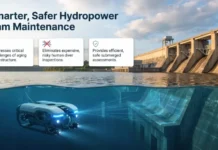









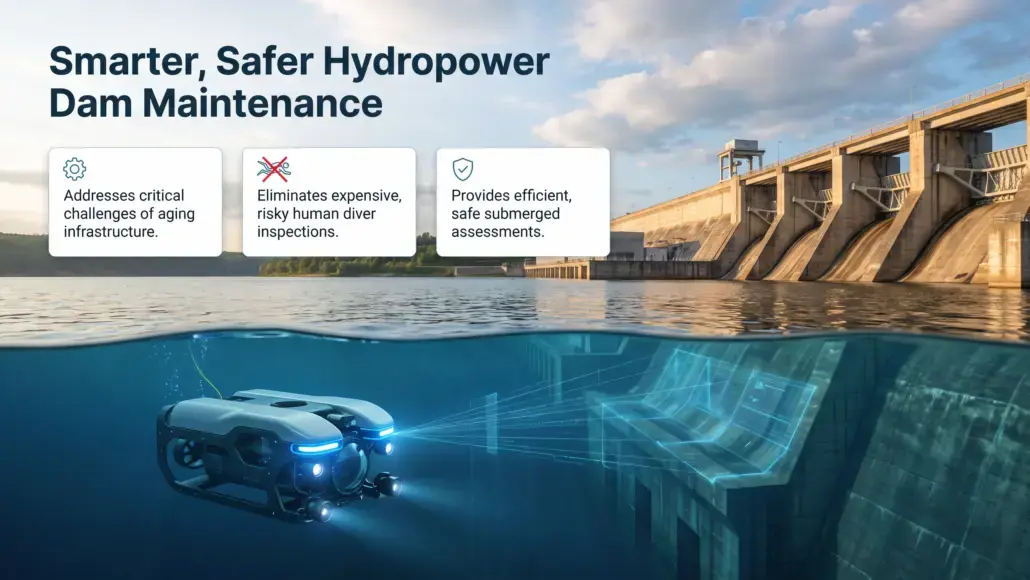

Maintaining the structural integrity of aging hydropower dams is a critical challenge for the global power generation industry. Traditional inspection methods often require dewatering or the use of commercial divers, both of which are expensive, time consuming, and carry significant safety risks. The emergence of these specialized tools has provided a more efficient and safer alternative for assessing the condition of submerged infrastructure. These technologies, ranging from remotely operated vehicles (ROVs) to autonomous underwater vehicles (AUVs), are equipped with high resolution cameras, sonar, and non-destructive testing sensors. By deploying these tools, dam owners can obtain detailed data on concrete degradation, seepage, and structural deformation without interrupting plant operations or putting human lives at risk. The ability to perform frequent, high precision inspections allows for a more proactive approach to maintenance, ensuring the long term safety and reliability of critical energy infrastructure.
The integration of advanced imaging and sensing technologies into robotic platforms has significantly improved the quality of data available to engineers. Modern ROVs can operate in high flow environments and reach depths that are inaccessible to divers, providing a comprehensive view of the entire dam structure. Sonar systems allow for the creation of three dimensional models of the underwater terrain and the dam face, identifying areas of erosion or sediment buildup that could impact hydraulic performance. Additionally, laser scanning and photogrammetry are used to detect fine cracks and surface defects with millimeter precision. This level of detail is essential for identifying early signs of structural distress, such as alkali-aggregate reaction or freeze-thaw damage, which can compromise the stability of the dam if left unaddressed.
Underwater Sensing and Structural Integrity Assessment
The deployment of robotic inspection systems for underwater assessment involves a variety of sophisticated sensing techniques designed to evaluate the internal health of concrete and masonry. Ultrasonic pulse velocity and ground-penetrating radar are being adapted for use on underwater robotic platforms, allowing engineers to look beneath the surface and detect voids, delamination, or internal cracking. These non-destructive testing methods provide a more accurate picture of the material condition than visual inspections alone. In a hydropower context, where structures are constantly exposed to high pressure and moisture, understanding the rate of internal degradation is vital for predicting the remaining service life of the asset. The data gathered by these sensors is integrated into structural health monitoring systems, providing a continuous record of the dam’s condition over time.
In addition to external assessments, these advanced tools allow for the inspection of internal conduits, such as penstocks and intake galleries, without the need for manual entry. These confined spaces present significant logistical challenges for human inspectors, including limited visibility and the risk of atmospheric hazards. Specialized crawlers and small scale ROVs can move through these passages, capturing high definition video and measuring wall thickness to identify corrosion or cavitation damage. The ability to inspect these critical components while the plant remains in operation, or during short maintenance windows, significantly reduces downtime and improves overall asset availability. By identifying localized issues before they develop into systemic failures, dam owners can target their repair efforts more effectively, optimizing the allocation of maintenance budgets. This proactive approach to internal inspections ensures that the heart of the power generation system remains in optimal condition, preventing costly emergency repairs and extending the operational life of the facility. The data gathered from these internal inspections is also used to refine hydraulic models, allowing for a more precise understanding of how water flow impacts the structural integrity of the conduits over time. In many cases, these internal inspections reveal sediment buildup or biofouling that could impede water flow and reduce energy production, providing another layer of operational value beyond mere structural safety. By integrating this internal data with external structural models, engineers can develop a holistic view of the dam system, ensuring that all components are functioning in harmony to maintain safety and efficiency. This level of comprehensive oversight is only possible through the systematic application of remote sensing technologies, which have revolutionized the field of civil engineering within the power sector.
Autonomous Navigation in High-Pressure Conduit Environments
Recent advancements in autonomous navigation and control have enabled robotic inspection systems to operate with increasing independence in complex hydropower environments. AUVs equipped with simultaneous localization and mapping (SLAM) algorithms can move through dark and murky water without the need for a tether, providing greater flexibility and range than traditional ROVs. These autonomous systems are particularly useful for inspecting long tunnels and large reservoir areas where tethers could become entangled or snagged on debris. The ability of the robot to follow a pre-programmed path and automatically adjust for water currents ensures consistent coverage and repeatable data collection, which is essential for long term monitoring.
In high-pressure conduit environments, the mechanical design of the robot must be specifically engineered to withstand the hydraulic forces. This often involves the use of streamlined hulls and high torque thrusters to maintain stability and position. The integration of pressure-tolerant electronics and redundant communication systems ensures that the robot can operate reliably in these demanding conditions. As the technology continues to mature, we are seeing the development of collaborative robotic swarms that can work together to map large areas or perform complex inspection tasks more quickly. This shift toward autonomy not only reduces the workload for human operators but also improves the accuracy and completeness of the structural assessment, providing a more reliable basis for engineering decisions.
Data Analytics for Long-Term Concrete Health Monitoring
The massive volume of data generated by robotic inspection systems requires sophisticated analytical tools to translate raw imagery and sensor readings into actionable maintenance plans. Machine learning algorithms are increasingly used to automate the detection of cracks and defects in concrete surfaces, significantly reducing the time required for manual review. By training these models on large datasets of dam images, they can learn to identify specific types of damage and assess their severity with high consistency. This automated approach allows for the processing of thousands of images in a fraction of the time it would take a human engineer, highlighting critical areas that require further investigation.
Long-term health monitoring also benefits from the ability to compare data from multiple inspection cycles. Digital twin technology allows for the creation of a virtual representation of the dam that is continuously updated with new inspection data. By tracking the progression of defects over years or even decades, engineers can model the rate of degradation and predict when specific repairs will be necessary. This predictive capability is a fundamental component of modern asset management, allowing for the transition from reactive repairs to a more sustainable, lifecycle-based maintenance strategy. The integration of robotic data into these digital platforms ensures that the most accurate and up-to-date information is always available to decision makers, improving the safety and efficiency of hydropower operations.
Reducing Human Risk in Submerged Infrastructure Repair
One of the primary drivers for the adoption of robotic inspection systems is the significant reduction in risk to human personnel. Diving operations in hydropower reservoirs are inherently dangerous, involving risks from differential pressure, entanglement, and mechanical equipment. By using robots to perform the majority of inspection and even some minor repair tasks, utilities can minimize the exposure of divers to these hazards. Robotic arms equipped with specialized tools can perform cleaning, grouting, and even underwater welding, allowing for repairs to be completed in environments that would be too dangerous for humans. This capability is particularly important for emergency repairs where time is of the essence and the conditions may be unstable.
Beyond the immediate safety benefits, the use of robots also allows for a more systematic approach to risk management. Detailed pre-repair inspections performed by robots provide divers with a clear understanding of the site conditions and the specific tasks they need to perform, reducing the time they need to spend underwater. In some cases, the entire repair process can be managed remotely, with human operators overseeing the robotic operations from the surface. This shift not only improves safety but also enhances the precision and quality of the repair work, as robots can operate with high consistency and repeatability. As the industry continues to prioritize safety and operational excellence, the role of robotics in dam maintenance will only continue to grow, providing a more secure and efficient way to manage our aging hydropower infrastructure.
The transformation of dam maintenance through the application of robotic technologies is a significant milestone for the power generation sector. By providing a safer, more accurate, and more cost-effective way to monitor and repair critical infrastructure, these systems are ensuring the long term viability of hydropower as a key component of the global energy mix. The integration of advanced sensors, autonomous navigation, and data analytics is creating a new paradigm for asset management, where decisions are based on comprehensive, real-time data rather than periodic, manual inspections. As the industry moves toward a more digital and automated future, the continued development of automated assessment tools will be essential for meeting the challenges of maintaining a safe and resilient energy system.