

























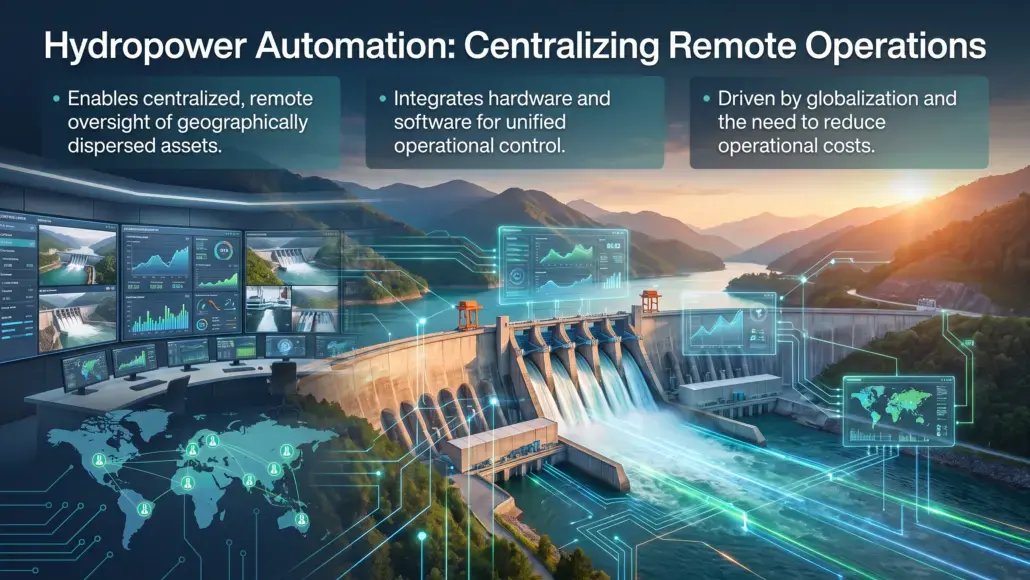

The globalization of the energy sector and the increasing pressure to reduce operational expenditures have catalyzed a significant shift toward the centralization of power plant management. For the hydropower industry, this transition is increasingly defined by the deployment of sophisticated hydropower automation systems that allow for the remote oversight and control of geographically dispersed assets. These systems integrate various layers of hardware and software to create a unified operational environment where real time data is translated into actionable insights. The move toward remote operations is not simply about reducing onsite personnel but rather about enhancing the precision with which plants are managed, allowing for higher availability and more responsive power generation. By utilizing high speed communication networks and advanced data processing, utilities can now manage entire portfolios of hydropower plants from a single command center, ensuring optimal performance across the board. This centralized approach enables a more strategic allocation of resources, as technical expertise can be shared across multiple sites without the logistical constraints of travel. In addition, the ability to aggregate data from diverse geographical regions allows for a more comprehensive understanding of regional water patterns and energy demands, leading to more informed generation planning.
The core of modern remote control technology lies in the Supervisory Control and Data Acquisition (SCADA) architecture, which has evolved from simple monitoring tools to comprehensive management platforms. These platforms now incorporate artificial intelligence and machine learning to predict potential failures and optimize generation based on market prices and water availability. The integration of sensors across every critical component,
from the turbine bearings to the transformer bushings,
provides a continuous stream of diagnostic information. When these data points are analyzed in aggregate, they reveal patterns that indicate the early stages of wear or inefficiency. This shift from reactive to proactive management is a hallmark of the digital transformation in the power sector, providing a level of visibility that was previously unattainable in decentralized or manually operated facilities. The implementation of these digital solutions also facilitates better regulatory compliance, as detailed operational logs can be automatically generated for reporting purposes. This reduces the administrative burden on plant managers and ensures that all safety and environmental standards are consistently met. The transparency provided by these platforms builds trust with stakeholders and regulators, demonstrating a commitment to operational excellence and environmental stewardship.
Centralized Control Architecture and Data Integration
Establishing a centralized control architecture is a foundational step in the modernization of power generation assets. This involves the installation of programmable logic controllers (PLCs) at the local plant level, which communicate with a central server via secure fiber optic or satellite links. These technical frameworks must be designed with high levels of redundancy to ensure that communication failures do not lead to loss of control. In a remote operating environment, the ability to reset systems or adjust parameters from hundreds of miles away requires a high degree of trust in the underlying technology. The integration process often involves reconciling data from legacy equipment with new digital sensors, requiring sophisticated middleware that can translate various industrial protocols into a standardized format for centralized analysis. This interoperability is key to modernizing older fleets without the need for complete equipment replacement, allowing for a more cost effective transition to digital operations. The use of standardized data models also simplifies the addition of new assets to the centralized network, providing a scalable solution for growing utilities.
Data integration also extends to external sources, such as meteorological services and grid management systems. By combining plant performance data with accurate weather forecasts, operators can better predict water inflows and adjust generation schedules accordingly. This is particularly important for run-of-river plants, where sudden changes in flow can significantly impact output. The centralized platform serves as a single source of truth, allowing different departments,
from maintenance crews to energy traders,
to access the same real time information. This cross-functional visibility improves decision making and ensures that the plant is always operating at its most efficient point, relative to both hydraulic conditions and market demands.
Predictive Maintenance through Distributed Sensor Networks
One of the most significant advantages of modern digital management is the ability to implement condition based maintenance strategies. In traditional plant operations, maintenance was typically performed on a fixed schedule, regardless of the actual state of the equipment. This often led to unnecessary downtime or, conversely, failed to prevent unexpected breakdowns between service intervals. Distributed sensor networks now monitor vibration, temperature, oil quality, and electrical partial discharge in real time. These sensors provide the raw data necessary for predictive algorithms to identify the specific moment when a component requires attention. By identifying issues before they lead to a forced outage, utilities can schedule repairs during periods of low market value or high water storage, minimizing the economic impact of the intervention.
The application of machine learning to this sensor data allows for even more refined diagnostics. By comparing current performance against historical trends and baseline models, the system can detect subtle anomalies that a human operator might miss. For instance, a slight increase in bearing temperature combined with a specific vibration frequency might indicate the beginning of a misalignment issue. Early detection allows for minor adjustments that can prevent major mechanical failures, extending the lifespan of the turbine generator set. This level of automated oversight is essential for remote operations, as it provides the necessary assurance that the plant is functioning within its safe operating limits even when no staff are physically present on site.
Cybersecurity Protocols for Remote Infrastructure Management
As hydropower automation systems become more interconnected and reliant on external networks, the risk of cyber threats increases. Protecting critical infrastructure from unauthorized access is a top priority for utilities and government agencies alike. Remote operations require a multi-layered security approach, beginning with the physical isolation of control networks from the public internet through hardware based firewalls and virtual private networks. Encryption of data in transit ensures that even if a communication link is intercepted, the information remains unreadable to malicious actors. Additionally, strict identity and access management protocols ensure that only authorized personnel can make changes to plant settings, with every action logged for future audit.
Beyond technical measures, the human element of cybersecurity must also be addressed. Personnel working in centralized control rooms require specialized training to recognize phishing attempts and other social engineering tactics. Regular security audits and penetration testing help identify vulnerabilities in the system before they can be exploited. The integration of intrusion detection systems within the automation platform provides real time alerts if unusual network activity is detected, allowing for immediate response. In the context of remote plant management, cybersecurity is not an optional add-on but a fundamental requirement for the safe and reliable delivery of power. A comprehensive security posture ensures that the benefits of automation are not overshadowed by the risk of digital disruption.
Operational Efficiency in Unmanned Power Generation Facilities
The ultimate goal of deploying hydropower automation systems is to achieve a level of operational efficiency that allows for the safe management of unmanned facilities. In many remote regions, attracting and retaining skilled technical staff to live on site is a significant challenge. By automating routine tasks,
such as synchronizing units to the grid, managing trash rack cleaning, and adjusting water levels,
utilities can significantly reduce the need for a constant physical presence. Maintenance crews can then be dispatched from a central hub only when the diagnostic data indicates a specific need, rather than being stationed at each individual plant. This model dramatically reduces labor costs while improving the quality of work, as technicians can focus on specialized repairs rather than routine monitoring.
However, the transition to unmanned operations requires a rethinking of safety and emergency protocols. Automated systems must be capable of detecting fire, flooding, or mechanical failures and initiating an immediate shutdown without human intervention. Remote visual monitoring through high definition cameras and thermal imaging provides the central control room with situational awareness, allowing them to verify the status of the plant before dispatching a response team. The combination of automated safety triggers and remote oversight creates a secure environment that meets all regulatory requirements for unmanned operation. As the technology continues to mature, the prevalence of these highly efficient, remotely managed hydropower assets will likely become the standard for the industry, providing a scalable solution for sustainable power generation.
The evolution of hydropower automation systems represents a fundamental shift in how the industry approaches asset management. By embracing the power of data and remote connectivity, utilities can overcome the geographical and logistical challenges associated with traditional plant operations. The integration of advanced diagnostics, secure communication, and automated control logic creates a resilient framework for the future of power generation. As the energy transition continues to place new demands on the grid, the agility and efficiency provided by these systems will be indispensable. The move toward remote operations is not just a trend but a necessary adaptation to a modern, digitally driven energy environment, ensuring that hydropower remains a reliable and cost effective source of renewable energy for decades to come.
This continuous flow of information, processed through sophisticated algorithms, provides the basis for a more resilient and responsive energy infrastructure. As the global demand for clean energy grows, the ability to manage hydropower assets with high precision will be a defining factor in the success of the energy transition. Utilities that invest in these advanced technologies will be better equipped to meet the challenges of a changing climate and a fluctuating power market, ensuring the long term sustainability of their operations. The integration of digital tools into the physical world of power generation is not just an upgrade but a necessity for the modern era, providing the foundation for a stable and reliable energy future. By prioritizing the development of these systems, the industry can ensure that hydropower remains a cornerstone of the global energy mix for decades to come.