



















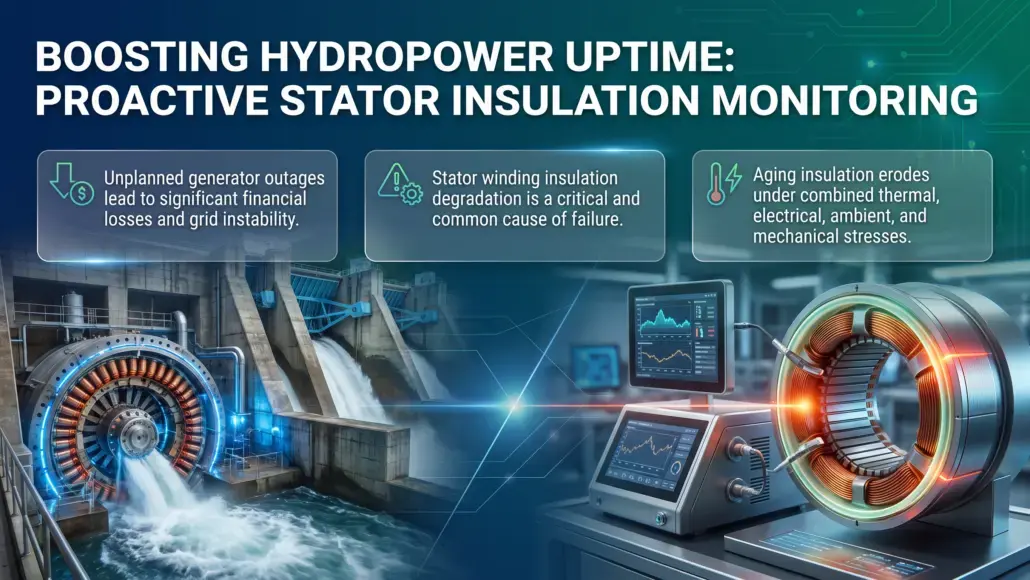

The reliability of high voltage generators is a cornerstone of efficient hydropower production, where unplanned outages can result in significant financial losses and grid instability. Among the various failure modes for these large scale machines, the degradation of stator winding insulation is one of the most common and critical. As generators age, their insulation systems are subjected to a combination of thermal, electrical, ambient, and mechanical stresses that gradually erode the dielectric strength of the materials. The implementation of these continuous tracking systems has become an essential practice for modern plant operators, providing a way to detect the early onset of insulation distress before a catastrophic fault occurs. By utilizing advanced diagnostic tools, utilities can transition from time based maintenance to a more effective condition based approach, optimizing the lifespan of their generating assets and ensuring a stable supply of renewable power.
Modern insulation monitoring systems focus primarily on the detection and analysis of partial discharge activity within the stator windings. Partial discharges are small electrical sparks that occur within voids or defects in the insulation, serving as a precursor to more severe electrical breakdown. The ability to monitor these discharges in real time, while the generator is in operation, allows for a more accurate assessment of the insulation health than periodic offline testing. As the discharge activity increases in intensity or frequency, it indicates a progression in the degradation process, such as the development of mica delamination or the erosion of semiconductive coatings. By tracking these trends over time, engineers can identify the specific units that require attention, allowing for targeted maintenance interventions during scheduled outages.
Partial Discharge Analysis for High-Voltage Windings
The analysis of partial discharge data is a complex task that requires specialized hardware and sophisticated software algorithms. Capacitive couplers are typically installed on the generator terminals to capture the high frequency signals associated with discharge events. These signals are then processed to filter out external electrical noise from the grid or nearby machinery, ensuring that the resulting data accurately reflects the condition of the stator insulation. The use of phase resolved partial discharge patterns allow experts to distinguish between different types of insulation defects, such as internal voids, slot discharge, or surface tracking. This diagnostic precision is vital for determining the appropriate remedial action, whether it be a simple cleaning of the end windings or a more extensive re-wedging of the stator bars.
In addition to identifying the type of defect, stator insulation monitoring systems also provide information on the location of the discharge activity. By comparing the signals from different sensors, it is possible to pinpoint the specific phase or even the individual slot where the insulation is failing. This level of detail significantly reduces the time required for visual inspections and manual testing, allowing maintenance crews to focus their efforts on the most critical areas. Additionally, the integration of temperature and humidity data into the analysis provides a more holistic view of the factors driving insulation aging. High temperatures, in particular, accelerate the chemical degradation of the epoxy resins used in modern insulation systems, making thermal management a key component of overall generator reliability. This expanded dataset allows for a more nuanced understanding of how environmental conditions interact with electrical stress to influence the rate of dielectric decay. By correlating these factors, engineers can refine their aging models and provide more accurate predictions of when the insulation will reach critical levels of degradation. The inclusion of atmospheric parameters is especially important for plants located in tropical or coastal environments, where high humidity and salt air can accelerate surface tracking and other forms of external insulation distress. In these regions, the monitoring system serves as a vital safeguard against the rapid deterioration that can occur when electrical and environmental stresses combine. The use of advanced data visualization tools also helps operators identify these complex relationships more easily, facilitating a more proactive approach to plant management. This comprehensive view of the generator environment ensures that all potential threats to insulation integrity are addressed, maintaining a high level of reliability even in the most challenging operational conditions. High temperatures, in particular, accelerate the chemical degradation of the epoxy resins used in modern insulation systems, making thermal management a key component of overall generator reliability.
Thermal Stresses and Dielectric Degradation Mechanisms
Thermal stress is a primary driver of insulation degradation in hydropower generators, especially in plants that operate with frequent load cycling. As the power output of the unit changes, the stator windings undergo thermal expansion and contraction, which can lead to mechanical strain between the copper conductors and the insulation wall. Over thousands of cycles, this mechanical fatigue can create micro-cracks and voids where partial discharge activity can begin. Continuous diagnostic oversight helps track the impact of these thermal cycles on the long term health of the machine. By monitoring the relationship between load, temperature, and discharge activity, operators can identify the operational regimes that are most damaging to the insulation, allowing for more informed decisions regarding plant dispatch and load management.
The chemical breakdown of the dielectric materials is another critical degradation mechanism. In older generators that use asphaltic or shellac based insulation, the materials can become brittle and lose their adhesive properties over time. Even in modern epoxy mica systems, prolonged exposure to high temperatures can lead to a loss of dielectric strength. High voltage diagnostic systems provide a continuous assessment of the insulation’s ability to withstand electrical stress, ensuring that the unit remains within its safe operating limits. When the monitoring data suggests that the insulation has reached the end of its reliable service life, utilities can plan for a full stator rewind well in advance, avoiding the chaos and expense of an emergency failure. This long term planning is essential for maintaining the economic viability of aging hydropower facilities in a competitive power market.
Real-Time Diagnostic Integration with SCADA Systems
The value of these technical monitoring tools is significantly enhanced when the diagnostic data is integrated directly into the plant’s Supervisory Control and Data Acquisition (SCADA) system. This integration allows for the real time visualization of insulation health alongside other critical parameters, such as vibration, oil temperature, and electrical output. Automated alarms can be set to trigger if discharge activity exceeds predefined thresholds, providing operators with immediate notification of a potential issue. This early warning system allows for a rapid response, such as reducing the load on the unit to mitigate further damage until a detailed inspection can be performed. The ability to correlate insulation data with other operational variables provides a deeper understanding of the root causes of degradation, leading to more effective long term maintenance strategies.
In addition, the aggregation of diagnostic data across an entire fleet of generators allows for the identification of systemic issues and the benchmarking of performance. By comparing the insulation health of similar units, utilities can identify best practices for operation and maintenance that extend asset life. The use of cloud based analytics platforms facilitates the sharing of data with equipment manufacturers and specialized consultants, who can provide expert interpretations of complex discharge patterns. This collaborative approach to asset management ensures that the latest technical knowledge is applied to the maintenance of the hydropower fleet. The integration of advanced diagnostics into the digital core of the plant is a clear indication of the industry’s shift toward a more data driven and proactive approach to generator reliability.
Extending Generator Lifespan through Targeted Remediation
The ultimate goal of stator insulation monitoring is to extend the service life of the generator while minimizing the risk of failure. When the monitoring data identifies a localized area of insulation distress, plant owners can perform targeted remediation rather than a full rewind. This might involve the injection of specialized resins to fill voids, the replacement of loose stator wedges, or the application of new semiconductive coatings to suppress slot discharge. These minor interventions can significantly slow the rate of insulation aging, adding years of reliable service to the machine at a fraction of the cost of a major overhaul. The ability to perform these repairs early in the degradation cycle is key to optimizing the total cost of ownership for the asset.
Targeted remediation also allows for a more flexible approach to maintenance scheduling. Instead of taking a unit out of service for an extended period for a complete rebuild, operators can perform shorter, more frequent interventions that address the most pressing issues. This approach is particularly valuable in regions where hydropower is a critical source of grid stability and downtime must be kept to a minimum. As the energy transition continues to place new demands on the power generation sector, the ability to maintain a high level of availability through intelligent asset management will be a defining characteristic of successful utilities. By embracing the power of stator insulation monitoring, the hydropower industry can ensure that its primary generating assets remain in peak condition, providing a reliable foundation for a clean and sustainable energy future.
The implementation of these advanced monitoring tools represents a significant advancement in the field of electrical engineering within the power sector. By providing a clear window into the internal health of the stator windings, these systems allow for a more nuanced and effective approach to maintenance. The shift away from reactive repairs toward proactive, data driven asset management is essential for meeting the challenges of a modern power grid. As generators continue to age and operational requirements become more demanding, the importance of maintaining insulation integrity will only grow. Through the systematic application of stator insulation monitoring, the hydropower industry is demonstrating its commitment to operational excellence and the long term reliability of its critical infrastructure.