




























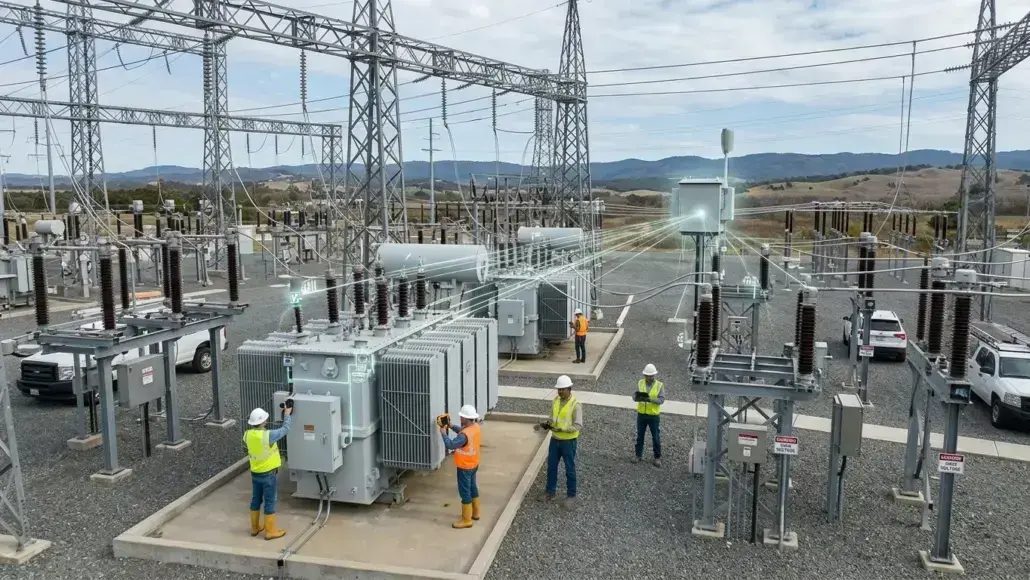

In the complex and high-stakes world of electrical engineering and utility management, the health of our power infrastructure is the thin line between a functioning, modern society and widespread chaos. For many decades, the industry operated primarily on a “break-fix” model or, at its most advanced, a schedule-based maintenance routine. However, as the global demand for electricity intensifies and the grid becomes increasingly complex with the integration of variable renewables and distributed energy resources, these traditional methods are no longer sufficient. The emergence of condition monitoring power asset reliability has fundamentally changed the management paradigm. By shifting from reactive maintenance to a data-driven, predictive approach, we are now able to “listen” to the internal health of our transformers, switchgear, and industrial motors, identifying signs of distress long before they lead to a catastrophic and costly failure.
The Evolution of Maintenance Strategies in the Digital Age
To fully appreciate the value of modern diagnostics, one must first understand the severe limitations of traditional maintenance philosophies. Schedule-based maintenance often leads to “over-maintenance,” where perfectly functional components are serviced or replaced prematurely, wasting valuable capital and potentially introducing human error during the reassembly process. Conversely, reactive maintenance simply waiting for a failure to occur is incredibly expensive due to the resulting unplanned downtime, emergency repair costs, and the risk of significant collateral damage to surrounding equipment.
Condition monitoring power asset reliability offers a sophisticated “just-in-time” solution. It utilizes continuous or high-frequency data collection to assess the actual physical state of the asset in real-time. If the analytics indicate that a bearing is beginning to wear out or that an insulation layer is starting to degrade, maintenance can be strategically scheduled during a planned outage. This ensures that the impact on the power grid or the industrial production line is minimized, saving millions of dollars in lost productivity and ensuring a steady supply of energy to consumers.
The Sensor Revolution and Real-Time Data Acquisition
The backbone of any effective monitoring system is the array of sensor technology used to gather information from the physical world. In the context of condition monitoring power asset reliability, this involves a wide and diverse range of physical measurements. For rotating machinery like generators and large pumps, vibration sensors, specifically high-frequency accelerometers, are used to detect minute imbalances, misalignments, or early-stage bearing wear. For critical high-voltage assets like power transformers, dissolved gas analysis (DGA) sensors monitor the chemical composition of the insulating oil in real-time.
Changes in the levels of gases like hydrogen or ethylene can reveal internal arcing, partial discharge, or localized overheating that would otherwise be invisible. Thermal imaging and infrared sensors are also vital components, as they can identify “hot spots” in electrical connections and busbars that indicate high resistance or poor contact. The ability to collect this vast amount of data in real-time and transmit it wirelessly to a centralized, cloud-based dashboard has made sophisticated monitoring more accessible and cost-effective than ever before for utilities of all sizes.
Predictive Diagnostics and the Power of Artificial Intelligence
Simply collecting data is only half the battle; the real transformative value lies in the intelligent interpretation of that data. This is where the field of reliability analytics and artificial intelligence (AI) come into play. A modern condition monitoring power asset reliability system does not just present a simple graph of temperature or vibration; it uses sophisticated machine learning algorithms to compare current readings against a vast historical database of “fingerprints” representing both healthy operation and known failure modes.
These AI models can be trained to recognize the subtle, non-linear precursors of a failure anomalies that are often invisible to the most experienced human operators. For instance, a very slight change in the harmonic profile of a motor’s current can predict a winding insulation failure weeks or even months in advance. This level of predictive diagnostics allows for a level of precision in power asset management that was previously unimaginable, transforming maintenance from a guessing game into a rigorous science.
Monitoring Critical Infrastructure: Transformers and Switchgear
Power transformers are perhaps the most critical and expensive individual assets in any power system. A single major transformer failure can cost several million dollars in equipment costs alone and leave thousands of people or entire industrial zones without power for days. Through the application of condition monitoring power asset reliability, transformers are now equipped with “smart” bushings and continuous oil monitoring systems that provide a non-stop stream of health data.
Similarly, for medium and high-voltage switchgear, partial discharge (PD) monitoring is used to detect the tiny electrical sparks that occur when insulation begins to break down. PD monitoring is particularly effective because it allows for the detection of “incipient” faults those that are in the very early stages of development and have not yet caused a full breakdown. By addressing these issues while they are still minor, the operational life of the asset can be extended by years, if not decades, drastically improving the return on investment for the utility provider.
Integrating Monitoring into Enterprise Asset Management Systems
For a large utility or a massive industrial plant, the challenge is not just monitoring one piece of equipment, but managing thousands of individual components across a wide geographic area. Condition monitoring power asset reliability must therefore be fully integrated into a broader Enterprise Asset Management (EAM) or Power Asset Management (PAM) framework. This integration allows for the automated prioritization of maintenance tasks across the entire fleet.
If the analytics suggest that five different transformers across a network need attention, the system can automatically rank them based on the severity of the detected condition and the criticality of the load they serve such as a hospital versus a residential neighborhood. This ensures that limited maintenance budgets and specialized manpower are deployed where they will have the greatest impact on overall system reliability. Furthermore, this empirical data provides a solid basis for long-term capital expenditure decisions, helping managers decide exactly when to repair an aging asset and when it is truly more cost-effective to replace it.
The Critical Role of Edge Computing in Performance Tracking
As the number of installed sensors grows into the millions, the sheer volume of data can become overwhelming for traditional centralized networks. To address this, many modern condition monitoring power asset reliability systems utilize “edge computing.” Instead of sending every raw, high-frequency data point to the cloud, the sensor itself or a local gateway performs the initial processing and analysis.
The system only transmits significant alerts or summarized health indices to the central server. This dramatically reduces the bandwidth requirements and allows for much faster response times in critical situations. For example, if an edge-based sensor detects a sudden, massive surge in vibration that indicates an immediate risk of mechanical failure, it can trigger an emergency shutdown signal locally in milliseconds, protecting the high-value asset before the failure can propagate, without ever needing to wait for a round-trip to a remote cloud server.
The Future: Toward Fully Autonomous Self-Healing Systems
Looking toward the next decade, the ultimate goal is to move beyond mere monitoring toward autonomous diagnostics and, eventually, self-healing power systems. We are already seeing the emergence of highly sophisticated “digital twins,” where every physical power asset has a virtual, mathematical counterpart that updates in real-time based on sensor data. In the future, condition monitoring power asset reliability data will be used by these digital twins to run continuous “what-if” simulations.
If a transformer is operating at 110% capacity during an extreme heatwave, the system can predict exactly how much of its remaining life is being consumed and suggest automated load-shedding strategies to protect the asset’s health. Eventually, we may see robotic systems or automated lubrication units that can perform minor preventative maintenance such as topping up insulating oil or tightening electrical connections automatically based on the diagnostic data. This would further reduce the need for human intervention in hazardous environments and ensure that our power systems are as resilient and autonomous as possible.
In conclusion, the fundamental shift toward proactive and predictive monitoring is a defining trend in 21st-century electrical engineering. Condition monitoring power asset reliability is not just a tool for avoiding inconvenient failures; it represents a total shift in how we value and manage our global industrial heritage. By turning physical signals into actionable intelligence, we are making our power systems more resilient, more efficient, and more sustainable. As sensor technology continues to advance and AI models become even more sophisticated, the “unplanned outage” may one day become a relic of the past, replaced by a future of seamless, continuous, and perfectly reliable energy delivery for all.