

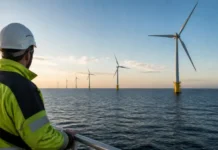


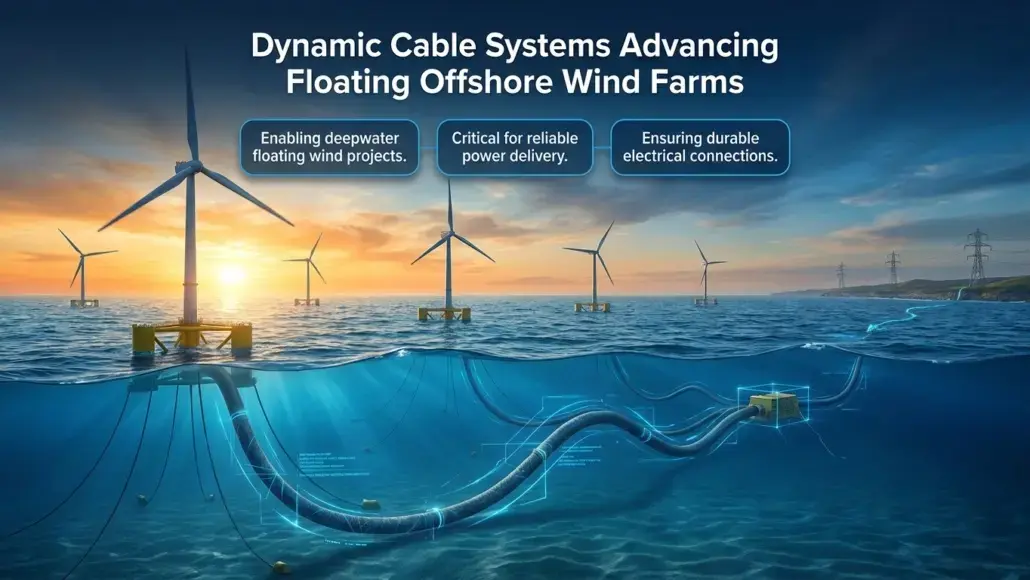

Commercial utility scale floating offshore wind deployment represents a significant shift in the global energy transition, as developers move beyond the shallow waters accessible to fixed bottom structures. The viability of these deepwater installations depends heavily on the performance and durability of the electrical infrastructure connecting the turbines to the shore. Specifically, dynamic cable systems advancing floating offshore wind farms are critical for ensuring continuous power delivery despite the constant movement of floating foundations. These subsea cables must withstand complex mechanical loads and hydrodynamic forces that are not present in traditional stationary installations. As the industry scales toward gigawatt level projects, the engineering of these components becomes a primary focus for risk management and technical optimization.
Engineering Resilience for Deepwater Power Transmission
The transition to floating foundations introduces a new set of environmental challenges for power transmission systems. Unlike static cables that rest on the seabed, dynamic cables are suspended through the water column, often in configurations like the lazy wave or catenary shapes. This suspension exposes the cables to significant hydrodynamic loads from currents, waves, and the multi directional motions of the floating platforms. Designers must account for heave, pitch, and roll of the turbine structures, which transmit mechanical stresses directly to the cable sections. Engineering resilience in this context involves selecting materials and geometries that maintain electrical integrity while accommodating frequent bending and stretching. The insulation and armoring layers are particularly susceptible to wear if not properly shielded from these environmental inputs.
Advanced numerical modeling techniques are utilized to simulate the behavior of these systems over a planned twenty five year service life. These models integrate metocean data with platform motion profiles to identify the most severe load cases. The goal is to ensure that the dynamic cable systems advancing floating offshore wind farms can survive extreme weather events while minimizing cumulative damage from daily operation. The selection of the cross section design is a balance between electrical capacity and mechanical flexibility. Copper or aluminum conductors must be stranded in a way that allows for movement without causing internal friction or local strain concentrations that could lead to premature failure.
Mechanical Stress Mitigation and Fatigue Analysis
Fatigue is the primary failure mechanism for subsea cables in floating applications. The repetitive motion of the sea induces millions of load cycles over the lifespan of a project. Fatigue analysis involves calculating the cumulative damage to each layer of the cable, from the core conductors to the external protective sheath. One of the most critical zones is the touchdown point, where the suspended cable meets the seabed. This area experiences high levels of curvature change and potential abrasion as the cable moves back and forth with the tide and wind induced platform displacement. Mitigation strategies often include the use of bend stiffeners or bend restrictors to manage the radius of curvature and prevent sharp bends that would exceed the material limits.
The development of high voltage dynamic cables, reaching 66kV or even 132kV, increases the complexity of fatigue management. Higher voltages require thicker insulation layers, which generally reduce the flexibility of the assembly. Manufacturers are innovating with lead free sheathing and thermoplastic materials that offer better fatigue resistance compared to traditional lead based designs. By employing detailed mechanical analysis, engineers can predict the expected life of each cable segment and schedule maintenance intervals accordingly. Ensuring the longevity of dynamic cable systems advancing floating offshore wind farms is essential for maintaining a low levelized cost of energy, as offshore repairs are both expensive and technically demanding.
Integration of Ancillary Components for Dynamic Stability
The stability of the cable configuration is supported by a variety of ancillary components that manage buoyancy and tension. Buoyancy modules are strategically placed along the cable length to create specific shapes, such as the lazy wave configuration. This geometry decouples the motion of the turbine platform from the touchdown point on the seabed, acting as a spring that absorbs the kinetic energy of the moving structure. The placement and sizing of these modules are determined through hydrodynamic analysis to ensure the cable remains within a safe operating window under all conditions. Additionally, specialized hang off systems are required at the interface between the cable and the platform. These systems must secure the cable while allowing for the necessary degree of freedom to avoid excessive tension.
Monitoring systems are also becoming an integral part of the dynamic cable assembly. Fiber optic sensors embedded within the cable structure provide real time data on strain, temperature, and vibration. This information allows operators to detect potential issues before they result in a total power outage. For example, an unexpected increase in local temperature might indicate a conductor problem, while changes in strain patterns could signal a shift in the buoyancy module positioning. The integration of these digital tools enhances the operational reliability of dynamic cable systems advancing floating offshore wind farms by enabling predictive maintenance strategies. This proactive approach reduces the risk of long term downtime and improves the overall bankability of floating wind projects.
Future Scalability and Grid Connection Strategies
As the power generation sector looks toward the deployment of larger turbine arrays, the scalability of cable technology is a major consideration. Commercial scale projects will require hundreds of kilometers of dynamic interarray cables and multiple export lines. The logistics of transporting and installing such large volumes of specialized hardware require significant investment in specialized vessels and harbor infrastructure. Additionally, the industry is moving toward higher transmission voltages to minimize electrical losses over long distances. The shift from 66kV to 132kV systems is already underway, presenting new challenges for cable weight and diameter. Heavier cables exert more force on the floating foundations, necessitating more durable mooring systems and platform designs.
Grid connection strategies are also evolving to include offshore substations that may themselves be floating. Connecting multiple dynamic cables to a single floating hub requires innovative connector technologies that can handle high power loads while being easy to install in a marine environment. Dry mate and wet mate connectors are being refined to reduce the time needed for offshore operations. The development of standardized connection protocols will be vital for the rapid expansion of the sector. By streamlining the interface between the turbines and the grid, dynamic cable systems advancing floating offshore wind farms will play a central role in achieving international renewable energy targets. The ability to efficiently link remote deepwater resources to onshore population centers is the final piece of the puzzle for large scale floating wind adoption.
Cost Reduction Pathways for Subsea Interarray Links
Reducing the capital and operational expenditure associated with subsea infrastructure is a priority for the power generation industry. Currently, dynamic cables represent a higher percentage of the total project cost for floating wind compared to fixed bottom projects. Cost reduction can be achieved through standardization of components and manufacturing processes. By producing buoyancy modules, bend stiffeners, and cable segments in larger volumes, the industry can benefit from economies of scale. Additionally, optimizing the installation process can significantly lower costs. Using purpose built vessels with automated cable handling systems reduces the time spent at sea, which is often the most expensive phase of a project.
Another pathway for cost reduction is the optimization of the cable layout itself. Using advanced algorithms to design the most efficient routing and buoyancy configurations can minimize the total length of cable required. Additionally, the shift toward shared mooring and cabling solutions could offer substantial savings for large arrays. If multiple turbines can share a single export line or use a simplified interarray topology, the total volume of hardware is reduced. The continuous improvement of dynamic cable systems advancing floating offshore wind farms is not just a matter of engineering excellence but also one of economic necessity. As these systems become more reliable and cost effective, the financial risk associated with floating offshore wind will decrease, attracting more investment to the sector and accelerating the deployment of renewable power generation capacity globally. Long term reliability is the cornerstone of investor confidence, and as empirical data from early stage projects begins to validate current engineering models, the cost of capital for floating wind is expected to fall. This trend will likely trigger a feedback loop where increased deployment leads to further technological refinement and even lower costs, ultimately positioning floating offshore wind as a primary pillar of the global power generation mix. The collaboration between cable manufacturers, platform designers, and offshore contractors is essential to create integrated solutions that address the specific needs of each unique maritime environment. Strategic focus on lifecycle management and end of life decommissioning will also ensure that the growth of the industry remains sustainable from both an economic and environmental perspective.