


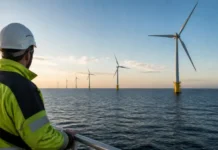

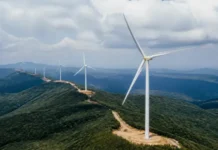
















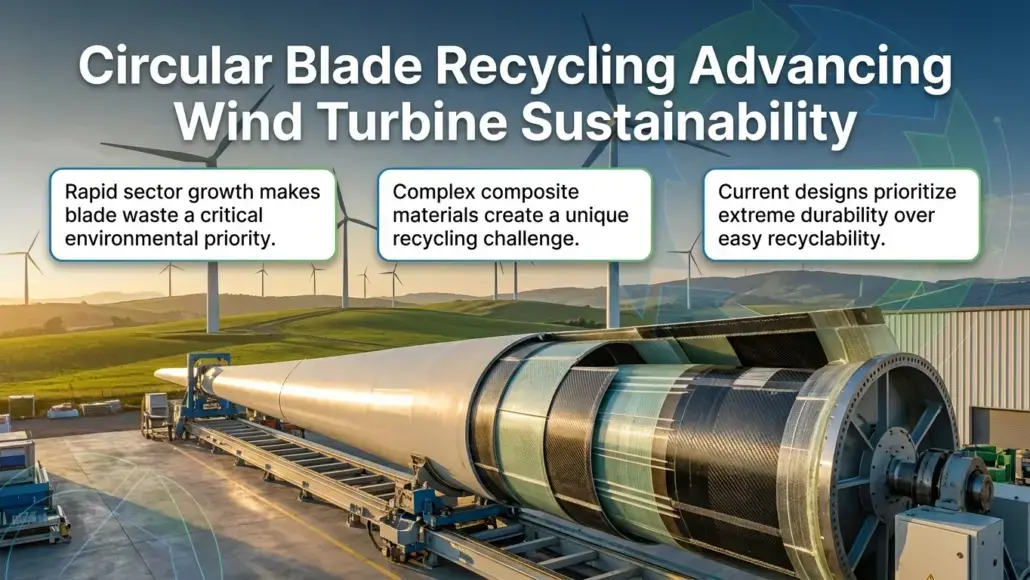

The rapid growth of the wind energy sector has brought the issue of turbine blade waste to the forefront of the industry’s environmental agenda. While the majority of a wind turbine’s components, such as the steel tower and copper wiring, are easily recyclable, the blades present a unique challenge due to their composite construction. Made from complex layers of glass or carbon fibers bound by thermoset resins, these blades are designed for extreme durability and resistance to harsh environmental conditions. However, this same durability makes them difficult to break down at the end of their service life. To address this issue, circular blade recycling advancing wind turbine sustainability is becoming a key focus for manufacturers and operators who are committed to a truly circular energy system. By developing new methods to recover and reuse these valuable materials, the industry can significantly reduce its environmental footprint and enhance the long term viability of wind power generation.
Material Recovery from Glass and Carbon Fiber Composites
The primary goal of blade recycling is to recover the structural fibers that give the blades their strength. Glass fibers are the most common material used in modern blades, while carbon fibers are increasingly used in larger, high performance designs. Traditional recycling methods, such as mechanical grinding, often result in short, low quality fibers that have limited applications in new products. To overcome this, researchers are developing thermal and chemical processes that can recover longer, more intact fibers. Pyrolysis, which involves heating the blades in the absence of oxygen, can burn off the resin while leaving the fibers behind. While effective, this process can sometimes degrade the mechanical properties of the glass fibers, necessitating further refinement of the temperature and duration of the treatment.
For carbon fiber blades, the economic incentive for high quality recovery is even greater due to the high cost of the raw material. Advanced thermal processes are being optimized to ensure that the recovered carbon fibers retain a high percentage of their original strength. These fibers can then be used in a wide range of secondary applications, from automotive components to consumer electronics. The successful implementation of circular blade recycling advancing wind turbine sustainability thus depends on the ability to produce high value recycled materials that can compete with virgin fibers. By creating a market for these recovered materials, the industry can offset the costs of the recycling process and drive the adoption of more sustainable end of life management practices across the power generation sector.
Chemical Solvolysis and Resin Reclamation Methods
In addition to fiber recovery, reclaiming the resin that binds the composite together is a major area of innovation. Standard thermoset resins, such as epoxy, are difficult to recycle because they form a permanently cross linked network during the curing process. Chemical solvolysis involves using solvents and catalysts to break down these chemical bonds at relatively low temperatures. This process can separate the resin into its constituent monomers or oligomers, which can then be purified and reused to create new resins or other chemical products. This approach offers a more complete recycling solution compared to thermal methods, as it recovers both the fibers and the matrix material.
The development of new, recyclable resin systems is also a key part of the circular strategy. Manufacturers are experimenting with thermoplastic resins that can be melted and reshaped multiple times, as well as vitrimers that offer the performance of thermosets with the recyclability of thermoplastics. These advanced materials could simplify the recycling process and reduce the energy required for material recovery. By integrating these innovations into the manufacturing process, circular blade recycling advancing wind turbine sustainability can move from an end of pipe solution to a core design principle. The challenge lies in ensuring that these new materials meet the rigorous performance and durability standards required for offshore and onshore wind environments. Continued collaboration between material scientists and turbine designers is essential for the successful commercialization of these technologies. This includes long term field testing to validate the performance of new resin systems under the high cyclic loads and environmental stresses typical of wind turbine operation. Additionally, the development of standardized chemical recycling processes can help lower the costs of resin reclamation, making it a more attractive option for large scale blade processing facilities. By optimizing these chemical pathways, the industry can ensure that the valuable building blocks of the composite matrix are not lost, but instead redirected into high value applications across the broader chemical industry. This holistic approach to material management is a key differentiator for companies seeking to lead the market in sustainable power generation.
Supply Chain Integration for Recycled Blade Materials
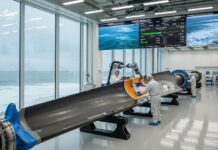
Creating a circular economy for wind turbine blades requires the participation of the entire supply chain, from material suppliers and manufacturers to waste management companies and end users. Logistics play a crucial role in the recycling process, as the massive size of the blades makes them difficult and expensive to transport. Regional recycling hubs are being established to minimize transport distances and improve the efficiency of the collection process. These facilities are equipped with specialized cutting equipment to reduce the blades into manageable sections before they are processed for material recovery. The synchronization of these logistics operations is vital for maintaining a low cost and low carbon recycling chain.
Integration also involves the development of standards and certification programs for recycled materials. Potential users of recovered fibers and resins need to have confidence in the quality and consistency of the materials they are buying. This requires the establishment of rigorous testing and quality control protocols throughout the recycling process. By providing transparent data on the properties of recycled materials, the industry can facilitate their adoption in a variety of industrial sectors. The deployment of circular blade recycling advancing wind turbine sustainability is thus a multi dimensional challenge that involves technical, logistical, and market based solutions. As the volume of decommissioned blades is expected to increase significantly in the coming years, the development of these integrated supply chains is a matter of strategic importance for the wind energy sector.
End of Life Management and Waste Reduction Targets
Setting clear waste reduction targets and end of life management policies is essential for driving the transition to circularity. Several European countries have already implemented bans on the landfilling of wind turbine blades, forcing the industry to find alternative disposal methods. These regulatory pressures are a powerful incentive for the development of recycling technologies and the creation of a circular market. Wind farm operators are also increasingly including recycling requirements in their procurement contracts, placing the responsibility for sustainable decommissioning on the turbine manufacturers. This shift toward extended producer responsibility is a hallmark of the evolving sustainability environment in the power generation sector.
Waste reduction also involves extending the service life of existing blades through better maintenance and repair practices. Advanced monitoring technologies, such as drones and robotic inspection systems, allow for the early detection of structural issues, enabling timely repairs that can prevent premature failure. When blades do reach the end of their life, they can sometimes be repurposed for other uses before being recycled. For example, blade sections have been used to create architectural features, such as bridges and park benches, or as structural elements in new buildings. While these applications are limited in scale, they demonstrate the potential for creative thinking in the management of blade waste. The ultimate goal of circular blade recycling advancing wind turbine sustainability is to eliminate waste entirely, ensuring that every part of a wind turbine contributes to a sustainable energy future.
Design for Circularity in Next Generation Turbines
The most effective way to address the blade waste challenge is to design turbines for circularity from the outset. This involves selecting materials and construction methods that simplify the disassembly and recycling process at the end of the project life. For example, using modular blade designs can allow for easier transport and processing. Manufacturers are also exploring the use of bio based materials and natural fibers as more sustainable alternatives to glass and carbon. These materials could potentially be composted or recycled more easily, further reducing the environmental impact of the power generation industry. Design for circularity also means considering the entire lifecycle of the turbine, including the energy and resources required for manufacturing, installation, and maintenance.
As the industry moves toward larger turbines and longer blades, the importance of circular design will only grow. Strategic investment in research and development is essential to identify the most promising materials and manufacturing techniques. By fostering an environment of innovation, the wind energy sector can lead the way in sustainable industrial practices. The transition to a circular economy is not just a technical challenge but also an opportunity to create new jobs and drive economic growth. Circular blade recycling advancing wind turbine sustainability is thus a central pillar of the industry’s commitment to providing clean, reliable, and sustainable power for generations to come. The ongoing transformation of the wind energy sector is a testament to the power of innovation in solving complex environmental problems and building a more resilient and sustainable energy system.
As global pressure for decarbonization intensifies, the ability to demonstrate a fully circular lifecycle will be a significant competitive advantage for wind energy providers. Strategic investment in recycling infrastructure and circular design is not just an environmental imperative but also a sound business strategy for the long term. By addressing the blade waste issue head on, the industry can reinforce its position as a global leader in the transition to a low carbon future. The journey toward full circularity is complex, but the progress made in circular blade recycling advancing wind turbine sustainability shows that the sector is well equipped to meet the challenge. The integration of these sustainable practices into the core of the wind energy value chain will remain a primary focus for industry leaders and policymakers alike, ensuring that the growth of wind power remains truly sustainable for decades to come.