










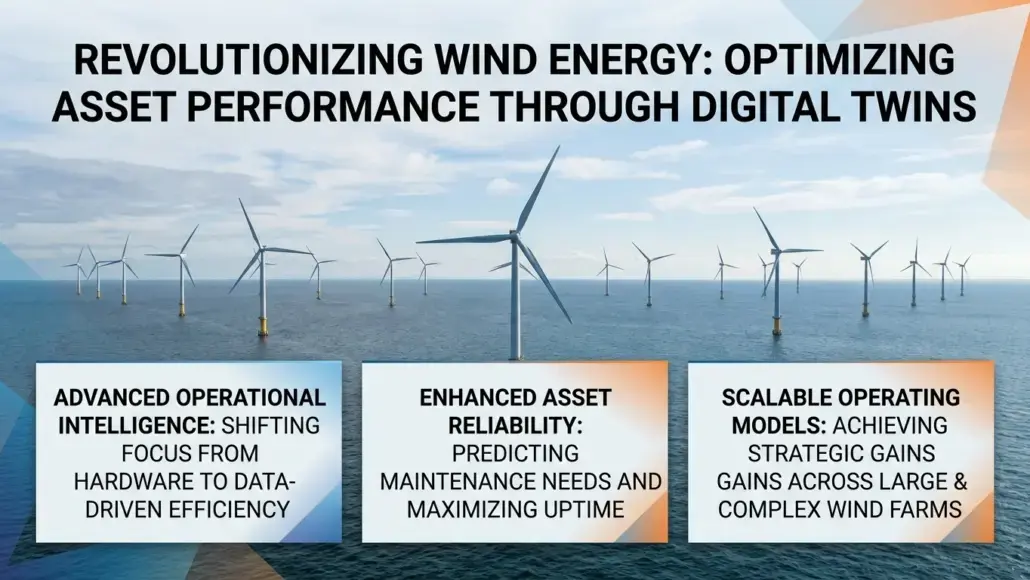

The wind energy sector has spent decades focused on increasing turbine size, expanding project capacity, and improving generation efficiency. These efforts have helped wind power become one of the world’s most important renewable energy sources. However, as wind farms grow larger and more complex, operators are discovering that future gains may come less from hardware improvements and more from operational intelligence.
Today, maximizing the value of wind assets requires more than simply generating electricity. Operators must improve reliability, reduce downtime, optimize maintenance schedules, and extract the highest possible performance from every turbine throughout its lifecycle. This shift is driving growing interest in digital twins in wind energy, a technology that is changing how wind assets are monitored, managed, and optimized.
Rather than relying solely on physical inspections and historical performance data, wind farm operators are increasingly turning to virtual asset models that provide deeper insights into turbine behavior and operational conditions.
What Digital Twins Mean for Wind Energy
A digital twin is a virtual representation of a physical asset that continuously receives and processes operational data from the real-world system it represents. In wind energy, digital twins create dynamic models of turbines, components, and entire wind farms using information gathered from sensors, monitoring systems, and operational platforms.
Unlike static models, digital twins evolve alongside the physical asset. They provide a continuously updated view of turbine performance, environmental conditions, and operational health.
This capability allows operators to move beyond traditional monitoring and gain a deeper understanding of how assets perform under real-world conditions. As a result, digital twins in wind energy are becoming increasingly valuable tools for asset optimization and long-term performance management.
From Reactive Maintenance to Predictive Operations
Maintenance remains one of the most significant operational challenges in wind energy. Turbines are often located in remote or offshore environments where inspections and repairs can be costly and logistically complex.
Historically, maintenance strategies relied heavily on scheduled servicing or reactive interventions after faults occurred. While effective to a degree, these approaches can lead to unnecessary maintenance activities or costly downtime.
Digital twins are helping change this model. By continuously analyzing operational data, virtual models can identify performance anomalies and detect early indicators of potential failures.
This enables operators to intervene before problems escalate into major equipment issues. The result is a more predictive maintenance strategy that improves reliability while reducing operational disruptions.
Improving Turbine Performance Through Continuous Analysis
Every wind turbine operates under unique environmental conditions. Wind speed, turbulence, temperature, and operating loads can vary significantly even within the same wind farm.
These variations create opportunities for performance optimization that may not be visible through conventional monitoring systems.
Digital twins in wind energy provide operators with a more detailed understanding of how turbines respond to changing conditions. By continuously comparing expected and actual performance, digital twins can identify inefficiencies, optimize operating parameters, and improve overall generation outcomes.
This level of insight enables a more proactive approach to performance management, helping operators maximize energy production throughout the life of an asset.
Reducing Downtime in High-Value Assets
Downtime remains one of the most expensive challenges facing wind farm operators. Even short periods of turbine unavailability can have significant financial implications, particularly in large utility-scale projects.
Digital twins contribute to downtime reduction by providing earlier visibility into equipment degradation and operational risks. Instead of discovering issues during routine inspections or after a failure occurs, operators can identify developing problems through continuous analysis.
This capability supports better maintenance planning, more efficient resource allocation, and improved scheduling of repairs.
For operators seeking to maximize availability, digital twins in wind energy are becoming a critical tool for protecting revenue-generating assets.
Supporting Offshore Wind Expansion
The growth of offshore wind is further increasing the importance of digital twin technology.
Offshore projects present unique operational challenges due to their scale, location, and maintenance requirements. Accessing turbines often depends on weather conditions, vessel availability, and specialized equipment.
Under these circumstances, minimizing unnecessary maintenance visits becomes particularly important.
Digital twins help operators better understand turbine conditions without requiring physical inspections as frequently. This improves decision-making and supports more efficient maintenance planning across offshore wind portfolios.
As offshore wind continues to expand globally, digital technologies are expected to play an increasingly important role in operational strategy.
Enhancing Asset Lifecycle Management
Wind turbines are long-term assets expected to operate for decades. Managing performance throughout this lifecycle requires continuous evaluation of equipment condition, operational efficiency, and maintenance requirements.
Digital twins provide a framework for tracking asset health over extended periods. By analyzing historical and real-time data together, operators can gain insights into degradation patterns, component performance, and future maintenance needs.
This supports more informed decisions regarding upgrades, replacements, and asset life-extension strategies.
As wind farm owners increasingly focus on lifecycle value, digital twins in wind energy are becoming an important component of long-term asset management programs.
Data Is Becoming a Strategic Asset
The rapid digitalization of wind energy is generating vast quantities of operational data. Turbines continuously produce information relating to performance, environmental conditions, mechanical systems, and energy output.
The challenge is no longer collecting data it is extracting meaningful insights from it.
Digital twins provide a mechanism for transforming raw operational information into actionable intelligence. Instead of viewing data as a byproduct of operations, operators are increasingly treating it as a strategic asset capable of improving performance and reducing risk.
This evolution reflects a broader shift occurring across the renewable energy sector, where data-driven decision-making is becoming central to operational success.
Challenges to Wider Adoption
Despite the benefits, implementing digital twin technology is not without challenges.
Many wind operators must address issues related to:
- Data integration across multiple systems
- Cybersecurity requirements
- Sensor reliability and data quality
- Workforce skills and digital expertise
- Technology investment costs
The effectiveness of a digital twin depends heavily on the quality and accuracy of the data feeding it. Organizations must therefore invest not only in software platforms but also in the supporting digital infrastructure needed to maintain reliable insights.
As technology matures and implementation experience grows, these barriers are expected to become more manageable.
The Future Wind Farm Will Be Digitally Optimized
The wind industry is entering a phase where operational intelligence is becoming as important as physical infrastructure. While larger turbines and expanded capacity will continue to drive growth, future competitiveness will increasingly depend on how effectively assets are managed.
Digital twins provide a pathway toward more efficient, data-driven operations capable of improving reliability, reducing costs, and maximizing generation performance.
As discussed across industry platforms such as Power Info Today, the future of wind energy is likely to be shaped not only by advancements in turbine technology but also by the growing ability to understand and optimize asset performance through digital tools.
Conclusion
Wind energy has matured into a critical component of the global power mix, but growing asset portfolios are creating new operational challenges. Maximizing generation, reducing downtime, and improving lifecycle value are becoming increasingly important priorities for operators and investors alike.
Digital twins in wind energy offer a powerful solution by combining real-time monitoring, predictive analytics, and virtual asset modeling to improve decision-making and operational efficiency. By transforming data into actionable insights, digital twins are helping wind farm operators move beyond reactive management and toward a more intelligent, performance-focused approach.
As renewable energy systems continue to evolve, digital twin technology is poised to become a key driver of operational excellence across the wind sector.