










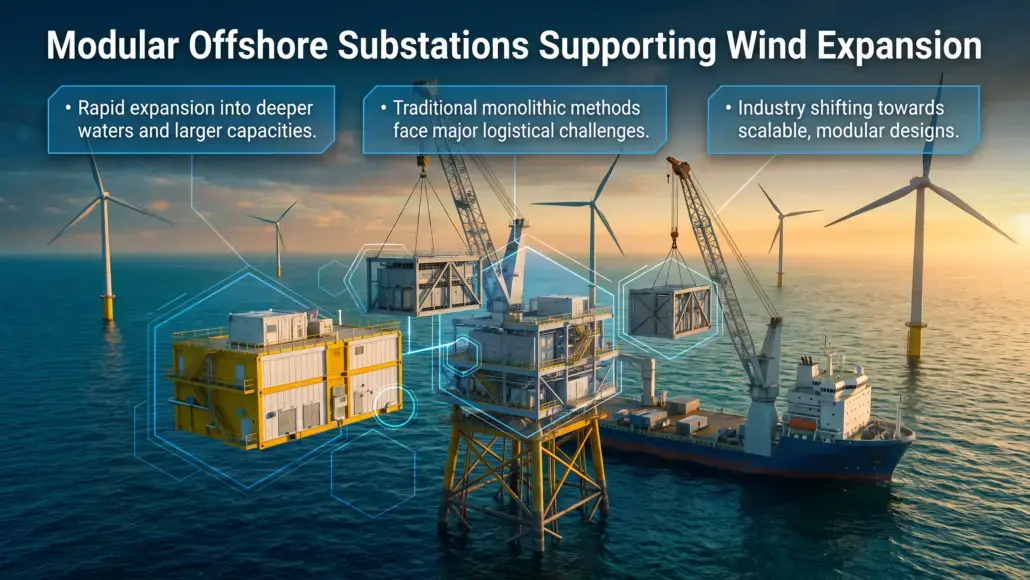

The rapid expansion of the offshore wind sector is currently driving a fundamental reorganization of the electrical infrastructure required to support massive energy developments. As projects move into deeper waters and larger capacities, the traditional methods of designing and installing offshore substations are facing significant logistical and financial challenges. Historically, these massive platforms were custom-designed and fabricated as single, monolithic decks, a process that often resulted in multi-year lead times and extreme complexity during the installation phase. To address these bottlenecks, the power generation industry is increasingly adopting industrialized delivery models. The implementation of modular offshore substations supporting wind expansion is providing developers with a more predictable and scalable path forward, ensuring that the critical link between the offshore turbines and the onshore grid is established with high efficiency.
Central to this advancement is the transition from bespoke engineering to a more standardized and modular approach to offshore platform design. Unlike conventional substations that are built as a single integrated structure, modular systems are composed of pre-fitted units that are manufactured in controlled environments and then assembled on a common foundation at sea. This capability is essential for the success of utility-scale wind clusters, where the speed and the reliability of the grid connection are primary determinants of the project’s economic viability. By utilizing modular offshore substations supporting wind expansion, the energy industry is reducing its reliance on a fragmented global supply chain and ensuring a level of quality and consistency that was previously unattainable with traditional fabrication methods.
Industrialized Fabrication and the Optimization of Electrical Infrastructure
The fabrication phase of an offshore substation is where the benefits of standardized design are most apparent. In a modular context, the focus is on creating discrete electrical and structural units that are easy to manufacture, test, and transport. This industrialized approach involves the use of specialized facilities where multiple modules can be produced concurrently, significantly reducing the overall lead time for the project. By breaking down the substation into smaller, pre-integrated units, manufacturers can achieve higher levels of efficiency and quality control. This move toward a more industrialised model of infrastructure production ensures that every component is manufactured to the exact required specification for the demanding offshore environment.
Furthermore, the use of modular systems allows for the selection of materials and fabrication methods that are specifically suited to the high-salinity and high-moisture conditions of the open sea. For example, instead of performing complex welding and painting on a massive single deck, smaller modules can be finished and tested in specialized shops before being joined together. This level of technical precision reduces the amount of manual labor required at the shipyard and ensures a consistent level of protection against corrosion across the entire platform. The focus remains on achieving the best possible balance between design flexibility and manufacturing efficiency, ensuring that the resulting power transmission infrastructure is both functional and cost-effective for the utility operator.
Logistics Precision and the Economics of Offshore Installation
The installation of a traditional offshore substation is one of the most high-risk operations in the energy sector, often requiring the use of the world’s largest heavy-lift vessels and specialized barges. A single integrated deck can weigh several thousand tons, limiting the number of available vessels and making the project highly vulnerable to weather-driven delays. Modular offshore substations supporting wind expansion address this challenge by breaking the structure into manageable units that can be transported and installed with more widely available crane vessels. This logistical flexibility significantly reduces the mobilization costs and the complexity of the offshore campaign, providing a more secure and predictable environment for the project team.
Furthermore, the modular model allows for a more efficient use of the weather windows during the installation season. By designing the units for rapid and secure mechanical and electrical joining, developers can reduce the time spent at the offshore site. These advanced connection systems allow for the quick coupling of the power cables and the control networks, minimizing the disruption to the overall project schedule. This focus on assembly precision is what allows for the successful delivery of complex offshore substations in a fraction of the time required by conventional methods. The ability to provide a clear and data-driven justification for every logistical decision is a fundamental requirement for the modern project manager in the power generation field.
Scalability and the Future of Large-Scale Energy Hubs
As the global demand for clean energy continues to rise, the ability to expand the capacity of existing offshore networks is becoming increasingly important. In a traditional project, the substation is sized for a specific generation capacity, making it difficult and expensive to add more power in the future. Modular offshore substations supporting wind expansion provide a scalable solution that can grow with the needs of the energy cluster. By adding new modules to the existing foundation or by designing the platform for future expansion, operators can increase the capacity of the link without the need for a completely new structure. This level of flexibility is essential for the development of offshore “energy hubs” that collect power from multiple independent wind farms.
Furthermore, the move toward standardized modular designs facilitates the coordination of shared digital platforms across the entire offshore network. This provides the grid operator with a level of visibility and accountability that was previously unattainable with bespoke systems. By identifying and resolving potential bottlenecks in the power flow before they can impact the grid, the team can avoid the expensive rework and the outages that often occur in traditional energy systems. The commitment to technical excellence in modular design is what will define the leaders of the offshore wind industry in the years to come, providing a secure and reliable foundation for the next generation of renewable energy clusters.
Future Strategic Direction of Offshore Power Transmission
As the energy industry continues to evolve toward a more autonomous and data-driven model, the role of intelligent modular infrastructure will only grow in importance. We are already seeing the emergence of smart substations that incorporate their own power management and self-diagnostic systems within individual modules. Modular offshore substations supporting wind expansion are at the forefront of this evolution, providing the physical and the digital platform for a more resilient and efficient energy future. The focus is no longer just on the physical structure of the deck, but on the ability to manage the entire lifecycle of the transmission asset with professional precision.
Looking ahead, the integration of new materials, such as high-strength composites and advanced cooling systems, will further enhance the performance and the flexibility of modular hubs. These advancements will allow for the production of even lighter and more efficient substations, further reducing the environmental footprint of the energy transition. The ability to manage complex offshore requirements with the same speed and precision as a simple assembly task is a major goal for both researchers and developers in the power generation sector. The ongoing commitment to technical innovation and operational excellence is what will define the success of these programs in the decades to come, providing a secure foundation for the transition to a carbon-neutral energy system.
The transition toward a more connected and data-driven approach to offshore infrastructure is a defining characteristic of the modern power sector. By prioritizing the use of modular offshore substations supporting wind expansion, utilities can achieve levels of resilience and efficiency that were once considered unattainable in a purely mechanical system. The benefits of this approach extend beyond the project site, contributing to a more responsive and resilient energy infrastructure that is better equipped to handle the challenges of a global market. The commitment to technical excellence and professional collaboration is what will define the success of these programs in the coming years.
As the industry moves forward, the focus will remain on the refinement of mechanical properties and the continued improvement of production outcomes in the energy field. The ability to handle the increasing complexity of new materials and regulatory requirements will remain a key challenge for engineers and project managers alike. The ongoing evolution of modular offshore substations supporting wind expansion is a testament to the power of technical innovation in the service of energy productivity, ensuring that the next generation of power generation infrastructure is both clean and reliable for every utility and organization that needs it around the world.