

































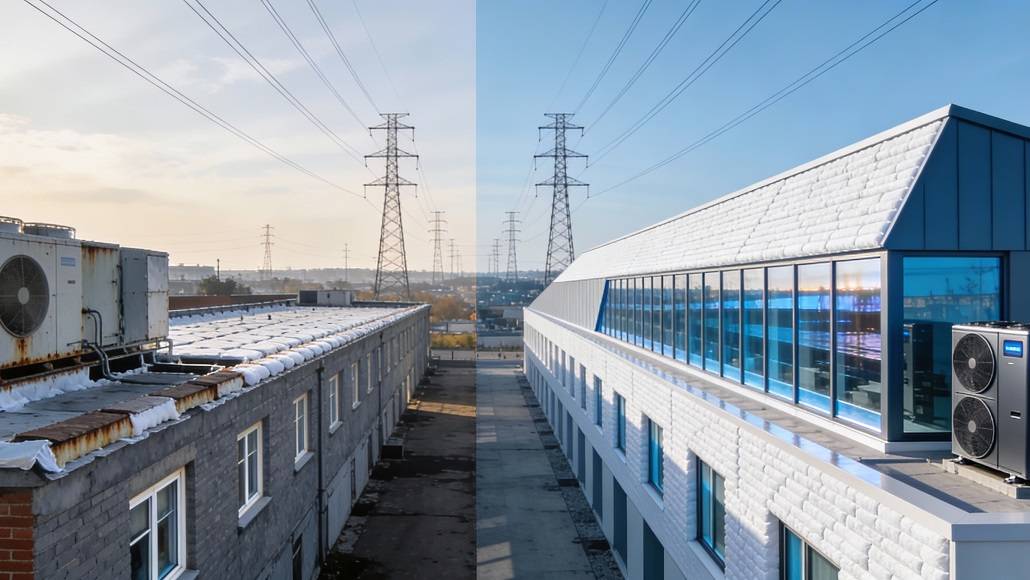

Energy efficiency has historically been framed within electricity and building sectors as an environmental initiative—well-intentioned but economically marginal compared to supply-side infrastructure investments. This characterization fundamentally misunderstands the economic role efficiency can play in electricity system operations. Viewed correctly, energy efficiency is a supply-side solution for power systems, providing electricity services equivalent to new generation, transmission, and distribution capacity but at substantially lower cost. This reframing has profound implications for infrastructure planning and electricity system economics, particularly as systems navigate transitions to higher renewable penetration and electrified thermal loads.
Capacity Deferral as Economic Rationale
The economic foundation for treating efficiency as a power system resource lies in the concept of capacity deferral. Electricity systems are engineered to reliably serve peak demand—the highest electricity consumption occurring during any hour of the year. In temperate climates, winter peaks typically occur during early morning cold periods when heating loads peak coincident with lighting loads, or during evening hours when heating and residential/commercial loads simultaneously surge. Summer peaks, conversely, tend to reflect afternoon air conditioning demand. The timing varies by geography, but the principle remains universal: electricity system capacity must be engineered for that peak demand hour.
A critical insight is that generation capacity, transmission capacity, and distribution system equipment are all sized for peak demand. A utility planning for a peak electricity demand of 1,000 megawatts must construct or acquire 1,000 megawatts of generating capacity (plus reserves and forced outages). To transmit that power from generation centers to consumption areas requires transmission corridors sized for that peak capacity. Distribution systems connecting those transmission lines to individual buildings must accommodate peak demand flows.
The economic consequence is profound: the entire electricity system investment is driven by peak demand. When a building reduces its peak electricity demand through efficiency improvements, it directly enables deferral of infrastructure investments across all system levels. If a commercial building reduces peak cooling demand by 10 megawatts through envelope efficiency improvements, chiller efficiency upgrades, and intelligent control systems, that reduction directly offsets utility requirements to build new generation, transmission, and distribution capacity.
Current capital costs for electricity infrastructure illustrate the economic magnitude. A new central generation facility costs approximately $1.5 million per megawatt of capacity. Transmission infrastructure costs roughly $2-5 million per mile depending on voltage and terrain, with each transmission mile serving perhaps 10-50 megawatts of capacity depending on corridors and loading. Distribution system upgrades to accommodate growing demand cost $1-3 million per mile. Aggregate system infrastructure costs to accommodate new peak demand range from $2-4 million per megawatt.
Energy efficiency improvements cost substantially less per unit of load reduction. Building envelope retrofits—insulation, air sealing, and window replacement—cost $0.15-0.40 per kilowatt-hour of reduced consumption over typical measure lives of 30+ years. Heating, ventilation, and air conditioning (HVAC) equipment improvements cost $0.10-0.25 per kilowatt-hour. Lighting efficiency retrofits cost $0.05-0.15 per kilowatt-hour. Industrial process efficiency improvements span a similar range. These costs are typically stated on a levelized basis, reflecting the cost per kilowatt-hour of energy saved over the technology lifetime.
Translating efficiency costs to a per-megawatt equivalent reveals the dramatic economic advantage. If envelope efficiency improvements cost $0.25 per kilowatt-hour and reduce consumption by 200,000 megawatt-hours annually across 500 buildings in an urban area, this represents roughly 15-25 megawatts of peak demand reduction. The total efficiency investment might be $50 million, achieving roughly $3 million per megawatt of peak reduction—still exceeding new generation costs in absolute terms. However, efficiency investments avoid transmission and distribution costs that capacity investments cannot escape. When integrated system costs including all infrastructure levels are compared, efficiency’s advantage becomes decisive: efficiency costs $2-4 per megawatt achieved through infrastructure deferral, compared to $2-4 million per megawatt for traditional capacity investments.
Peak Demand as the Critical System Constraint
The economic logic underlying capacity deferral becomes even more compelling when recognizing that electricity systems must provision for peak demand regardless of utilization. An electric generating plant constructed to serve a 1,000-megawatt winter peak operates at far lower capacity factors during shoulder and summer months. A transmission line built to handle a 500-megawatt peak operates at perhaps 30-40 percent of capacity on average. Distribution equipment sized for summer afternoon peaks is similarly underutilized during off-peak periods.
This utilization pattern means that reducing peak demand has outsized value compared to reducing average consumption. A megawatt of peak demand reduction directly eliminates the requirement for a megawatt of generation capacity, transmission corridor capacity, and distribution equipment. In contrast, reducing average consumption equally across all hours is more difficult to achieve economically and provides no generation or transmission benefits—the system must maintain peak capacity regardless.
Advanced efficiency technologies designed specifically to address peak demand periods therefore provide exceptional value. Smart thermostats enabling dynamic setpoint adjustment that shaves peak cooling or heating demand provide capacity deferral benefits exceeding annual energy savings. Building envelope improvements reducing peak cooling demand by pre-cooling during off-peak times provide value beyond their direct energy savings. Demand response technologies that automatically shed non-essential loads during system peaks provide temporary but economically valuable capacity deferral.
Regional variations in electricity system characteristics mean that peak-targeting efficiency measures should be strategically selected to address each region’s dominant peak. In heating-dominated climates, efficiency improvements focused on heating systems and envelope efficiency address the binding capacity constraint. In cooling-dominated regions, cooling efficiency, thermal mass, and demand response capabilities targeting cooling peaks maximize capacity deferral value. In regions with more balanced heating and cooling peaks, comprehensive envelope efficiency improvements addressing both seasons provide the greatest benefit.
Transmission System Benefits and Long-Distance Effects
Electricity transmission systems experience peak demand flows determined by the simultaneous electrical loads across geographic regions. When weather patterns create cold spells affecting an entire region, heating loads across hundreds of miles of territory surge simultaneously, creating high concurrent transmission flows. Efficiency improvements that reduce heating loads thereby reduce the coincident peak across transmission systems, deferring transmission investments.
The economics of transmission deferral exceed generation deferral in many regions. New transmission lines cost $2-5 million per mile plus substantial environmental and siting costs that often exceed capital costs. A new 500-kilovolt transmission line serving a region might cost $1-2 billion and require 5-10 years of permitting and environmental review. An efficiency program reducing regional peak demand by 100 megawatts, deferring the need for that transmission line, returns $1-2 billion in economic value—benefits vastly exceeding efficiency program costs.
Industrial efficiency improvements provide particular transmission deferral value in regions with significant industrial facilities. A steel plant, petrochemical facility, or data center consuming 50+ megawatts might undertake efficiency improvements reducing peak consumption by 5-10 megawatts. In a region where peak demand is constrained by transmission capacity, these industrial efficiency improvements directly defer transmission reinforcement requirements for the entire region, providing spill-over benefits to other users.
Avoided Energy and Capacity Market Revenue
Efficiency improvements provide economic benefits beyond direct infrastructure deferral. Reduced electricity consumption lowers wholesale market electricity prices throughout electricity markets. When thousands of buildings implement efficiency improvements reducing aggregate demand by hundreds of megawatts, wholesale electricity prices decline due to reduced scarcity. This price reduction benefits all electricity consumers, not merely those making efficiency investments—a positive externality that markets fail to value.
Similarly, capacity market prices reflect supply and demand for capacity. Efficiency improvements reducing system-wide capacity requirements decrease capacity prices by reducing the scarcity premium. Again, all market participants benefit, yet efficiency investments attract no compensation for this benefit-creation.
Forward-thinking electricity market designs have begun incorporating mechanisms for efficiency participation in capacity markets and energy markets. Some jurisdictions allow “negawatts”—avoided energy consumption—to be transacted identically to generated megawatts. These markets assign economic value to efficiency improvements, enabling efficiency investors to capture benefits they generate. As these market innovations proliferate, efficiency investments become economically competitive with generation and infrastructure investments.
Integration with Renewable Energy Systems
Energy efficiency plays a particularly important role in electricity systems transitioning to high renewable penetration. Renewable integration challenges stem substantially from demand growth and the temporal mismatch between renewable generation availability and electricity demand patterns. Efficiency improvements that reduce overall electricity demand proportionally reduce the renewable generation capacity required to serve that demand.
A stylized example illustrates this dynamic. A region projecting 20 percent electricity demand growth over the next decade might plan for 100 gigawatts of wind and solar capacity to achieve 80 percent renewable penetration by 2035. If comprehensive efficiency improvements reduce underlying demand growth to 5 percent, the renewable capacity requirement declines to perhaps 85 gigawatts—a 15 percent reduction representing $10-15 billion in avoided renewable capacity investment.
Efficiency improvements also smooth demand profiles, reducing extreme peaks that create challenges for renewable integration. A building with variable occupancy and inefficient HVAC systems might experience 5-megawatt peaks during cooling periods and minimal nighttime demand. The same building with improved efficiency and smart controls might experience relatively stable 2-megawatt average consumption with less dramatic peaks. This load smoothing reduces the renewable generation variability that system operators must accommodate, enabling higher renewable penetration without extensive storage or curtailment.
Policy and Market Framework Challenges
Despite compelling economic logic, energy efficiency has remained persistently underutilized as a power system resource, constrained by several market and institutional barriers. Electricity utilities historically earned revenue based on energy sales; efficiency reducing customer consumption directly reduced utility revenue, creating perverse incentives for utilities to oppose efficiency improvements. While regulatory reforms in many jurisdictions have begun addressing this misalignment through decoupling utility revenues from sales, the cultural bias toward supply-side solutions remains embedded in many utilities.
Financing barriers persist, particularly for residential efficiency improvements. Building owners often view efficiency investments as discretionary capital expenditures competing against other priorities rather than as infrastructure investments competing against generation and transmission expenditures. Mortgage financing typically does not accommodate improvements financed through energy savings. Government policies in many regions provide limited financial incentives for residential efficiency.
Information barriers also constrain efficiency adoption. Building owners and operators lack reliable information regarding efficiency opportunities, performance of different technologies, and expected payback periods. Uncertainty about performance creates risk aversion, particularly among cost-conscious building operators. The engineering analysis required to identify optimal efficiency improvements for specific buildings requires expertise many building owners cannot access.
Regulatory treatment of distributed efficiency differs from centralized infrastructure investments. A utility company investing $100 million in a new power plant earns a regulated return on investment over decades. An efficiency program providing identical energy services typically receives no comparable return, instead being treated as an expense. This regulatory asymmetry creates systematic underinvestment in efficiency relative to generation infrastructure.
The Path Forward: Efficiency as Infrastructure
Overcoming these barriers requires viewing efficiency systematically as infrastructure rather than as a discretionary conservation program. Policy reforms should establish market mechanisms enabling efficiency to compete equally with generation and infrastructure investments. Utility regulatory frameworks should compensate efficiency providers through mechanisms analogous to generation resource compensation. Public financing programs should establish efficiency financing structures parallel to home mortgage financing, enabling building owners to finance improvements through energy savings.
Technical standardization and performance metrics should reduce uncertainty and information barriers. Building efficiency standards and performance certification programs provide transparency regarding efficiency opportunities and expected performance. Standardized equipment ratings enable reliable performance prediction. These technical frameworks reduce risk and enable widespread adoption.
Aggregate efficiency programs targeting specific geographic regions or building populations can achieve economies of scale in program administration and technology deployment. A region undertaking comprehensive residential efficiency retrofits can negotiate equipment costs, develop standardized installation practices, and achieve widespread adoption of best practices more efficiently than individual building-by-building improvements.
Efficiency as Power System Solution
Energy efficiency represents one of the most economically attractive power system resources available. By reducing electricity consumption, particularly during peak demand periods, efficiency improvements directly defer generation, transmission, and distribution infrastructure investments costing billions of dollars. Yet efficiency remains persistently underutilized due to market barriers, financing constraints, and regulatory misalignment. Overcoming these barriers through reformed policies, financing mechanisms, and market structures will unlock substantial economic value while simultaneously advancing electricity system decarbonization. In electricity systems navigating transitions to high renewable penetration and electrified thermal loads, efficiency represents a foundational strategy for managing infrastructure costs and system transformation. The future power system that successfully integrates high renewable penetration and electrified thermal loads will make efficiency a central infrastructure strategy, capturing the immense economic and environmental benefits it offers.