







































In order to achieve its ambitious target of reaching net zero by 2070, India will need to invest $20 trillion in capital projects, according to a new estimate. According to a report by research firm UBS, they devised an in-house India Energy model identifying needs for solar, batteries, and hydrogen to estimate the total capex needed to attain net zero, which they estimate at $20 trillion over the next 50 years.
Since India promised last year to attain net-zero carbon emissions by 2070, investors have fought about the consequences for global commodities considering that the country is one of the top five importers of coal, LNG, and oil.
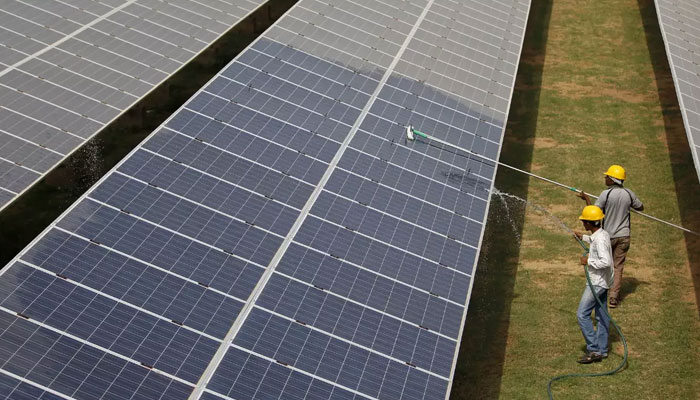
During that time, they anticipate India to increase its solar energy production and stop importing 3% of the current world demand for coal and oil by a factor of 100. According to the report, by 2040, global trade flows and supply chains would have changed to suit India’s shift from being a net energy importer to a net exporter of renewable resources. By 2070, India’s primary energy consumption is projected to nearly double, with renewables providing 72% of the country’s total energy needs, up from 1% in 2019, followed by bioenergy and green hydrogen at 9% each.
To achieve this, they project $20 trillion in capital expenditures, or 1.2% of GDP over the period—led primarily by private investment.
However, India’s reliance on fossil fuels will increase over the short to medium term, spiking around 2040, further challenging the fundamentals of the worldwide energy transition, said the paper.
Significantly, it is anticipated that India will surpass China as the world’s largest oil growth market during this period. This would result in prolonged pressure on India’s import costs and a current account deficit that would last at least until 2045.
While India’s entry into solar PV and battery manufacturing is different from China’s, the report notes that past experience, for instance, in the execution of 4G, suggests that streamlining is possible, supposing supportive government policies, incentives, and large corporations endorse the transition. This is in reference to whether India can accomplish self-sufficiency in solar cells, batteries, and electrolyzers. According to the paper, India’s 265 GW/1000 GW of renewable deployments and 600/7400 GWh of battery additions by 2030/40E might boost domestic manufacturers. By 2040, utilities and OEMs in India are expected to invest $2 trillion.
By 2030, India can create 190 GWh of batteries annually and 80 GW of solar PV, placing it among the top three manufacturers worldwide. In the following decades, if the nation’s goal of solar PV production capacity is attained, it may shift its economic priorities from being a net importer to becoming an exporter.