





















Close
MCE 2026
World Hydrogen & Carbon Americas

Indonesia officially launches $20bn renewables investment plan

Note* - All images used are for editorial and illustrative purposes only and may not originate from the original news provider or associated company.

Subscribe

- Never miss a story with notifications

- Gain full access to our premium content

- Browse free from any location or device.

Media Packs

Expand Your Reach With Our Customized Solutions Empowering Your Campaigns To Maximize Your Reach & Drive Real Results!

– Access the Media Pack Now

– Book a Conference Call

Leave Message for Us to Get Back

Related stories

Transformation of Power Distribution through Advanced Metering Infrastructure

The distribution level of the energy value chain is undergoing a fundamental redesign as utilities replace legacy equipment with intelligent monitoring systems that optimize flow and efficiency.

Strengthening Grid Reliability Through Advanced Metering Infrastructure

Grid stability and uptime are becoming increasingly critical as extreme weather events and fluctuating demand patterns challenge the resilience of traditional power systems.

The Role of Advanced Metering Infrastructure in Driving Smart Grid Growth

Modern energy systems are undergoing a radical transformation as digital communication layers integrate with traditional power hardware to facilitate a more responsive and scalable grid architecture.
- Advertisement -

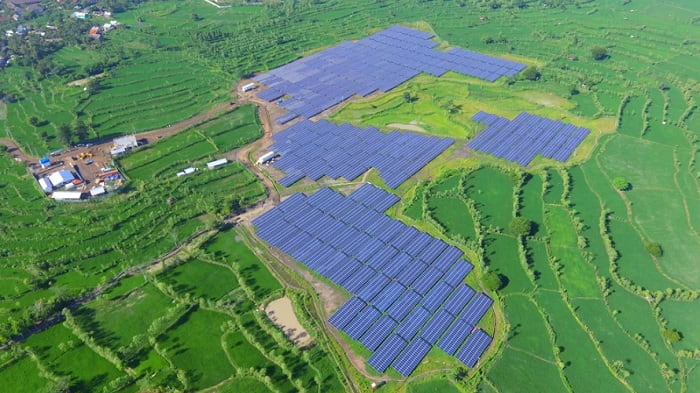
Indonesia officially launched its plan to mobilise a $20bn investment fund for decarbonisation on Tuesday as the country looks to accelerate its transition towards clean energy.

Financing for the fund, which was set up under Indonesia’s JETP, is led by the US and Japan, among other global leaders, as the country seeks to cut CO₂ emissions from its on-grid power sector by 250 million tonnes by 2030. It also has targets to increase the portion of renewable energy in its power mix to 44% by 2030, up considerably from the 12% seen last year.

A 327-page draft of the investment roadmap, known as the Comprehensive Investment and Policy Plan (CIPP), was initially released at the beginning of this month for public consultation.

The CIPP outlines the need for further investment worth $97.3bn if Indonesia is to meet these targets. This includes $66.9bn for 400 clean energy project proposals, which must be started by 2030 at the latest.

Of Indonesia’s electricity mix, 60% is still powered by coal, according to statistics from the International Energy Agency, and profits from the industry remain huge. In 2022 alone, the country earned $46.7bn from coal exports. The CIPP projects that emissions from on-grid coal generation will peak well before 2030 and that by the end of the decade, the country will see coal capacity reduced to 2020 levels as renewables and gas, a less polluting fossil fuel, are adopted at scale.

The CIPP also aims to significantly accelerate the deployment of wind and solar power compared with previous energy transition targets, but commitment to the clean energy sources remains insufficient, according to some environmental bodies.

The Centre for Research on Energy and Clean Air, a non-profit think tank, said in a statement reacting to the draft roadmap: “While the ambition to increase the share of renewable energy in power generation by 2030 is welcomed, there is an excessive focus on biomass and hydropower and overly conservative limits on solar power expansion.

“There is no reason why Indonesia cannot pursue more than 32 gigawatts (GW) of solar to be installed before 2030, based on experiences from China, among others,” it added.

Latest stories

Related stories

Transformation of Power Distribution through Advanced Metering Infrastructure

The distribution level of the energy value chain is undergoing a fundamental redesign as utilities replace legacy equipment with intelligent monitoring systems that optimize flow and efficiency.

Strengthening Grid Reliability Through Advanced Metering Infrastructure

Grid stability and uptime are becoming increasingly critical as extreme weather events and fluctuating demand patterns challenge the resilience of traditional power systems.

The Role of Advanced Metering Infrastructure in Driving Smart Grid Growth

Modern energy systems are undergoing a radical transformation as digital communication layers integrate with traditional power hardware to facilitate a more responsive and scalable grid architecture.

Advanced Metering Infrastructure Powering Data Driven Utilities

The transition from analog management to digital intelligence is redefining the utility sector as data becomes the primary driver for operational excellence and strategic decision-making.

Subscribe

- Never miss a story with notifications

- Gain full access to our premium content

- Browse free from any location or device.

Media Packs

Expand Your Reach With Our Customized Solutions Empowering Your Campaigns To Maximize Your Reach & Drive Real Results!

– Access the Media Pack Now

– Book a Conference Call

Leave Message for Us to Get Back

Translate »