
















Close
MCE 2026
World Hydrogen & Carbon Americas

Triple Renewable Capacity By 2030 – COP28 Urges Governments

Note* - All images used are for editorial and illustrative purposes only and may not originate from the original news provider or associated company.

Subscribe

- Never miss a story with notifications

- Gain full access to our premium content

- Browse free from any location or device.

Media Packs

Expand Your Reach With Our Customized Solutions Empowering Your Campaigns To Maximize Your Reach & Drive Real Results!

– Access the Media Pack Now

– Book a Conference Call

– Leave Message for Us to Get Back

Related stories

The Strategic Role of Hydrogen in Long-Duration Energy Storage

Detailed comparison of hydrogen versus batteries and other storage technologies for seasonal balancing, grid reliability and renewable surplus utilisation in high-renewable power systems.

Digital Technologies Optimising Hydrogen and Carbon-Managed Power Plants

Examination of digital twins, AI optimisation, predictive maintenance and real-time monitoring systems enhancing operational efficiency, flexibility and emissions performance in hydrogen-enabled and carbon capture power plants.

Hydrogen Storage Solutions and Their Role in Grid Flexibility

Comprehensive review of hydrogen storage technologies including compressed gas, liquid hydrogen and underground solutions, evaluating their critical contributions to peak demand management, renewable integration and grid stability.
- Advertisement -

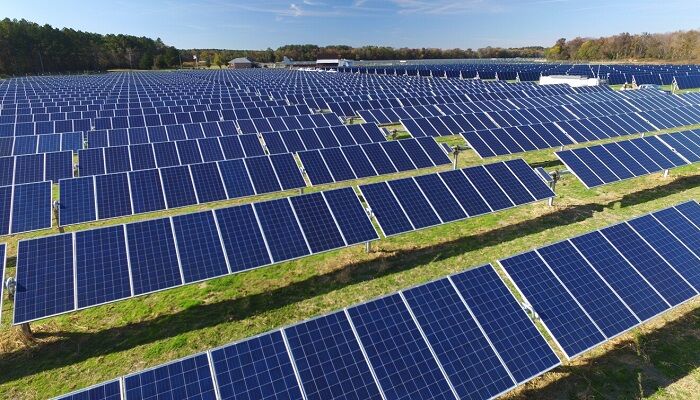
The forthcoming COP28 climate summit’s presidency, along with two renewable energy organisations, have gone on to call on governments to triple their renewable energy capacity by 2030 so as to avoid global warming from going beyond 1.5 degrees Celsius.

Countries are aiming to reach an agreement on increasing capacity during the upcoming global climate negotiations in Dubai, which are scheduled to begin in late November this year. The focus of these negotiations will be on addressing the gaps in the execution of the 2015 Paris Agreement, which had set a limit of 1.5°C.

According to a joint report by the United Arab Emirates’ COP28 presidency, the International Renewable Energy Agency- IRENA as well as the Global Renewables Alliance, it is necessary for renewable energy capacity to go beyond 11,000 GW by 2030.

Almost all major economies have already embraced that objective. In September, a coalition of 20 nations, including China, the United States, and India, reached an agreement to actively work towards tripling the world’s renewable energy capacity by this decade’s end.

Scientists go on to warn that if immediate action is not taken to reduce CO2 emissions, the Earth will surpass the very critical 1.5°C limit within the next decade. This will result in far greater consequences than just from climate change, affecting not only humans but also wildlife and ecosystems.

However, reaching a consensus among the numerous countries participating in COP28 meetings will prove to be a challenging task. European nations and climate-vulnerable states are emphasizing that simply scaling up clean energy is insufficient and that countries must also commit to phasing out polluting energy sources that are contributing to climate change.

According to reports, it is believed that a renewable energy agreement at COP28 should be coupled with a firm commitment to gradually eliminate the use of fossil fuels that emit CO2. That said, this particular pledge has encountered opposition from countries like Saudi Arabia, Russia, and other economies that rely heavily on fossil fuels.

During an event in Brussels recently, Wopke Hoekstra, the European Union climate policy chief, expressed his opinion that simply setting a goal for renewables is not enough to consider the Conference of the Parties- COP a success.

The COP28 talks will be led by Sultan al-Jaber from the UAE, a decision that has faced criticism from certain U.S. and EU lawmakers as well as campaigners since al-Jaber serves as both the head of the state oil company ADNOC as well as the UAE’s climate envoy.

The report also recommended the implementation of measures to double energy efficiency by setting targets with specific time frames, establishing strong regulatory frameworks, providing financial incentives, and conducting awareness campaigns.

Latest stories

Related stories

The Strategic Role of Hydrogen in Long-Duration Energy Storage

Detailed comparison of hydrogen versus batteries and other storage technologies for seasonal balancing, grid reliability and renewable surplus utilisation in high-renewable power systems.

Digital Technologies Optimising Hydrogen and Carbon-Managed Power Plants

Examination of digital twins, AI optimisation, predictive maintenance and real-time monitoring systems enhancing operational efficiency, flexibility and emissions performance in hydrogen-enabled and carbon capture power plants.

Hydrogen Storage Solutions and Their Role in Grid Flexibility

Comprehensive review of hydrogen storage technologies including compressed gas, liquid hydrogen and underground solutions, evaluating their critical contributions to peak demand management, renewable integration and grid stability.

Hybrid Power Systems Combining Renewables Hydrogen and Dispatchable Generation

In-depth analysis of hybrid power system architecture integrating renewables, hydrogen storage and dispatchable generation to manage intermittency, enhance grid stability and achieve long-term decarbonisation targets.

Subscribe

- Never miss a story with notifications

- Gain full access to our premium content

- Browse free from any location or device.

Media Packs

Expand Your Reach With Our Customized Solutions Empowering Your Campaigns To Maximize Your Reach & Drive Real Results!

– Access the Media Pack Now

– Book a Conference Call

– Leave Message for Us to Get Back

Translate »