
















China has gone ahead and completed the grid connection of what, according to it, is the largest open-sea solar power plant in the world, thereby further highlighting the rapid pace of the country when it comes to building large and intricate energy projects.
CHN Energy, which is the state-owned China Energy Investment Corporation, announced that its 1 GW offshore photovoltaic project off the coast of Shandong province is completely connected now to the power grid.
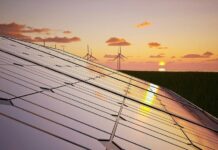
This largest open-sea solar power plant is situated almost eight kilometers from the Kenli district in Dongying city, which is in eastern China. Unlike the floating solar plants that are witnessed in lakes as well as reservoirs, this project is constructed on steel truss platforms that are fixed to the seabed by way of using piles. The water depth within the area ranges between one and four meters, hence enabling the structures to be firmly anchored to the sea floor.
The project, which is officially called the Shandong Dongying Kenli Guohua HG14 project, is being developed by Guohua Energy Investment, which is a subsidiary of CHN Energy. China State Construction Engineering Corporation has been responsible for the installation work and has gone on to complete 930 platforms so far out of 2,934 that have been planned. Each platform gets supported by four piles, building a stable base for solar panels within the offshore conditions.
Spanning almost 1,223 hectares of open sea, the project goes on to represent a major investment within offshore solar. The overall investment has been forecasted to be around CNY 8.1 billion, or almost USD 1.16 billion. CHN Energy has reportedly gone on to upgrade the design during the construction phase by way of switching to stronger bifacial double-glass solar modules that are rated at 710 W. Once completed entirely, the plant is anticipated to generate almost 1.78 TWh of electricity per year.
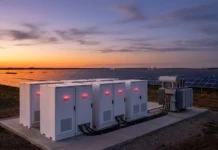
It is well to be noted that the The offshore solar plant is connected to the mainland grid by way of a 66 kV power cable. The first section of the grid connection went operational in November 2024. Apart from solar generation, the project also has a battery energy storage system having a power rating of 100 MW and also an energy capacity of 200 MWh that is aimed at enhancing grid stability and also managing the fluctuations in power.
Apparently, in recent weeks, CHN Energy has also commissioned numerous other large energy projects throughout China. In Qitai County of the Xinjiang province, which is close to the Mongolian border, the company purchased a 600 MW solar power plant online. Another major project, which is a 425 MW solar plant based in Quitai County in Qinghai Province, happens to form part of a much larger 1 GW solar-plus-storage development. This facility is situated at an elevation of almost 3,000 meters, underlining the push by China to roll out solar even in environments that are challenging.