
















Key Takeaways:
- Electrolysis technologies for clean power convert electricity into hydrogen using alkaline, PEM and solid oxide electrolysers, each with distinct advantages and trade-offs in cost, efficiency, flexibility, and operating temperature, and together they form the technological backbone of large‑scale green hydrogen production to decarbonise electricity systems.
- Future clean power systems will rely on increasingly efficient and affordable electrolysers integrated with renewable energy and grids, enabling flexible power‑to‑hydrogen conversion, sector coupling, and long‑duration storage, while manufacturing scale‑up, innovation in materials, and supportive policy are steadily reducing costs and expanding deployment options.
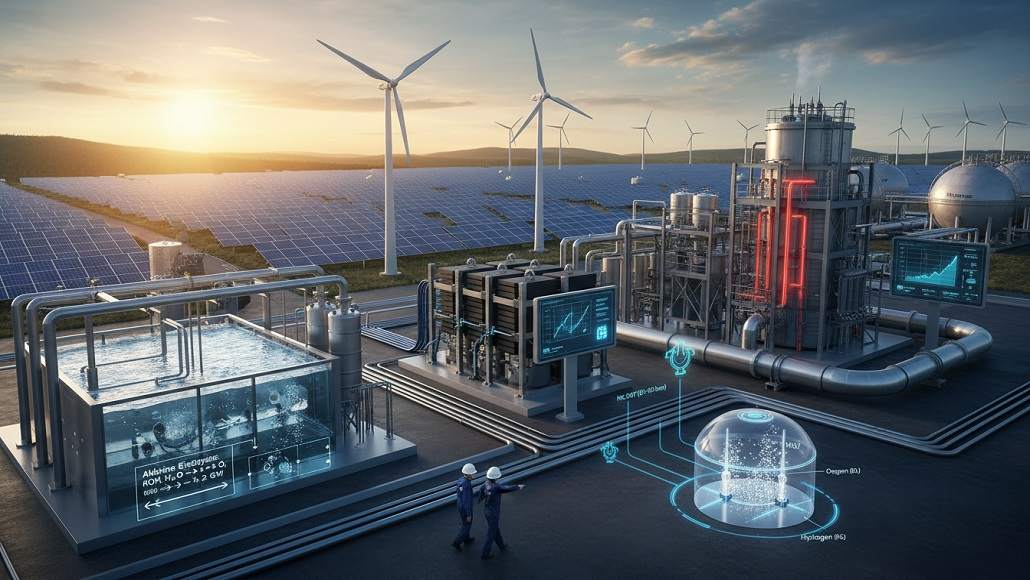
Electrolysis technologies for clean power sit at the heart of the emerging hydrogen economy. By splitting water into hydrogen and oxygen using electricity, electrolysers create a bridge between the power sector and a versatile, low‑carbon energy carrier that can be stored, transported and used in multiple applications. As grids incorporate higher shares of variable renewables, electrolysis offers a way to convert surplus electricity into hydrogen, supporting both system flexibility and deep decarbonisation.
Understanding how electrolysis technologies for clean power are advancing requires a close look at the three main commercial and emerging platforms: alkaline electrolysers, proton exchange membrane (PEM) electrolysers, and solid oxide electrolysers. Each technology has different strengths, technical characteristics and cost trajectories, and together they define what is practically achievable for renewable-based hydrogen production over the coming decades.
The role of electrolysis in clean power systems
In a clean power system dominated by solar and wind, electricity supply is inherently variable. Times of high generation and low demand can lead to curtailment, where valuable renewable electricity is simply not used. Electrolysis technologies for clean power convert that surplus into hydrogen, which can then serve as a fuel for power generation, a feedstock for industry, or an energy carrier for transport.
The power-to-hydrogen pathway adds flexibility in both time and geography. Hydrogen can be stored over long durations and moved where needed, decoupling the locations of renewable resources from end-use demand. When hydrogen is later used to produce electricity through gas turbines, engines or fuel cells the system effectively gains long‑duration storage, addressing one of the most challenging aspects of high-renewable grids.
Yet the economics and performance of this pathway depend critically on electrolyser efficiency, capital cost, operating characteristics and durability. That is why the evolution of alkaline, PEM and solid oxide electrolysers is so central to the future of clean power.
Alkaline electrolysers: mature and cost-effective
Alkaline electrolysers are the oldest and most mature electrolysis technology. They use a liquid alkaline electrolyte, typically potassium hydroxide, with electrodes separated by a diaphragm. Operating at moderate temperatures and pressures, alkaline electrolysers are relatively simple, use well‑known materials and benefit from decades of industrial experience.
Their main advantage lies in cost. On a per‑kilowatt basis, alkaline systems are generally the least expensive, making them attractive for large-scale hydrogen projects, especially in regions where capital intensity is a key barrier. For projects focused on baseload operation with stable electricity supply such as electrolysers linked to dedicated hydropower or nuclear plants alkaline technology can provide a robust and economical solution.
However, alkaline electrolysers have limitations that matter in modern clean power systems. Their ability to ramp output quickly is weaker than that of other technologies, which reduces their responsiveness to rapid changes in renewable generation. They are also less tolerant of frequent start‑stop cycles, making them less ideal for highly intermittent operation. Integration with variable solar and wind therefore requires careful system design or acceptance of lower utilisation factors.
Despite these constraints, improvements continue. Modern alkaline electrolysers are more compact and efficient than earlier generations, and manufacturers are developing pressurised designs that reduce downstream compression costs. As manufacturing scales and standardisation increases, alkaline technology will likely remain a central workhorse in electrolysis technologies for clean power, especially in cost‑sensitive markets.
PEM electrolysers: flexible and fast‑responding
Proton exchange membrane (PEM) electrolysers use a solid polymer electrolyte that conducts protons, with water introduced on the anode side and hydrogen generated on the cathode. They operate at relatively low temperatures but can deliver high current densities and respond very quickly to changes in power input.
This dynamic behaviour makes PEM electrolysers particularly well suited to integration with variable renewable energy. They can ramp up and down rapidly, follow solar and wind output, and handle frequent cycling without significant performance degradation when properly designed. For grid operators and project developers seeking to co-locate electrolysers with wind farms or solar parks, PEM technology often offers the most operationally flexible option.
PEM electrolysers also operate effectively at higher pressures than typical alkaline systems, which can reduce or simplify downstream compression requirements. Their compact footprint is advantageous in constrained sites, including industrial facilities or urban environments where space is at a premium.
The primary challenges facing PEM technology are cost and materials. PEM electrolysers traditionally rely on precious‑metal catalysts, such as platinum and iridium, and specialised membranes, which drive up capital costs and raise concerns about long‑term resource constraints. Nevertheless, steady innovation is reducing catalyst loadings, improving membrane durability and manufacturing processes, and enabling higher stack lifetimes. As deployment scales, the cost premium of PEM over alkaline is narrowing, especially when system-level benefits like flexibility and higher utilisation of cheap renewable power are taken into account.
In electrolysis technologies for clean power that must track volatile renewable output, PEM electrolysers are increasingly the technology of choice, marrying high performance with operational agility.
Solid oxide electrolysers: high‑temperature efficiency
Solid oxide electrolysers (SOECs) represent a different design philosophy. Operating at high temperatures, typically in the 600–850°C range, they use a ceramic electrolyte that conducts oxygen ions. At these elevated temperatures, the thermodynamic requirements for splitting water decrease, and part of the energy input can be supplied as heat, leading to very high electrical efficiency.
The theoretical efficiency advantages of solid oxide electrolysis are compelling, especially when waste heat from industrial processes, biomass plants or other high‑temperature sources is available. In such settings, SOECs can convert a given amount of electricity into more hydrogen than low‑temperature technologies, improving overall system efficiency and reducing the cost per kilogram of hydrogen produced.
However, these benefits come with technical challenges. High operating temperatures impose stringent demands on materials, seals and stack design, affecting durability and maintenance requirements. Thermal cycling heating up and cooling down frequently is particularly stressful, limiting the ability of current SOEC designs to follow rapid fluctuations in power input. As a result, many early solid oxide projects target steady, baseload operations with relatively stable electricity and heat supplies.
From the perspective of electrolysis technologies for clean power, solid oxide electrolysers are promising for specific integration contexts: industrial clusters with consistent heat sources, co‑generation arrangements, or plants linked to high‑capacity‑factor low‑carbon generation such as nuclear. Over time, advances in materials and designs may broaden their applicability and improve cycling capability, making them more suitable for dynamic grid environments.
Efficiency improvements and cost reduction pathways
Across alkaline, PEM and solid oxide technologies, two imperatives dominate: increase efficiency and reduce cost. Efficiency gains directly lower the amount of electricity needed for a given hydrogen output, which is crucial when using renewable power that already competes on cost with fossil-based generation. Cost reductions, particularly in capital expenditure, make projects financially viable at scale.
For alkaline electrolysers, efficiency improvements focus on electrode materials, diaphragm design and optimised operating conditions. Incremental advances can yield meaningful reductions in energy consumption and extend stack lifetimes. Cost reductions stem from larger manufacturing facilities, standardised modules and experience gained in deployment.
PEM electrolysers see parallel efforts in membrane chemistry, catalyst optimisation and stack engineering. Reducing precious‑metal content without sacrificing performance is a key research area, as is enhancing durability under frequent cycling. At the system level, improved balance‑of‑plant components and smarter controls contribute to better overall efficiency and lower capital intensity.
Solid oxide electrolysers pursue higher current densities and more robust ceramics capable of withstanding repeated thermal and electrochemical stresses. Integrating SOECs with complementary processes that supply or utilise heat is another path to system-level efficiency gains.
On the cost side, learning curves are already evident. As manufacturing scales and supply chains mature, unit costs fall. Policies that create predictable demand through auctions, contracts for difference or targeted support for green hydrogen accelerate this process. Over time, electrolysis technologies for clean power are expected to reach cost points that make hydrogen from renewables competitive with fossil-derived alternatives in many markets.
Implications for renewable-based power systems
As electrolysis technologies for clean power advance, their integration into renewable-based power systems will deepen. Co‑located projects combining solar or wind with electrolysers will become more common, optimised to maximize utilisation of cheap electricity while respecting grid constraints. Grid‑connected electrolysers will increasingly act as flexible loads, participating in balancing markets and ancillary services while producing hydrogen for multiple end uses.
Sector coupling will also intensify. Power, gas, heat and industrial systems will become more intertwined as hydrogen flows across these domains. Utilities may find themselves operating not just electricity networks but also hydrogen infrastructure, or partnering closely with industrial players to manage integrated value chains.
At the system‑planning level, models will incorporate electrolysers as both demand and storage assets, capturing their ability to smooth renewable variability and reduce reliance on unabated fossil backup. Strategies for achieving high renewable shares at least cost will often feature substantial deployment of electrolysis technologies for clean power, alongside batteries, demand response and grid reinforcement.
Ultimately, the trajectory of alkaline, PEM and solid oxide electrolysers will help determine how quickly and affordably the world can scale green hydrogen. Their performance and economics will shape investment decisions across the power sector, from grid‑connected plants to off‑grid renewable hubs. As innovation and deployment continue, electrolysis will move from a promising technology niche to a core pillar of clean power systems worldwide.