























Close
MCE 2026
World Hydrogen & Carbon Americas

  Investments in Renewables Dwarf New Coal, Gas Generation

Note* - All images used are for editorial and illustrative purposes only and may not originate from the original news provider or associated company.

Subscribe

- Never miss a story with notifications

- Gain full access to our premium content

- Browse free from any location or device.

Media Packs

Expand Your Reach With Our Customized Solutions Empowering Your Campaigns To Maximize Your Reach & Drive Real Results!

– Access the Media Pack Now

– Book a Conference Call

Leave Message for Us to Get Back

Related stories

Heat Pumps as Strategic Grid Assets Enabling Renewable Integration and Stability

Modern heat pumps have evolved beyond efficiency technologies to become strategic grid assets capable of providing demand flexibility, load shifting and seasonal balancing. Discover how large-scale heat pump deployment supports renewable integration and grid stability.

Electrification of Heating and Cooling: Reshaping Global Electricity Demand

The rapid electrification of heating and cooling systems is fundamentally transforming electricity demand patterns worldwide. Explore how thermal electrification impacts peak loads, grid infrastructure, and long-term power generation planning in the transition to decarbonized energy systems.

The Growing Role of Demand-Side Flexibility in Renewable Grids

Modern electricity grids face unprecedented challenges as renewable energy penetration increases. Demand-side flexibility and automated demand response have emerged as operational tools equal in importance to generation reserves, fundamentally transforming how utilities maintain grid reliability while integrating variable renewable sources.
- Advertisement -

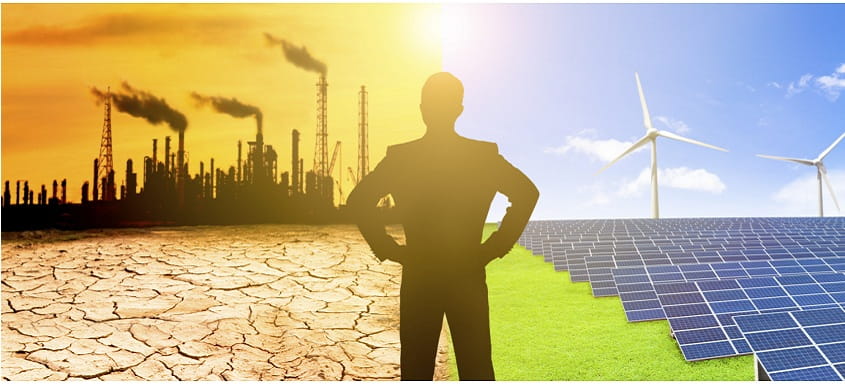
A report from groups including the United Nations environmental arm and Bloomberg New Energy Finance (BNEF) shows renewable energy installations were responsible for 61% of the world’s net power capacity additions in 2017, more than double the new-builds from fossil fuel-powered generation.

The Global Trends in Renewable Energy Investment 2018 report, compiled by BNEF, the United Nations Environment Program, and the Frankfurt School-UNEP Collaborating Centre, said solar power led all renewable sources, accounting for 98 GW or 38% of new global power generation capacity installed last year. Nearly $161 billion was invested worldwide in solar power technology in 2017.

In total, a record 157 GW of renewable power generation were commissioned last year, up from 143 GW in 2016. By comparison, a net of about 73 GW of fossil fuel generation came online in 2017—121 GW of new coal and gas-fired power capacity, less 48 GW of gas and coal that were retired. Nuclear generation increased by a net 11 GW.

The report, released April 5, said lower costs for solar and wind continue to spur deployment. The groups said the benchmark levelized cost of electricity for a utility-scale solar photovoltaic project fell to $86/MWh, down 15% from 2016, and a 72% drop since 2009. The report said the decrease can be attributed to lower capital costs and efficiency improvements.

The groups said 2017 marked the eighth straight year with more than $200 billion in worldwide investment in renewable energy technologies, although the nearly $280 billion spent on renewable energy projects (excluding large hydropower) lagged the record $323.4 billion invested in 2015. It did, however, top 2016 investment of a revised $274 billion, up from the $241.6 billion reported when the 2017 report was released a year ago.

“The world added more solar capacity than coal, gas, and nuclear plants combined,” Nils Stieglitz, president of the Frankfurt School of Finance & Management, said in the report. “This shows where we are heading, although the fact that renewables altogether are still far from providing the majority of electricity means that we still have a long way to go.”

A December report from the North American Electric Reliability Corp. (NERC) said U.S. power generation from renewable sources, along with natural gas, would produce enough electricity to offset retirements of U.S. coal and nuclear units over the next 10 years. The report was part of NERC’s 2017 Long-Term Reliability Assessment for the U.S. power grid.

China remains the world’s largest investor in renewables, with $126.6 billion invested in 2017, a 31% increase over the prior year. The report said U.S. investment in renewables totaled $40.5 billion, a 6% drop from 2016. Europe sustained a 36% drop, to $40.9 billion, a figure that included a 65% drop ($7.6 billion) in UK investment. The UK decline primarily reflected an end to government subsidies for utility-scale solar and onshore wind projects, along with a gap between auctions for offshore wind projects.

Germany, another large player in the renewable energy space, invested 35% less ($10.4 billion) in 2017, owing to lower costs per MW for offshore wind, and uncertainty regarding auctions for onshore wind projects. Japan’s 28% drop ($13.4 billion) in investment also was attributed to uncertainty surrounding auctions for onshore wind projects, and ongoing grid connection issues for renewable energy sources.

“In countries that saw lower investment, it generally reflected a mixture of changes in policy support, the timing of large project financings, such as in offshore wind, and lower capital costs per megawatt,” Angus McCrone, BNEF’s chief editor, said in the report.

Latest stories

Related stories

Heat Pumps as Strategic Grid Assets Enabling Renewable Integration and Stability

Modern heat pumps have evolved beyond efficiency technologies to become strategic grid assets capable of providing demand flexibility, load shifting and seasonal balancing. Discover how large-scale heat pump deployment supports renewable integration and grid stability.

Electrification of Heating and Cooling: Reshaping Global Electricity Demand

The rapid electrification of heating and cooling systems is fundamentally transforming electricity demand patterns worldwide. Explore how thermal electrification impacts peak loads, grid infrastructure, and long-term power generation planning in the transition to decarbonized energy systems.

The Growing Role of Demand-Side Flexibility in Renewable Grids

Modern electricity grids face unprecedented challenges as renewable energy penetration increases. Demand-side flexibility and automated demand response have emerged as operational tools equal in importance to generation reserves, fundamentally transforming how utilities maintain grid reliability while integrating variable renewable sources.

How Renewable Electricity Powers Continuous Thermal Systems

The integration of renewable electricity into thermal energy systems—heating, cooling, and hot water—requires sophisticated technical solutions including thermal storage, hybrid system configurations, and intelligent dispatch algorithms. These innovations enable renewable power to reliably serve round-the-clock thermal demands while maintaining the system reliability that modern buildings and industries require.

Subscribe

- Never miss a story with notifications

- Gain full access to our premium content

- Browse free from any location or device.

Media Packs

Expand Your Reach With Our Customized Solutions Empowering Your Campaigns To Maximize Your Reach & Drive Real Results!

– Access the Media Pack Now

– Book a Conference Call

Leave Message for Us to Get Back

Translate »