



Close
MCE 2026
World Hydrogen & Carbon Americas

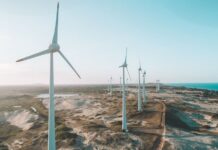
Clements Gap Wind Farm, Australia

Note* - All images used are for editorial and illustrative purposes only and may not originate from the original news provider or associated company.

Subscribe

- Never miss a story with notifications

- Gain full access to our premium content

- Browse free from any location or device.

Media Packs

Expand Your Reach With Our Customized Solutions Empowering Your Campaigns To Maximize Your Reach & Drive Real Results!

– Access the Media Pack Now

– Book a Conference Call

Leave Message for Us to Get Back

Related stories

Largest Solar-Plus-Storage Project Hits Initial Grid Sync

The first phase of the MTerra Solar project in...

ACCIONA Energía Repowers The 84.4MW Tahivilla Wind Farm

ACCIONA Energía has completed the repowering of the Tahivilla...

Financing Models Driving Hydrogen and Carbon Power Projects

The massive scale of the energy transition requires innovative financial structures that can bridge the gap between technological potential and industrial reality. By examining the evolution of project finance, the role of public-private partnerships, and the rise of sustainable investment criteria, we can understand the mechanisms that are de-risking and accelerating the deployment of next-generation hydrogen and carbon capture infrastructure.
- Advertisement -
Clements Gap Wind Farm (CGWF) is the 11th wind farm built in South Australia. The farm is located about 200km northwards of the Spencer Gulf, Adelaide, in Barunga Ranges, South Australia. CGWF is owned by Pacific Hydro and will generate around 56.7MW of power. It is Pacific Hydro’s first power facility in South Australia.

The project was planned as a part of Australian Government’s commitment to step-up its Mandatory Renewable Energy Target (MRET) to 20% by 2020. CGWF commenced operations in August 2009, while it officially opened on 18 February 2010. The cost of the project was approximately $150m. The wind farm is capable of generating enough energy to power around 30,000 homes annually.

The renewable power facility will also reduce five million tons of greenhouse gases. Clements Gap wind farm project details The plan for developing the wind farm dates back to 2001. The planning approval was received from Port Pirie Regional Council in mid-2003. Pacific Hydro awarded a contract, which involved the supply and installation of wind turbine generators, to Suzlon Energy in February 2008. Suzlon Energy carried out the work, including the design and manufacture of the turbine units, in-house wind turbine micro-siting, wind turbine power curve testing, and the international shipping and delivery of wind turbine components to the rural site.

The company has manufactured 80m-tall steel towers, in addition to the installation, commissioning and testing of the wind turbines. It has also supplied and installed SCADA systems for the farm. Suzlon Energy will also provide long-term maintenance and other services to the wind farm. “The wind farm is capable of generating enough energy to power around 30,000 homes annually.” Wind farm construction

Latest stories

Related stories

Largest Solar-Plus-Storage Project Hits Initial Grid Sync

The first phase of the MTerra Solar project in...

ACCIONA Energía Repowers The 84.4MW Tahivilla Wind Farm

ACCIONA Energía has completed the repowering of the Tahivilla...

Financing Models Driving Hydrogen and Carbon Power Projects

The massive scale of the energy transition requires innovative financial structures that can bridge the gap between technological potential and industrial reality. By examining the evolution of project finance, the role of public-private partnerships, and the rise of sustainable investment criteria, we can understand the mechanisms that are de-risking and accelerating the deployment of next-generation hydrogen and carbon capture infrastructure.

Carbon Pricing and Its Long-Term Impact on Power Generation Economics

The implementation of robust carbon pricing mechanisms is fundamentally altering the financial landscape of the energy sector. By internalizing the environmental costs of emissions, these policies are shifting the competitive advantage from fossil fuels to low-carbon alternatives, reshaping investment strategies, and redefining the long-term economic viability of power generation technologies globally.

Subscribe

- Never miss a story with notifications

- Gain full access to our premium content

- Browse free from any location or device.

Media Packs

Expand Your Reach With Our Customized Solutions Empowering Your Campaigns To Maximize Your Reach & Drive Real Results!

– Access the Media Pack Now

– Book a Conference Call

Leave Message for Us to Get Back

Translate »