















Close
MCE 2026
World Hydrogen & Carbon Americas

$500bn Mark Breached By Global Renewable Investments In 2022

Note* - All images used are for editorial and illustrative purposes only and may not originate from the original news provider or associated company.

Subscribe

- Never miss a story with notifications

- Gain full access to our premium content

- Browse free from any location or device.

Media Packs

Expand Your Reach With Our Customized Solutions Empowering Your Campaigns To Maximize Your Reach & Drive Real Results!

– Access the Media Pack Now

– Book a Conference Call

Leave Message for Us to Get Back

Related stories

Risk Management Strategies in Emerging Low-Carbon Power Investments

Comprehensive framework for identifying, quantifying and mitigating risks across technology, market, regulatory and operational domains in hydrogen, carbon capture and renewable hybrid power investments.

The Strategic Role of Hydrogen in Long-Duration Energy Storage

Detailed comparison of hydrogen versus batteries and other storage technologies for seasonal balancing, grid reliability and renewable surplus utilisation in high-renewable power systems.

Digital Technologies Optimising Hydrogen and Carbon-Managed Power Plants

Examination of digital twins, AI optimisation, predictive maintenance and real-time monitoring systems enhancing operational efficiency, flexibility and emissions performance in hydrogen-enabled and carbon capture power plants.
- Advertisement -

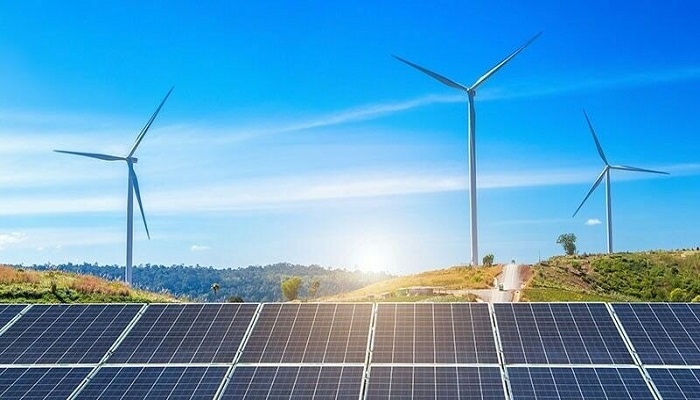
The overall renewable energy investment globally posted a historic high of $500 billion in 2022; however, it was still 40% below the average of $1.3 trillion that is required annually between 2021 and 2030 so as to achieve the target of limiting the temperature increase to 1.5 degrees Celcius.

The climate policy initiative and International Renewable Energy Agency noted in a report that the investments don’t seem to be on track in order to reach the 2030 agenda for a development that is sustainable, noting that the off-grid renewable energy investment was only at $500 million, which is again way behind the $2.30 billion annual average so as to ramp up access to energy.

According to the report, investments seem to be focused on specific technologies like solar photovoltaic, which accounted for a whopping 43% of the overall renewable investments in 2020, which were then followed by onshore as well as offshore wind investments, standing at 35% and 12% respectively.

It is well to be noted that only 15% of the investments that were made in 2020 went to almost 70% of the world’s population, which happens to be mostly from developing as well as emerging markets. As far as investment in energy transition tech such as energy efficiency is concerned, the numbers reached a record high of $1.3 trillion, which happens to be 19% more than what was witnessed in 2021 and in fact 50% more than the pre-pandemic numbers.

The report further added that in order to let the energy transition have a positive effect, authorities as well as development partners needed to play a major role so as to ensure a more balanced flow of finance, acknowledging varied endowments as well as the starting conditions of nations.

There is a need for more public funds to flow in across regions, as well as into countries that have immense untapped potential, but are finding it difficult to attract investment. These funds have to go into aiding energy transition infra development, enabling policy frameworks, and at the same time addressing the consistent socio-economic gaps.

Latest stories

Related stories

Risk Management Strategies in Emerging Low-Carbon Power Investments

Comprehensive framework for identifying, quantifying and mitigating risks across technology, market, regulatory and operational domains in hydrogen, carbon capture and renewable hybrid power investments.

The Strategic Role of Hydrogen in Long-Duration Energy Storage

Detailed comparison of hydrogen versus batteries and other storage technologies for seasonal balancing, grid reliability and renewable surplus utilisation in high-renewable power systems.

Digital Technologies Optimising Hydrogen and Carbon-Managed Power Plants

Examination of digital twins, AI optimisation, predictive maintenance and real-time monitoring systems enhancing operational efficiency, flexibility and emissions performance in hydrogen-enabled and carbon capture power plants.

Hydrogen Storage Solutions and Their Role in Grid Flexibility

Comprehensive review of hydrogen storage technologies including compressed gas, liquid hydrogen and underground solutions, evaluating their critical contributions to peak demand management, renewable integration and grid stability.

Subscribe

- Never miss a story with notifications

- Gain full access to our premium content

- Browse free from any location or device.

Media Packs

Expand Your Reach With Our Customized Solutions Empowering Your Campaigns To Maximize Your Reach & Drive Real Results!

– Access the Media Pack Now

– Book a Conference Call

Leave Message for Us to Get Back

Translate »