



















Close
MCE 2026
World Hydrogen & Carbon Americas

Europe may have hard time to get out of the energy crisis, WindEurope Says

Note* - All images used are for editorial and illustrative purposes only and may not originate from the original news provider or associated company.

Subscribe

- Never miss a story with notifications

- Gain full access to our premium content

- Browse free from any location or device.

Media Packs

Expand Your Reach With Our Customized Solutions Empowering Your Campaigns To Maximize Your Reach & Drive Real Results!

– Access the Media Pack Now

– Book a Conference Call

Leave Message for Us to Get Back

Related stories

Industrial Decarbonisation and Power Sector Synergy

The path to a net-zero economy requires the deep integration of heavy industry with the electrical grid. By exploring the concept of sector coupling and the role of hydrogen in difficult-to-abate sectors, this analysis details how industrial decarbonisation and power sector synergy can create a more resilient, flexible, and efficient energy system through shared infrastructure and coordinated strategy.

Hydrogen Trade Corridors Reshape Global Energy Supply

The emergence of international hydrogen trade is fundamentally redrawing the world's energy maps. By establishing dedicated corridors that connect resource-rich exporters with high-demand industrial centers, the global energy transition is moving toward a more diversified and resilient supply chain underpinned by advanced maritime logistics and rigorous certification standards.

Largest Solar-Plus-Storage Project Hits Initial Grid Sync

The first phase of the MTerra Solar project in...
- Advertisement -

According to a statement released by WindEurope on Friday, renewable investments will be at risk if EU energy ministers choose to disregard the EU-wide renewables price cap by imposing additional tariffs on electricity producers.

The EU energy ministers will decide on new guidelines for income caps for the production of infrastructure power on September 30th. The European Commission proposes to temporarily cap the price at which low-carbon electricity businesses sell power at €180 per megawatt-hour (MWh) as part of its emergency plan to combat rising energy prices.

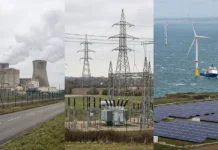
Not only would wind generation be subject to this cap, but also solar, biomass, nuclear, lignite, and a small amount of hydropower.

According to WindEurope, the ruling will make it considerably more difficult for Europe to recover from its current energy crisis. Governments must take action to assist households and companies in paying their energy costs. However, what is determined today may make the energy crisis worse, cautioned WindEurope.

Europe needs significant investments in domestic renewable energy sources, according to WindEurope. Everyone concurs with this, and it is the way out of the dilemma. However, as it is, the emergency legislation will halt a lot of investments in renewable energy. The regulation’s intended goal was to impose a limit on all infrastructure power generation across the EU. However, as it is, the regulation has no effect on national governments’ ability to impose additional taxes and other disorganised policies on various forms of energy production, according to the statement.

In addition to the EU’s extraordinary measures, some governments are already preparing new taxes. Additionally, these additional measures impose taxes on the overall revenue rather than the profits of electricity producers. This will freeze investments in green energy, the group said.

Investors will merely move on. Consider the US, where the Inflation Reduction Act offers significant tax credits for investments in renewable energy sources. This is still avoidable, but national governments must pay attention to those who are developing renewable energy sources, it said.

Latest stories

Related stories

Industrial Decarbonisation and Power Sector Synergy

The path to a net-zero economy requires the deep integration of heavy industry with the electrical grid. By exploring the concept of sector coupling and the role of hydrogen in difficult-to-abate sectors, this analysis details how industrial decarbonisation and power sector synergy can create a more resilient, flexible, and efficient energy system through shared infrastructure and coordinated strategy.

Hydrogen Trade Corridors Reshape Global Energy Supply

The emergence of international hydrogen trade is fundamentally redrawing the world's energy maps. By establishing dedicated corridors that connect resource-rich exporters with high-demand industrial centers, the global energy transition is moving toward a more diversified and resilient supply chain underpinned by advanced maritime logistics and rigorous certification standards.

Largest Solar-Plus-Storage Project Hits Initial Grid Sync

The first phase of the MTerra Solar project in...

India, UK Launch Offshore Wind Taskforce to Scale Capacity

India and the United Kingdom formally launched the India-UK...

Subscribe

- Never miss a story with notifications

- Gain full access to our premium content

- Browse free from any location or device.

Media Packs

Expand Your Reach With Our Customized Solutions Empowering Your Campaigns To Maximize Your Reach & Drive Real Results!

– Access the Media Pack Now

– Book a Conference Call

Leave Message for Us to Get Back

Translate »