




















European Energy has gone on to connect the Glejbjerg Solar Park to Denmark grid after the completion of the last of the technical checks.
It is worth noting that the solar park adds 148.2 MW of installed capacity. It makes the company’s operational platform across Northern Europe more robust by adding another utility-scale asset having a power purchase agreement that is suitable for long-term ownership.
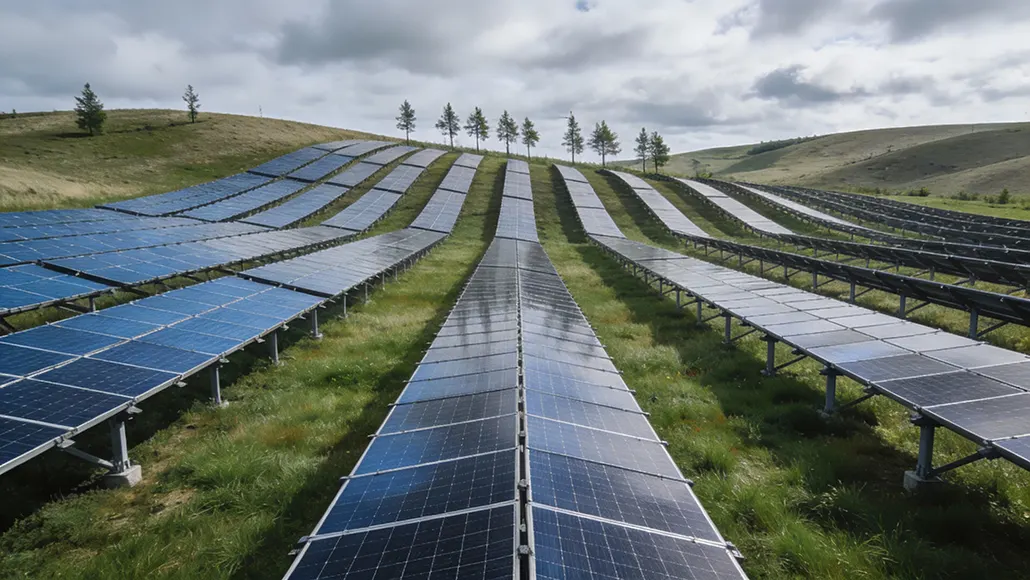
Glejbjerg Solar Park has in it 238,368 PV modules that are installed on a fixed-tilt mounting system and are supported by way of 572 inverters. The technology setup goes on to support the streamlined operations as well as maintenance that is often valued in terms of long-duration infrastructure portfolios.
The yearly production is anticipated to reach almost 153 GWh, in sync with the electricity consumption of around 35,000 Danish households. The generation profile goes on to contribute towards the continued expansion when it comes to the utility-scale solar production and also supports decarbonization of the national electricity system.
Says EVP as well as the Head of EPC in European Energy, Poul Jacobsen, getting Glejbjerg Solar Park online, and that too ahead of schedule indeed showcases a consistent construction process and also offers quite a strong foundation for the operational performance of the asset in the times to come.
Construction took almost one year and was delivered on schedule. Attaining COD at the end of 2025 goes on to reflect quite consistent progress all across the construction phase and also offers a solid basis in terms of operational optimization in 2026.
There are many community-oriented features that have been incorporated within the surrounding landscape, which includes shelter along with recreational areas that are designed to integrate the project within the local area and also support long-term coexistence.
Its scale, the configuration of tech, and also the contractual framework goes on to sync with the anticipations of the investor for stable as well as long-duration energy infrastructure assets. Electricity from the plant gets delivered as per a power purchase agreement, making sure of a stable revenue stream that supports the ongoing operations.
Having achieved the COD, Glejbjerg Solar Park shifts completely to its operational phase. The completion of the construction as well as commissioning goes on to decrease the technical risk and also establishes a crystal-clear basis for the long-term asset performance.
Apparently, the Glejbjerg Solar Park to Denmark Grid is connected at the same grid point as Holsted Solar Park, which is located nearby and is also owned by European Energy, which, by the way, is operational. It is well to be noted that the shared grid infrastructure goes on to create a natural linkage between two assets, such as the integration of battery energy storage. The two solar parks are part of the operational project pipeline of European Energy that is suitable in terms of future commercial optimization.