















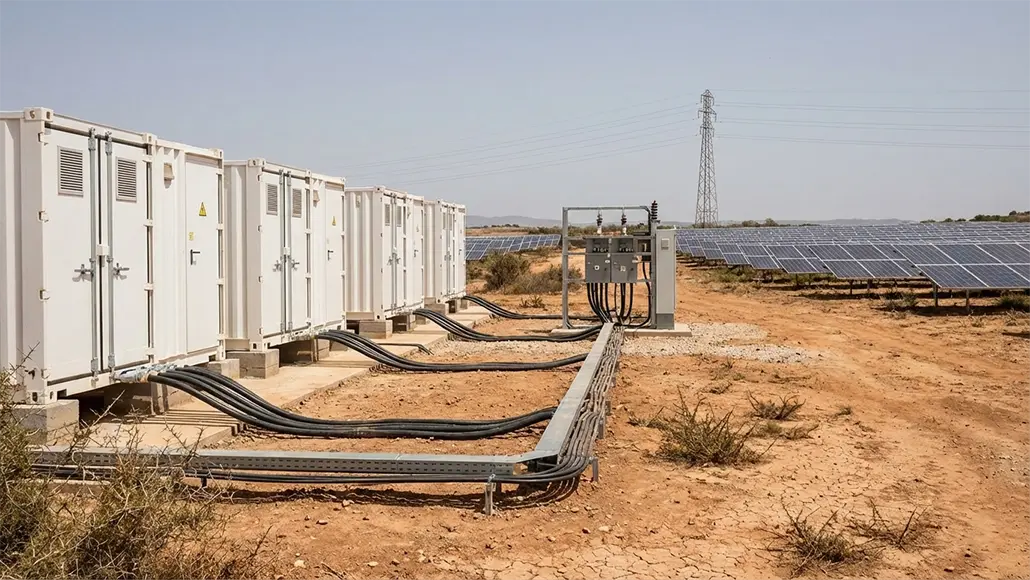

Greece has formally launched its first tender under the Apollo Program, with regulators opening the Greece solar plus storage auction for projects totaling up to 200 MW, alongside a separate 400 MW wind tender.
The auctions represent the first operational step of the Apollo Program since it entered into law in 2024. The initiative is designed to secure low-cost renewable electricity for low-income households and, in later phases, for municipalities and local authorities.
Under the Greece solar plus storage auction, bidders must submit project documentation and tariff offers at the same time through a single-round static process. The maximum eligible tariff has been set at €80 per megawatt-hour for solar projects combined with storage, while wind bids will be capped at €75 per megawatt-hour.
Winning projects will receive contracts for difference, with the awarded tariff functioning as the strike price. All selected assets must participate directly in the wholesale electricity market rather than operating under fixed feed-in schemes.
Applications must be filed by March 16. Eligible solar-plus-storage projects must already hold grid connection terms and an energy storage installation license, or provide a binding commitment to add storage capacity at a later stage.
Construction deadlines require photovoltaic and storage assets to be completed and grid-ready by December 31, 2027. The CfDs will run for 20 years from the date of grid connection and will apply only to electricity injected via the photovoltaic connection point, leaving battery revenues to be managed separately.
Auction conditions also impose a minimum oversubscription requirement of 40%, meaning bids must total at least 280 MW to allocate the full 200 MW. Participation must include at least three independently owned projects, with no single bidder permitted to secure more than 25% of the awarded capacity.
According to the government, this first phase of the Apollo Program will channel electricity at reduced tariffs to vulnerable households. A second phase, expected later this year, will focus on renewable projects supplying power directly to municipalities to lower public energy costs.